
Aldura Hopper Trailers For Sale in Colorado
Browse Aldura hopper trailers for sand and grain hauling, with aluminum construction, bottom-drop discharge, and payload-focused specs.
Learn more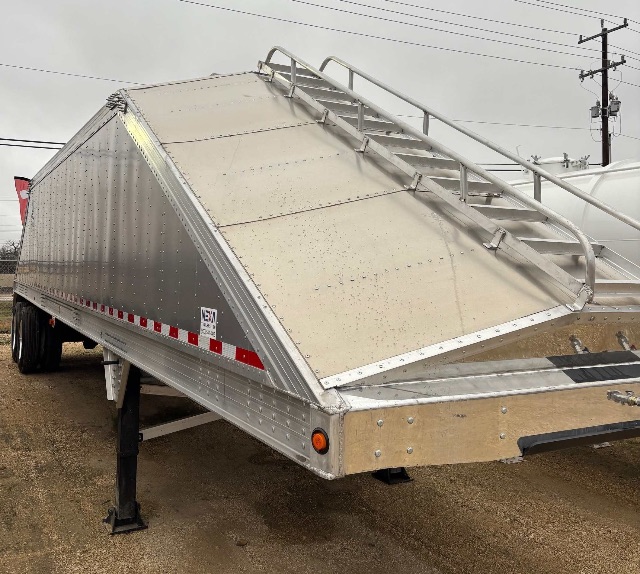
Have aldura hopper trailer to sell? List it here to reach thousands of buyers.
About Aldura Hopper Trailers in Colorado
For sand and grain work, gate design and capacity matter as much as frame construction. Many Aldura hopper trailers in this class use manual top and bottom gates, with cubic yard capacity and gate opening dimensions that should be matched to the material you haul and the way you unload. Fine sand, frac sand, grain, feed ingredients, and other dry bulk products all flow differently, so buyers should pay close attention to hopper slope, discharge opening size, and how cleanly the trailer empties. If the job involves repeated loading at plants or terminals, kingpin setting, fifth wheel height, overall height, and axle spread should be reviewed against local bridge formulas, loader clearance, and the tractor spec already in the fleet.
The running gear on a hopper trailer has a direct effect on uptime and maintenance cost. Common specs in this segment include 30,000-pound air ride suspension, air brakes with ABS, 24.5-inch rubber, and two-speed landing gear. On Colorado routes, buyers often pay extra attention to brake performance, suspension durability, and tire condition because mountain grades, weather swings, and rough site access can expose weak points quickly. Wheel type, brake lining spec, landing gear brand, lighting harness quality, and parts commonality are practical buying points, especially for fleets trying to simplify service across multiple trailers.
A good hopper trailer choice comes down to matching the trailer to the commodity, the tractor, and the route. Buyers comparing Aldura hopper trailers should look closely at empty weight, GVWR, gate operation, subframe material, coupler construction, and overall discharge design. For operations hauling sand, a bottom-drop or bottom-dump style hopper trailer can improve cycle times and reduce unloading labor. For grain applications, cleanout, sealing, and material protection are equally important. The best unit in this category is the one that protects payload, unloads consistently, and fits the legal and operational limits of the lanes it will run.
Frequently Asked Questions
What are Aldura hopper trailers commonly used for?
Aldura hopper trailers in this category are commonly used for hauling dry bulk materials such as sand, grain, feed, and other free-flowing commodities. Many are configured as aluminum bottom-drop hopper trailers, which makes them especially useful where quick gravity unloading is important. The exact fit depends on gate size, hopper shape, and how abrasive or fine the material is.
Why does aluminum construction matter on a hopper trailer?
Aluminum construction helps reduce trailer tare weight, which can improve legal payload and overall operating efficiency. It also offers strong corrosion resistance compared with painted steel, an advantage for trailers exposed to weather, wash cycles, and seasonal road conditions. Buyers should still inspect the subframe, crossmember design, and high-stress areas because low weight only matters if the structure holds up under the intended commodity and route conditions.
What specs should I compare first on a hopper trailer?
Start with capacity, empty weight, GVWR, trailer length, axle configuration, suspension type, and gate design. Then verify kingpin setting, fifth wheel height, overall height, and axle spread to make sure the trailer will match your tractor and stay compliant on your lanes. For bulk work, discharge opening size and how well the trailer empties can be just as important as the published capacity number.
Are bottom-drop hopper trailers a good fit for sand hauling?
Bottom-drop hopper trailers are often a strong fit for sand hauling because they unload quickly and can support efficient turn times at the jobsite or terminal. The trailer still needs the right hopper geometry, gate opening dimensions, and structural design for the material being moved. Sand is abrasive and can expose wear points faster than lighter commodities, so floor condition, gate sealing, and overall build quality deserve close inspection.
What should Colorado buyers pay attention to when shopping for hopper trailers?
Colorado buyers often focus on brake condition, suspension durability, tire quality, and overall trailer stability because routes may include elevation changes, long grades, and mixed weather. Overall height and fifth wheel height also matter when pairing the trailer with an existing tractor and clearing local loading points. A hopper trailer that works well on flatter regional lanes may need a closer review before it is assigned to mountain corridors or rough plant access roads.