
Used Great Dane Flatbed Trailers For Sale in New York
Browse used Great Dane flatbed trailers with specs that matter, including deck length, GVWR, axle setup, flooring, and load securement features.
Learn more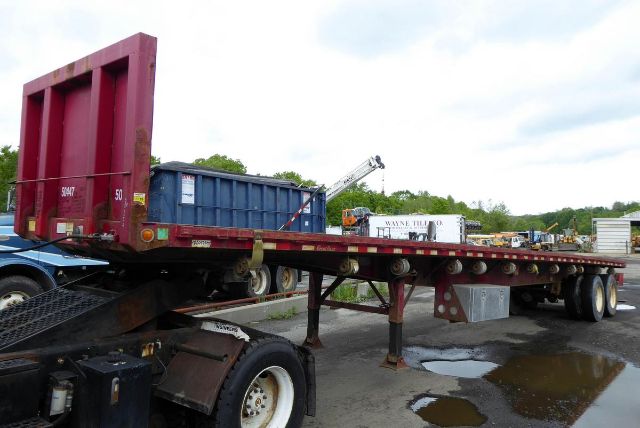
Have used great dane flatbed trailer to sell? List it here to reach thousands of buyers.
About Used Great Dane Flatbed Trailers in New York
On Great Dane flatbeds, common buying decisions usually start with trailer length, deck height, and overall weight. Many units are found in 45-foot and 48-foot configurations, with tandem axle setups and air brakes, though exact specs vary by model and age. Buyers hauling in New York and the Northeast often pay close attention to tare weight, legal payload, and deck height because bridge laws, urban delivery access, and loading dock compatibility can all affect day-to-day use. Floor composition matters too. Wood floors remain common for traction and forklift use, while steel framing and crossmembers need to be checked closely for corrosion, repairs, and signs of concentrated load damage.
Used Great Dane flatbeds may also come with application-specific equipment that adds real value, including coil package setups, moffett forklift mounts, headache racks, winches, sliding winch tracks, chain ties, strap storage, and stake pockets with rub rails in usable condition. Suspension type, axle spacing, tire size, and wheel spec all influence maintenance cost and ride quality. A fixed closed tandem setup can be a straightforward option for regional work, but buyers should confirm how that configuration fits the freight they haul and the weight laws in the lanes they run most. On older trailers, it is worth inspecting landing gear operation, kingpin area wear, lighting updates, and the condition of the rear frame and bumper.
For most buyers, the best used Great Dane flatbed trailer is not just the lowest-priced unit. It is the one with the right combination of legal payload, deck usability, securement layout, and structural condition. Look closely at the frame rails, floor fasteners, rub rail damage, and any evidence of heavy concentrated loads or hard forklift impact. A well-kept Great Dane flatbed can stay productive for years in regional or over-the-road service, especially when the trailer's original spec matches the freight mix and loading method you handle most often.
Frequently Asked Questions
What should I inspect first on a used Great Dane flatbed trailer?
Start with the frame, crossmembers, and deck. Check for bent rails, cracked welds, corrosion, patched areas, and soft or damaged flooring. After that, inspect the kingpin area, landing gear, suspension, brake components, tires, and lights. On a flatbed, structural condition and deck usability usually matter more than cosmetic appearance because they directly affect payload safety and loading efficiency.
Are Great Dane flatbed trailers good for forklift loading and building materials?
Yes, many Great Dane flatbeds are well suited for forklift-loaded freight such as lumber, palletized products, and construction materials. The main factor is the trailer's actual floor and crossmember condition, along with deck height and securement layout. Buyers should confirm the floor can handle repeated forklift traffic and look for useful features such as rub rails, stake pockets, winches, and strap storage.
What axle and suspension setup is common on used Great Dane flatbeds?
Tandem axle configurations are common, often paired with air brakes and either spring or air ride suspension depending on how the trailer was originally ordered. A fixed closed tandem is frequently seen on regional and general freight flatbeds. The right setup depends on your freight, lane restrictions, maintenance preferences, and the weight laws that apply where the trailer will operate.
How important is trailer weight on a used flatbed?
Trailer tare weight is very important because it directly affects legal payload. A heavier steel flatbed may offer durability, but it can reduce the amount of freight you can haul before reaching gross weight limits. Buyers should compare empty weight, GVWR, axle ratings, and intended cargo type to make sure the trailer fits their revenue loads rather than simply choosing by purchase price alone.
What flatbed features add the most value on a used trailer?
The most useful value-added features are the ones that reduce setup time and improve securement. Common examples include headache racks, moffett forklift kits, sliding winch tracks, chain ties, strap and tool storage, coil package equipment, and well-maintained rub rails and stake pockets. These features matter most when they match the type of freight you haul and are still in serviceable condition.