
Dorsey Flatbed Trailers For Sale in New York
Browse Dorsey flatbed trailers for sale with details on lengths, axle setups, deck materials, capacity, and specs that matter to buyers.
Learn more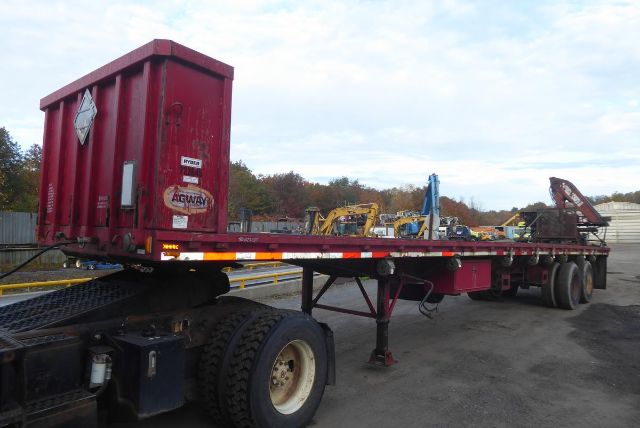
Have dorsey flatbed trailer to sell? List it here to reach thousands of buyers.
About Dorsey Flatbed Trailers in New York
Length, axle arrangement, and deck construction usually drive the buying decision first. Common flatbed lengths include 45-foot and 48-foot units, with some older trailers built for applications where overall weight distribution and maneuverability mattered more than maximum deck space. A sliding closed tandem can be useful for bridge-law compliance and load placement flexibility, especially in New York and other states where axle positioning affects legal payload. Suspension type, brake condition, tire size, wheel condition, and kingpin area wear are all worth checking because repair costs can change the value of an older flatbed quickly.
Deck design tells you a lot about the trailer's intended use. Many Dorsey flatbeds use wood floors over steel structure, which can be practical for mixed freight and easier board replacement, but buyers should inspect for soft spots, delamination, broken fasteners, and damage around coil package areas or concentrated point loads. Steel-frame trailers can be durable in hard service, but corrosion in the main rails, outriggers, crossmembers, and rear impact area is a major concern on older Northeast equipment. Securement hardware is just as important as the deck itself, so look for usable rub rails, stake pockets, winches, spool track, and any signs of bent side structure from repeated side-loading.
Some Dorsey flatbed trailers were also configured for specialized work, including units with headache racks, mounted cranes, or other jobsite-oriented equipment. Those setups can suit construction, utility, or material delivery operations, but they need extra scrutiny for hydraulic condition, added frame stress, and legal weight impact from the mounted equipment. For a buyer comparing listings, the most important question is not just rated capacity. It is how well the trailer's actual structure, axle placement, deck height, and securement layout match the freight you plan to haul every day.
Frequently Asked Questions
What should I inspect first on a used Dorsey flatbed trailer?
Start with the main frame, crossmembers, suspension mounts, slider rails if equipped, and the kingpin area. Those components determine structural value and can be expensive to repair correctly. After that, inspect the floor, rub rail, stake pockets, brake system, wheel ends, tires, lights, and rear impact guard. On older Northeast trailers, corrosion and previous weld repairs deserve close attention because cosmetic appearance can hide deeper structural issues.
Are Dorsey flatbed trailers good for heavy or irregular freight?
They can be, but the answer depends on the exact build. Dorsey produced flatbeds in different lengths, frame designs, and axle configurations, and some are better suited to general freight while others are more appropriate for steel, equipment, or jobsite materials. A buyer should confirm GVWR, structural capacity, deck condition, and securement layout rather than assuming every flatbed is built for the same work. Concentrated loads and machinery can expose weaknesses in older decks and crossmembers quickly.
Why is a sliding tandem important on a flatbed trailer?
A sliding tandem gives the operator more flexibility in axle spacing and load distribution. That matters for bridge-law compliance, state-specific weight rules, and balancing different freight types on the deck. In states like New York, where legal axle placement can affect how much payload you can carry on certain routes, a functioning slider can add practical value. The system should be checked for rail wear, locking pin engagement, air operation, and signs of binding or damage.
What deck material is common on Dorsey flatbed trailers?
Many Dorsey flatbeds use a wood floor over a steel support structure, though exact construction varies by model and age. Wood floors are common because they provide traction and are easier to repair in sections, but they still need careful inspection. Look for rot, cracked boards, fastener pull-through, and damage from forklifts, steel products, or repeated point loading. The floor condition should always be judged together with the health of the crossmembers underneath it.
Can a flatbed trailer with a mounted crane still be a practical purchase?
It can be practical for specialized delivery or jobsite work, but it is not automatically a better value. A mounted crane adds versatility, yet it also adds tare weight, maintenance complexity, and potential structural stress to the trailer frame. Buyers should inspect the crane base, hydraulic lines, cylinders, controls, and any reinforcement around the mounting area. It is also important to confirm that the added equipment does not compromise payload, legal compliance, or the trailer's core structural condition.