
Custom Repurposed Frameless Dump Trailers For Sale in Florida
Browse custom repurposed frameless dump trailers for aggregate, scrap, demolition, and ag hauling with lightweight bodies and high payload potential.
Learn more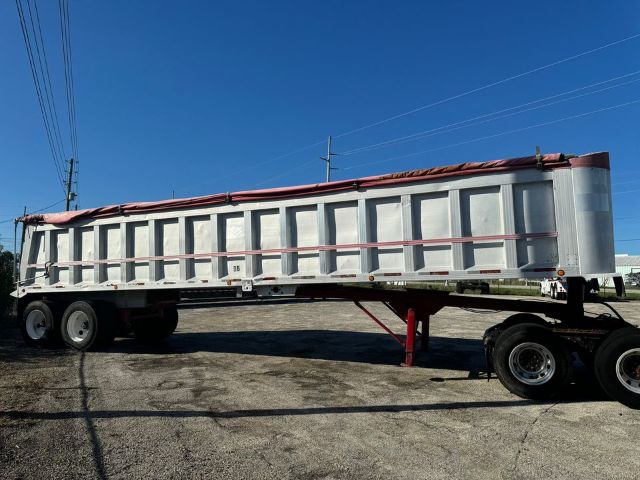
Have custom repurposed frameless dump trailer to sell? List it here to reach thousands of buyers.
About Custom Repurposed Frameless Dump Trailers in Florida
The main buying decision is body material, body shape, and hoist condition. Aluminum bodies are common when corrosion resistance and lighter weight are priorities, while steel remains popular for abrasive material and harder impact loading. Common dimensions in this class include bodies around 39 to 40 feet long, 96 inches wide, and side heights near 60 inches, but capacity varies with side configuration and floor design. On a frameless trailer, inspect the tub, crossmember areas, draft arms, hinge points, and upper coupler structure closely because the body carries the load and dump stress. A clean liner, functional roll tarp, and a usable grain door can add versatility if the trailer may alternate between bulk material and lighter commodity work.
Running gear and stability deserve just as much attention as the body. Tandem axle setups are common, often paired with air ride suspension for a better ride and less shock transfer into the body. Check axle ratings, wheel-end condition, brake life, tire wear patterns, and suspension alignment before focusing only on cosmetic appearance. Hoist performance is critical on any end dump, but especially on a repurposed unit. Look at cylinder seals, mount integrity, hydraulic line routing, and signs of previous twist damage from uneven dumping. Buyers working soft ground, transfer stations, or uneven demolition sites should pay close attention to center-of-gravity concerns, because a frameless end dump loads and unloads differently than a hopper bottom, belt trailer, or walking floor.
Repurposed frameless dump trailers can be a practical fit for operators who know exactly what material they haul and what jobsite conditions they face. The best units are not simply older trailers with fresh paint. They are trailers with documented repairs, sound metal, tight hinges, straight tubs, and serviceable running gear. If the trailer will see asphalt, sand, rock, or mixed debris in Florida heat and humidity, it is worth checking tarp condition, liner wear, corrosion around dissimilar metals, and how well the rear gate seals. A well-matched frameless dump trailer can deliver strong payload efficiency, but it pays to buy based on structure, hoist health, and application suitability rather than appearance alone.
Frequently Asked Questions
What is a frameless dump trailer and how is it different from a frame-type end dump?
A frameless dump trailer uses the body as a stressed structural component instead of carrying the body on a full-length frame. That design usually reduces trailer weight and increases potential payload, which is why frameless end dumps are common in aggregate and bulk hauling. The tradeoff is that body condition, hinge integrity, coupler structure, and hoist mounting become even more important, because those areas absorb more of the load and dump forces than they would on a frame-type trailer.
What should I inspect first on a custom repurposed frameless dump trailer?
Start with the tub, hoist, hinge area, and upper coupler section. Look for cracks, patched aluminum or steel, buckling, floor wear, and signs the trailer may have been twisted during an uneven dump. After the structure, inspect the suspension, axles, brakes, tires, and hydraulic system. A repurposed trailer can still be a strong value if repairs were done correctly, but the quality of the rebuild matters more than paint, lights, or other cosmetic updates.
Are aluminum frameless dump trailers a good choice for Florida work?
Aluminum frameless dump trailers are often a strong fit in Florida because they resist corrosion well and help keep empty weight down. That can be useful for frequent hauls of sand, aggregate, millings, and agricultural products. The right choice still depends on the material. Repeated loading with large abrasive rock, heavy demolition debris, or high-impact scrap may push some buyers toward heavier-duty steel bodies or trailers with liners designed for tougher service.
What features add the most versatility to a used frameless end dump?
A liner, roll tarp, grain door, and air ride suspension are among the most useful features in this category. A liner helps protect the body and improves cleanout on sticky material. A roll tarp helps with load control and compliance. A grain door adds flexibility for lighter bulk commodities. Air ride can reduce shock and improve ride quality, which may help preserve body condition over time, especially on rough local routes.
How do I know if a frameless dump trailer is right for my operation?
A frameless dump trailer is usually the right fit when payload matters, dump locations are reasonably stable, and the freight is suited to an end-dump body. It is commonly used for aggregates, sand, scrap, demolition debris, and some farm commodities. It may be less suitable if your operation regularly unloads on uneven ground, handles freight that bridges badly, or needs safer discharge in areas where rollover risk is a major concern. In those cases, a belt trailer, walking floor, or other bulk trailer design may be a better match.