
Trail King Drop Deck Trailers For Sale in New York
Shop Trail King drop deck trailers for heavy equipment, taller freight, and low deck height hauling with durable steel construction.
Learn more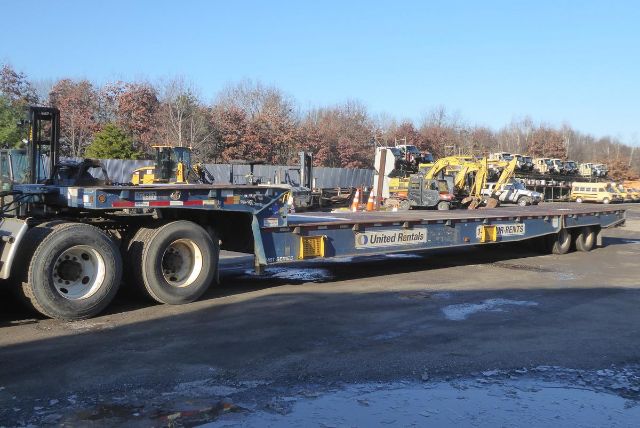
Have trail king drop deck trailer to sell? List it here to reach thousands of buyers.
About Trail King Drop Deck Trailers in New York
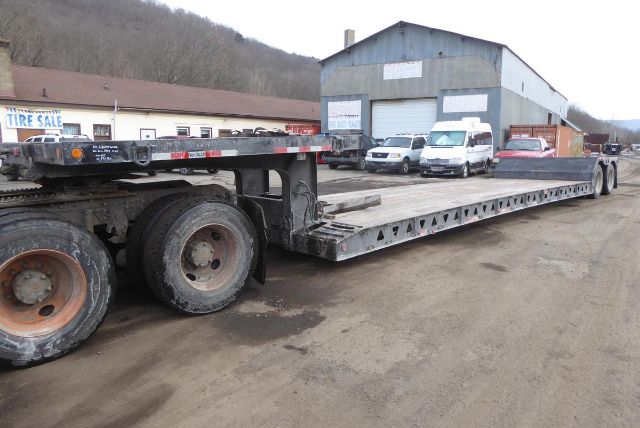
In the Trail King line, you will see a range from conventional tandem axle drop decks to heavier specialized configurations with hydraulic ramps, sliding axles, and concentrated load ratings suited for equipment transport. Common specs include 48-foot overall length, 102-inch width, steel construction, wood-over-steel flooring, and air ride suspension. Some models are set up more like a general freight step deck, while others lean toward the equipment side with low deck heights, beavertails, fold-under tails, hydraulic loading ramps, or winches. If your freight includes forklifts, skid steers, compact excavators, or other self-propelled equipment, ramp design and deck transition are just as important as published GVWR.
A serious buyer should pay close attention to the relationship between trailer tare weight and usable payload. Heavier built Trail King drop decks often trade payload for durability, especially on trailers designed for concentrated loads or repeated equipment loading. Main deck height, upper deck height, and well length all affect how practical the trailer is for your routes and freight mix. In New York and the Northeast, that matters because bridge clearances, tighter delivery sites, and mixed highway-secondary road use can make a low, stable deck more valuable than maximum theoretical capacity. Tire size, suspension type, and sliding closed tandem setups also affect ride quality, axle spread flexibility, and maintenance costs over time.
Condition matters as much as spec on an older Trail King drop deck. Buyers should inspect the frame rails, crossmembers, ramp hinges, hydraulic components, suspension mounts, floor condition, and any corrosion around the neck and main deck transition. On equipment-oriented trailers, check for twist in the deck, uneven tire wear, and repairs around concentrated load areas. Trail King has a strong reputation in the heavy-haul and equipment market, so a properly maintained trailer can remain productive for years, but the right choice depends on whether you need a lighter freight-oriented step deck or a heavier low-profile trailer built to load machines every week.
Frequently Asked Questions
What is the main advantage of a Trail King drop deck trailer compared with a flatbed?
The main advantage is lower deck height. A Trail King drop deck trailer, also known as a step deck trailer, allows taller freight to ride lower than it would on a standard flatbed. That helps keep many loads within legal height limits while still providing open-deck loading access from the sides, rear, or by ramp on equipment-configured models.
Are all Trail King drop deck trailers designed for heavy equipment?
No. Some Trail King drop deck trailers are set up for general freight, while others are built more specifically for equipment hauling. Equipment-focused models often have hydraulic ramps, reinforced deck sections, beavertails, winches, lower deck heights, and stronger concentrated load ratings. General freight models may prioritize lighter tare weight and longer usable deck space instead.
What specs should I compare first on a used Trail King drop deck trailer?
Start with deck height, well length, overall length, axle setup, trailer weight, and frame rating. After that, look at suspension type, floor material, tire and wheel size, and any loading equipment such as ramps or winches. These specs tell you how much cargo height you can handle, how the trailer will track and ride, and how much real payload capacity remains after tare weight is considered.
Why does concentrated load rating matter on a drop deck trailer?
Concentrated load rating matters when hauling equipment or freight that puts substantial weight into a short section of deck. A trailer may have a high overall gross rating but still be limited in how much weight it can safely carry in a 10-foot section or over the axles. That is especially important for loaders, tractors, scissor lifts, and other machine loads that do not distribute weight evenly across the full deck.
What should buyers inspect on an older Trail King drop deck trailer?
Inspect the frame for cracks, corrosion, and past repairs, especially around the neck, suspension hangers, and deck transition points. Check crossmembers, flooring, ramp hardware, hydraulic systems, air ride components, lights, brakes, and tire wear patterns. On Northeast trailers, rust can be a major issue, so pay close attention to structural corrosion rather than focusing only on cosmetic appearance.