
Trail King Drop Deck Trailers For Sale in New Mexico
Browse Trail King drop deck trailers with specs, deck height, axle, weight, and securement insights for freight in New Mexico and beyond.
Learn more
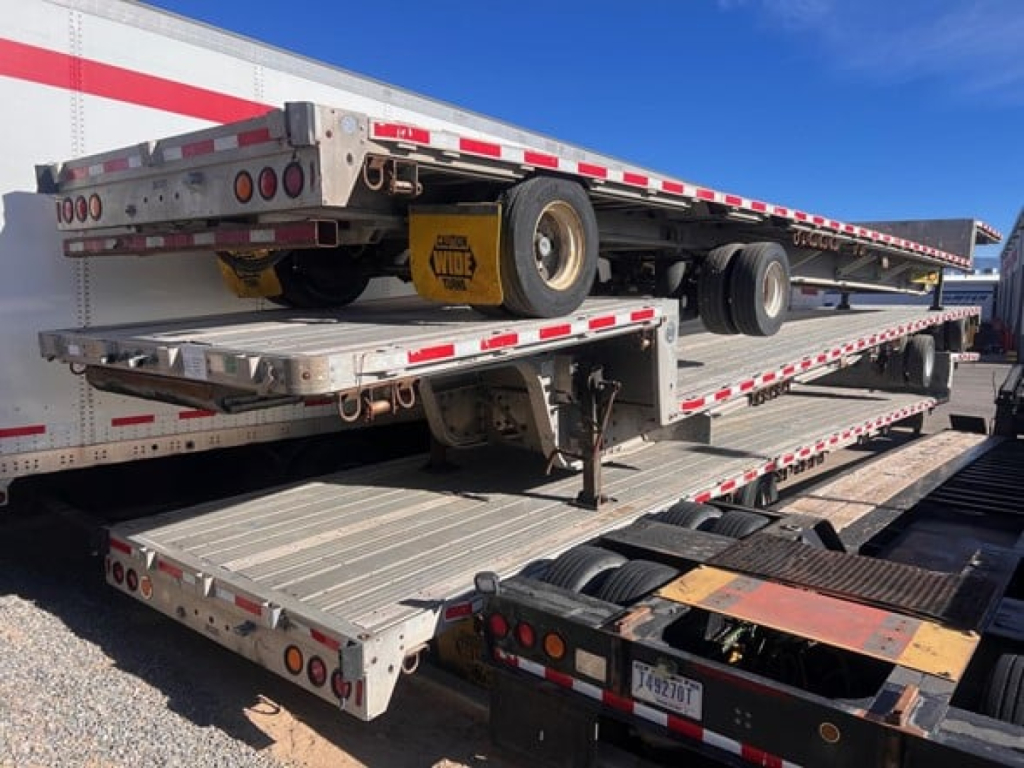
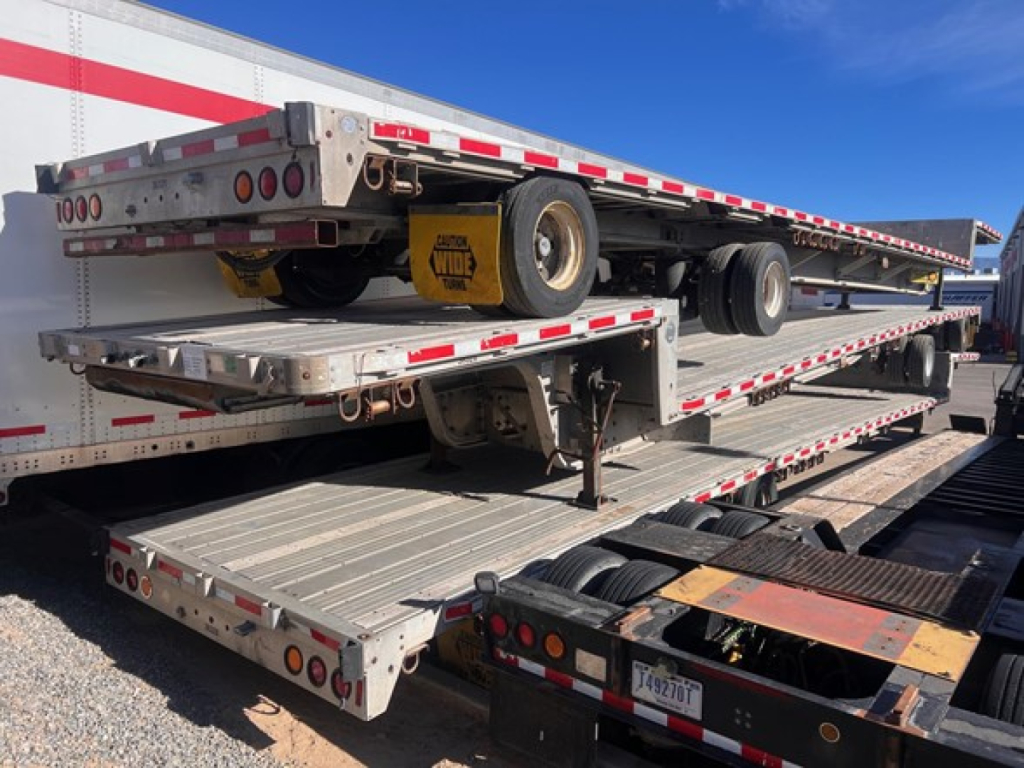
Have trail king drop deck trailer to sell? List it here to reach thousands of buyers.
About Trail King Drop Deck Trailers in New Mexico
One of the first decisions is aluminum versus steel construction. Trail King aluminum drop decks are popular because they cut tare weight and leave more payload for revenue freight. Listings in this category often include all-aluminum construction, aluminum main beams, aluminum rails, and features like nail strips, stake pockets, pipe spools, and sliding winches. Those details matter because they determine how flexible the trailer is across different cargo types. A 29-inch loaded deck height, 17.5-inch rubber, and air ride suspension are common configurations when the goal is to keep freight low and ride quality steady. Buyers hauling finished products or sensitive machinery usually pay close attention to suspension spec, crossmember spacing, and overall condition of the deck surface and securement points.
Trail King has a strong reputation among flatbed and specialized trailer buyers for structural integrity and practical freight handling. On a drop deck, that usually translates into clean load angles, usable deck length, solid tie-down access, and frame design that balances payload with durability. Look closely at the upper deck length, lower deck length, axle spacing, kingpin setting, and rated capacity, especially if the trailer will see mixed freight instead of one dedicated commodity. If the trailer has sliding winches and full stake pocket access, it will usually be easier to adapt between crated freight, pipe, steel shapes, and equipment with irregular tie-down points. Tire size, wheel material, and brake specification also deserve attention because replacement cost and service availability can affect total operating cost over time.
For a buyer comparing Trail King drop deck trailers, the real question is how the trailer matches the freight lane and loading method. A lightweight all-aluminum trailer can make sense for general commodity hauls where every pound counts, while a heavier-spec configuration may be the better fit for repeated machinery or concentrated loads. Check deck height, concentrated load ratings, frame condition around the transition area, suspension wear, and the condition of winch tracks, rub rail, and floor fasteners. A good drop deck should give you legal height flexibility, straightforward securement, and enough structural reserve to stay productive across a wide range of loads.
Frequently Asked Questions
What is the advantage of a Trail King drop deck trailer compared with a flatbed?
A drop deck trailer gives you lower deck height on the main deck, which allows taller freight to stay within legal height limits more easily than on a standard flatbed. That makes it a practical choice for machinery, stacked building materials, crated equipment, and other loads that would sit too high on a conventional platform trailer. You still get much of the loading flexibility of a flatbed, but with better clearance for taller cargo.
Are aluminum Trail King drop deck trailers a good choice for general freight?
Yes, aluminum Trail King drop deck trailers are commonly chosen for general freight because lower trailer weight can increase legal payload. That can be especially valuable for carriers hauling building products, palletized freight, pipe, or other commodities where weight matters. Buyers should still verify main beam construction, floor condition, and load rating to make sure the lighter trailer matches the actual freight mix.
What specs matter most when buying a used Trail King drop deck trailer?
The most important specs are overall length, width, upper deck and lower deck dimensions, loaded deck height, suspension type, axle configuration, tire size, and rated capacity. On a used unit, condition is just as important as specification. Check the transition area between decks, crossmembers, floor wear, rub rails, stake pockets, winch track condition, air ride components, and brake system service history. Those areas usually tell you how the trailer has been loaded and maintained.
Why are features like stake pockets, pipe spools, and sliding winches important on a drop deck?
These features improve securement flexibility across different types of cargo. Stake pockets and rub rails provide multiple tie-down positions, pipe spools help with chain and strap placement for round or irregular loads, and sliding winches make strap positioning faster on mixed freight. A trailer with strong securement options is easier to keep productive because it can handle more than one commodity without requiring workarounds at the load point.
Is a 53-foot Trail King drop deck suitable for hauling equipment in New Mexico?
In many cases, yes. A 53-foot drop deck is a common length for hauling equipment, materials, and oversized freight that benefits from lower deck height. In New Mexico, route planning still matters because bridge limits, local permitting requirements, axle weights, and load dimensions can vary by road and commodity. Buyers hauling equipment regularly should confirm deck strength, axle spec, and legal configuration for the routes they expect to run.