
Used Trail-Eze Drop Deck Trailers For Sale
Browse used Trail-Eze drop deck trailers built for hauling taller, heavier equipment with lower deck height, strong frames, and stable loading.
Learn more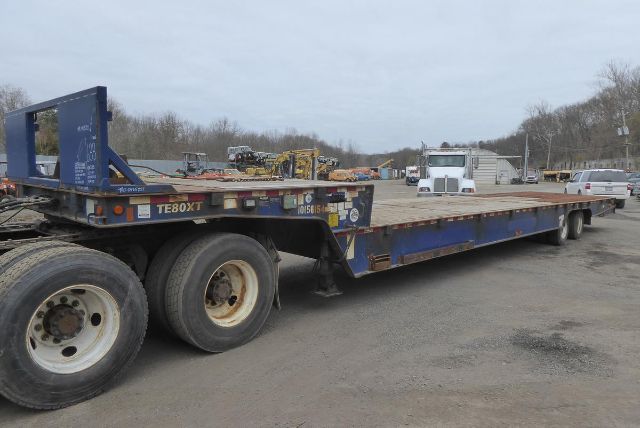
Have used trail-eze drop deck trailer to sell? List it here to reach thousands of buyers.
About Used Trail-Eze Drop Deck Trailers
Trail-Eze is well known for equipment-oriented trailer construction, so buyers often focus on deck strength, ramp setup, and frame design before anything else. On a used Trail-Eze drop deck trailer, common inspection points include main beam condition, deck wear, crossmember integrity, ramp hinges, hydraulic or spring-assist ramp function if equipped, and signs of concentrated loading damage near the rear. Deck length, lower deck length, and loaded deck height matter because they directly affect what machines you can legally and safely move. Axle configuration, suspension type, tire condition, brake wear, and the condition of air and electrical lines should also be checked closely, especially on trailers that have seen regular equipment loading.
Spec selection depends on what the trailer will haul most often. Buyers comparing used drop deck trailers usually look at overall length, lower deck clearance, weight rating, axle spacing, and beavertail or ramp options. A Trail-Eze drop deck used for skid steers, compact excavators, tractors, or attachment-heavy loads may benefit from aggressive traction surfaces, heavy-duty ramps, and deck layouts that simplify loading over the rear. For more general freight service, details like winch track, chain slots, stake pockets, D-rings, and tool storage can have a bigger day-to-day impact. In either case, load balance is critical, so kingpin setting and axle placement should match the tractor and the freight profile you expect to run.
A used Trail-Eze step deck can be a strong value when the trailer's prior service matches your application. Units that spent most of their life moving equipment may show cosmetic deck wear but still offer solid structural life if they were maintained correctly. The best buying decisions come from matching capacity, deck geometry, and loading method to real operating conditions, including route restrictions, dock access, and the type of securement your freight requires. For buyers who need a proven drop deck trailer with a lower working deck and equipment-friendly design, Trail-Eze remains a recognized name in the market.
Frequently Asked Questions
What is the advantage of a drop deck trailer compared with a flatbed?
A drop deck trailer gives you a lower main deck height than a flatbed, which allows more legal cargo height under standard road limits. That extra vertical space is the main reason buyers choose a step deck for taller equipment, crated machinery, and loads that would sit too high on a conventional flatbed. It can also make loading certain machines easier because the rear deck is closer to the ground.
What should I inspect first on a used Trail-Eze drop deck trailer?
Start with the frame, main beams, crossmembers, deck surface, ramps, suspension, brakes, tires, and all air and electrical connections. Pay close attention to wear around ramp pivots, rear loading areas, and any section that may have carried concentrated machine weight. Evidence of repeated overloading, poor repairs, or uneven tire wear can tell you a lot about how the trailer was used and maintained.
Are Trail-Eze drop deck trailers mainly for equipment hauling?
Many Trail-Eze trailers are configured with equipment hauling in mind, especially when they include ramps, beavertails, and reinforced rear deck sections. That said, a drop deck trailer can also work well in general freight service if the deck layout and securement package fit the cargo. The right setup depends on whether the trailer will spend most of its time carrying wheeled or tracked equipment, palletized freight, or mixed loads.
How do I choose the right used drop deck trailer capacity and deck length?
Choose capacity and deck dimensions based on the heaviest and tallest loads you haul regularly, not just occasional jobs. Lower deck length, loaded deck height, axle rating, and ramp design all affect real-world usability. A trailer that is technically rated for the weight but awkward for your machine wheelbase, track width, or securement pattern can slow loading and create balance issues on the road.
What features matter most on a used equipment-oriented step deck trailer?
For equipment service, the most important features are usually ramp design, deck strength, traction surface, tie-down points, and proper weight distribution. Buyers often look for heavy-duty ramps, chain slots, D-rings, stake pockets, and a frame built to handle repeated loading cycles. If the trailer will also handle freight, practical additions like winch track, storage, and flexible securement options can improve day-to-day efficiency.