
New XL Specialized Double Drop Expandable Trailers For Sale
Shop new XL Specialized double drop expandable trailers built for heavy equipment hauling, low deck height, detach neck options, and versatile load lengths.
Learn more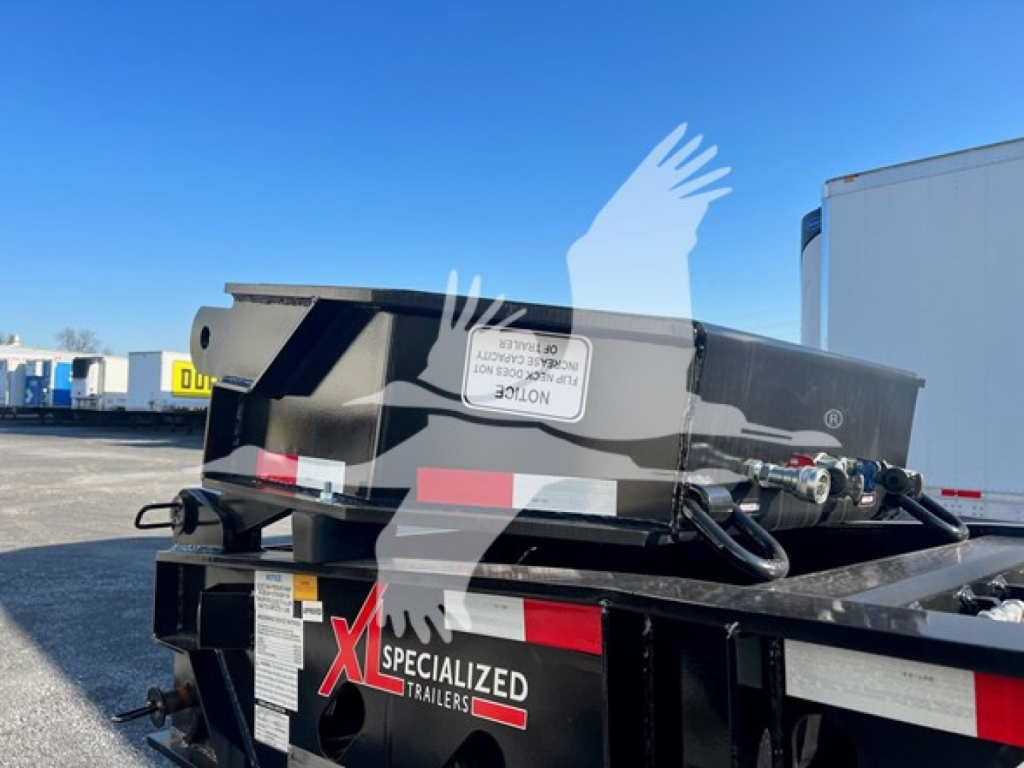
Have new xl specialized double drop expandable trailer to sell? List it here to reach thousands of buyers.
About New XL Specialized Double Drop Expandable Trailers
A buyer should start with deck layout and neck style. In this category, XL Specialized commonly offers hydraulic detachable goosenecks in classic or scraper-style designs, with full-width neck decking on many setups. Main deck height is often around 12 inches loaded with ground clearance near 4 inches, which matters when hauling taller construction equipment, crushers, paving machines, and other over-dimensional freight. Main deck lengths in this class are commonly in the low-30-foot range before any extension, and some trailers are built with provisions for neck extensions, flip axles, or a third axle flip. Swing clearance, kingpin setting, and loaded fifth wheel height are important fitment details, especially if the trailer will be paired with a specific tractor wheelbase or used across mixed fleets.
Capacity and suspension specs deserve close attention because two trailers with similar overall length can perform very differently under real jobsite conditions. Many new XL Specialized double drop expandable trailers in this class fall in the 30 ton to 40 ton range, often with air ride Hendrickson suspension, 54-inch axle spacing, raise-and-lower valves, and 255/70R22.5 tires. Apitong flooring, steel perimeter beams, Durabak-covered steel between the main beams, flush rear bogie decking, and multiple pairs of D-rings are common features because these trailers are expected to take repeated machine loading. Hydraulic systems may be tractor-supplied or powered by a pony motor, and that choice affects loading speed, service simplicity, and how easily the trailer can be used with different power units.
For buyers comparing listings, the real questions are load profile, future flexibility, and operating environment. A narrower or classic neck can matter if you load equipment with tighter track spacing, while a full-width hydraulic neck can improve versatility and front deck usability. Provisions for flip axles, flip boxes, and extension components can add resale value and expand legal payload options later. If the work involves asphalt crews, utility contractors, demolition, or heavy equipment dealers, an XL Specialized double drop expandable trailer is typically chosen for dependable low deck geometry, straightforward securement, and the ability to adapt to a wide range of machine dimensions without stepping into a much larger multi-axle platform.
Frequently Asked Questions
What is the main advantage of an XL Specialized double drop expandable trailer?
The main advantage is the combination of low deck height and adjustable load space. A double drop design lowers the main deck between the neck and rear bogie, which helps haul taller equipment with better overall height control. An expandable configuration adds flexibility for different machine lengths, making the trailer useful for excavators, dozers, pavers, compactors, and other equipment that may not fit efficiently on a fixed deck.
What capacity range is common for new XL Specialized mini deck and double drop expandable trailers?
Many trailers in this category are configured in the 30 ton to 40 ton class, though exact legal payload depends on axle count, axle spacing, add-on flip axle options, and state bridge laws. Buyers should separate structural rating from legal hauling capacity. A trailer may be built for a certain concentrated load rating, but the legal load on the road still depends on the complete tractor-trailer setup and the jurisdictions where it will operate.
Should I choose a hydraulic detachable neck with a pony motor or tractor wet line hydraulics?
A pony motor gives the trailer self-contained hydraulic power, which can make it easier to use across multiple tractors without requiring each one to be equipped with wet line hydraulics. Tractor-supplied hydraulics can reduce engine maintenance on the trailer side and simplify fueling, but they require compatible power units. The better choice depends on how often the trailer moves between tractors, how your fleet is spec'd, and how much you value interchangeability versus hydraulic system standardization.
What specs matter most when comparing double drop expandable trailers?
The most important specs are main deck length, loaded deck height, ground clearance, neck style, swing clearance, axle configuration, and compatibility with flip axles or neck extensions. Securement layout also matters, including D-ring placement, side rail design, and deck material. Buyers hauling tracked machines should also pay attention to deck surface durability, flush decking over the rear bogie, and whether the trailer has enough clear deck space for proper weight distribution without forcing awkward loading positions.
Why are Apitong flooring and air ride suspension common on this trailer category?
Apitong is widely used because it holds up well under repeated equipment loading, concentrated track pressure, and harsh hauling environments. Air ride suspension is common because it improves ride quality for both trailer and cargo, helps manage deck height, and works well with raise-and-lower functions during loading and unloading. Together, these features support durability, load protection, and easier operation in the field.