
Used Fontaine Double Drop Expandable Trailers For Sale
Shop used Fontaine double drop expandable trailers with low deck height, stretch capability, and heavy-haul specs for taller freight.
Learn more
Have used fontaine double drop expandable trailer to sell? List it here to reach thousands of buyers.
About Used Fontaine Double Drop Expandable Trailers
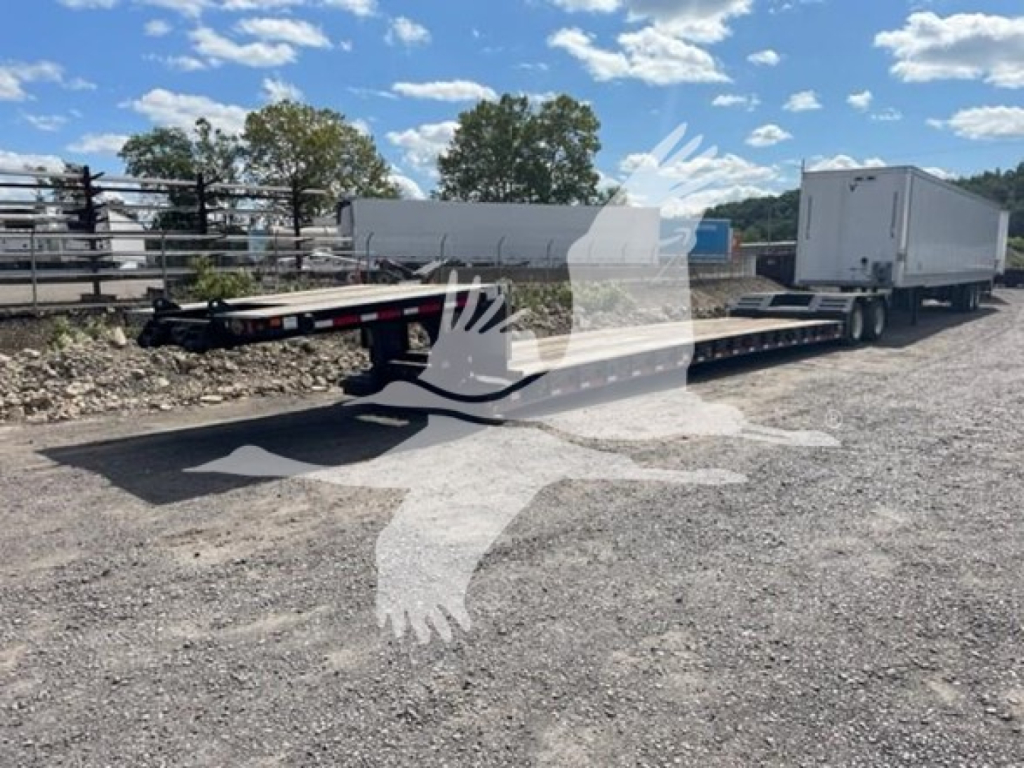
Fontaine expandable double drops are often seen in Renegade-series configurations, including trailers with mechanical detachable necks, closed tandems, air ride suspensions, and provisions for a third axle. That combination matters because axle grouping, kingpin setting, and neck style all affect maneuverability, bridge compliance, and how easily the trailer fits your typical permits. A buyer comparing listings should look closely at the well length, rear deck length, overall extended length, width, ground clearance, and whether the trailer is already plumbed for flip axles or a jeep. Features like outriggers, bent D-rings, ramp systems built into the deck, strobe lights, flag holders, and air and electric hookups add real jobsite value and reduce setup time when the trailer is working in heavy-haul service.
Condition matters more on an expandable trailer than it does on simpler platform equipment because the extension structure, locking points, and sliding components take repeated stress. Check for deck wear, weld repairs, neck fit, suspension condition, and signs of twist or uneven extension. Tire size and wheel spec also affect ride height and replacement cost, especially on 22.5 low-profile setups. If the trailer has air ride, inspect ride control components and confirm it holds height correctly under load. On used units, it is also smart to verify how the trailer was previously permitted and what types of loads it commonly carried, since heavy concentrated loads can tell you more about remaining life than model year alone.
For many fleets, a Fontaine double drop expandable is a versatile middle ground between a fixed double drop and a more specialized multi-axle lowboy. It gives you legal-height advantages for taller cargo, stretch capacity for longer pieces, and enough deck access for machines or freight that must be positioned carefully in the well. Buyers who routinely haul mixed over-dimensional freight usually benefit most from this category, especially when they need one trailer that can cover regional heavy-haul work, machinery moves, and occasional specialized loads without stepping up to a more complex trailer every time.
Frequently Asked Questions
What is a Fontaine double drop expandable trailer used for?
A Fontaine double drop expandable trailer is used for hauling tall and long freight that will not fit efficiently on a flatbed or a standard fixed-length double drop. Common applications include construction equipment, industrial components, tanks, structural steel, and over-dimensional machinery. The dropped well lowers the load height, while the expandable deck adds flexibility for longer cargo without requiring a dedicated long-length trailer on every haul.
What specs matter most when buying a used Fontaine double drop expandable?
The most important specs are ton rating, well length closed and extended, loaded deck height, overall extended length, rear deck length, width, kingpin setting, axle configuration, and neck type. Buyers should also confirm ground clearance, suspension type, and whether the trailer is plumbed for a third axle or additional axle equipment. These details determine what freight the trailer can legally and practically move, how it loads, and how it fits state permit requirements.
How is an expandable double drop different from a standard double drop lowboy?
A standard double drop has a fixed deck length, while an expandable double drop can stretch to handle longer freight. That added flexibility is the main advantage, but it also means more moving parts, more locking points, and more areas to inspect for wear. For operations that haul a wide range of freight lengths, an expandable trailer can improve utilization because one trailer can cover more load profiles.
What should I inspect on a used expandable trailer before buying?
Focus on the extension rails, locking mechanisms, crossmembers, neck connection, suspension, and any signs of frame damage or repaired stress cracks. Inspect the deck surface, D-rings, outriggers, ramps, lights, air lines, and electrical connections. On a used heavy-haul trailer, structural condition matters more than cosmetics, so look for uneven tire wear, poor ride height, misalignment, and evidence that the trailer does not extend or retract smoothly.
Are Fontaine double drop expandable trailers good for heavy-haul fleets?
They are a strong fit for fleets that regularly move over-height and variable-length freight but do not need a highly specialized trailer for every load. Fontaine trailers are widely recognized in heavy-haul service for practical designs, common-spec configurations, and features that support permitting and load securement. The right trailer still depends on the weights, dimensions, and axle requirements of the freight you move most often.