
Fontaine Double Drop Deck Trailers For Sale in Alabama
Shop Fontaine double drop deck trailers built for heavy haul, tall freight, and low deck height applications with mechanical or detachable gooseneck designs.
Learn more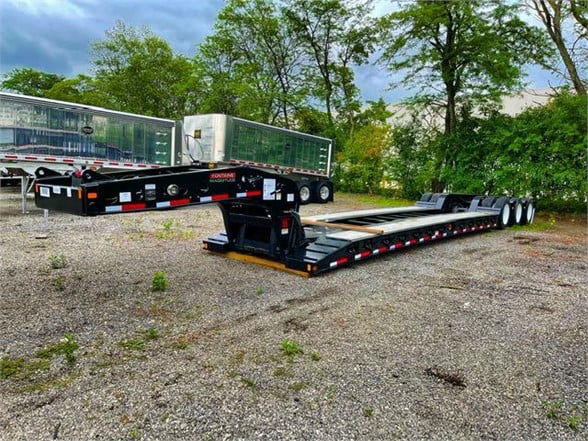
Have fontaine double drop deck trailer to sell? List it here to reach thousands of buyers.
About Fontaine Double Drop Deck Trailers in Alabama
Fontaine has a strong reputation in heavy haul, and buyers usually compare these trailers by capacity, gooseneck style, loaded deck height, suspension, axle configuration, and deck length. Common setups include mechanical detachable gooseneck trailers and hydraulic removable gooseneck models, along with flat level deck variations for specialized loads. Mechanical RGN and detachable configurations are popular for fleets that load self-propelled equipment and want a durable, straightforward connection system with fewer hydraulic components to maintain. Look closely at loaded deck height, ground clearance, swing radius, neck length, axle spacing, and the number of outriggers. Those details affect what you can legally haul, how easily you can load, and how the trailer performs on uneven jobsites or steep transitions.
A Fontaine double drop deck trailer is often spec'd for excavators, dozers, paving equipment, agricultural machines, transformers, steel assemblies, and modular construction components. Features that add real value include a flat, level deck for stable loading, traction cleats on the approach, air-ride suspension, lift axles, aluminum outer wheels, and provisions for flip axles or flip boxes when you need to spread weight or extend capacity. Buyers moving varied freight should also pay attention to deck width, well length, concentrated load ratings, crossmember construction, and tie-down layout. Outriggers, D-rings, chain slots, and securement options matter just as much as published ton rating because the trailer has to match the shape and contact points of the load, not just its gross weight.
When comparing listings, it helps to think beyond headline tonnage. The real question is how the trailer is configured for your permits, tractor wet-line setup, loading method, and the freight you move most often. A 40 ton or 55 ton Fontaine double drop may be ideal in one operation and inefficient in another if the deck length, axle group, or detachable neck style does not fit your routing and loading routine. Buyers in Alabama often look for corrosion-resistant finishes, durable wiring protection, and suspension specs that hold up on mixed highway and jobsite use. A well-matched Fontaine lowboy can improve legal payload planning, reduce loading time, and give you better flexibility on taller or heavier freight than a conventional deck trailer.
Frequently Asked Questions
What is the advantage of a Fontaine double drop deck trailer over a step deck or flatbed?
A Fontaine double drop deck trailer provides a lower main deck height than a step deck or flatbed, which allows taller freight to move with better overall height control. That lower well is the main reason buyers choose a double drop for heavy equipment, industrial machinery, and over-height loads. If your freight regularly pushes legal height limits, a double drop can reduce permit complexity and expand routing options compared with taller deck trailers.
What should I check first when comparing Fontaine double drop deck trailers?
Start with loaded deck height, well length, rated capacity, axle configuration, and gooseneck style. Those five items determine what the trailer can legally and practically haul. After that, review suspension type, ground clearance, swing radius, securement points, and whether the trailer is set up for flip axles, wet-line operation, or other heavy haul accessories. A trailer with the right ton rating can still be a poor fit if the deck geometry or neck design does not match your equipment.
Are mechanical detachable gooseneck Fontaine trailers a good choice for heavy equipment?
Yes, mechanical detachable gooseneck Fontaine trailers are a common choice for hauling self-propelled equipment and other loads that benefit from drive-on loading. Many buyers like them because they are durable, simpler than hydraulic neck systems, and well suited to repeated equipment loading in fleet service. The tradeoff is that loading procedures and jobsite conditions still need to match the trailer design, so ease of detach, ramp angle, and deck transition should be evaluated closely.
How do axle configuration and accessories affect legal payload on a double drop deck trailer?
Axle count, axle spacing, lift axle options, and accessories such as flip axles or flip boxes directly affect weight distribution and permitting. Legal payload is not based only on the trailer's published ton rating. It also depends on gross axle weight ratings, bridge law considerations, and how the load sits on the deck. Buyers hauling concentrated heavy freight should confirm axle spread and deck loading patterns before relying on the advertised capacity alone.
What types of freight are commonly hauled on Fontaine double drop deck trailers?
Common loads include excavators, bulldozers, loaders, rollers, agricultural equipment, cranes, transformers, tanks, generators, structural steel, and modular construction components. These trailers are designed for freight that is either too tall, too heavy, or too awkwardly shaped for a standard flatbed. The lower deck well and heavy haul construction make them especially useful when cargo height and machine loading are the primary concerns.