
NuVan Curtainside Trailers For Sale in New York
Shop NuVan curtainside trailers for freight needing side access, weather protection, and fast loading with dock or ground-level flexibility.
Learn more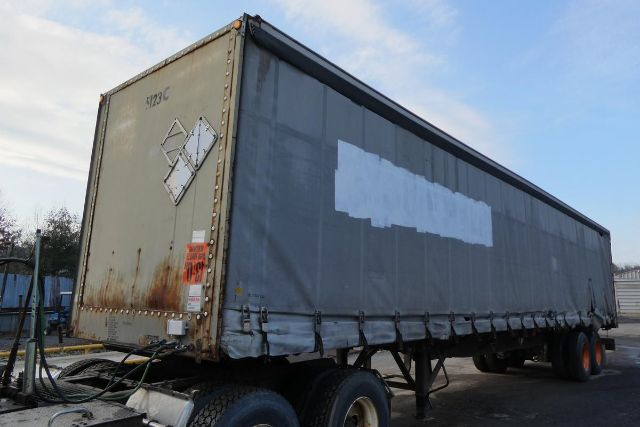
Have nuvan curtainside trailer to sell? List it here to reach thousands of buyers.
About NuVan Curtainside Trailers in New York
On older NuVan units, buyers should pay close attention to structural condition before anything else. Crossmembers, side posts, roof bows, rear frame, and curtain track alignment matter more than cosmetics because they affect how well the curtains travel, how square the body remains under load, and how easily the trailer seals up. Common specs in this category include tandem or slideable tandem axles, air ride suspension, air brakes, swing rear doors, and 11R22.5 tires. Length is often 45 feet or 48 feet on legacy units, though exact dimensions and legal loading capacity depend on axle placement, tare weight, and the trailer's original body design. Floor condition is another major checkpoint, especially on trailers that have seen forklift traffic or carry concentrated pallet weights.
A good curtainside trailer should be evaluated like both a van and a flatbed. Inspect curtain fabric for tears, patch quality, buckle tension, ratchet operation, and securement points along the lower rail. Check the roof and front wall for leaks, and confirm the rear doors close square without forcing the frame. If the trailer is set up to carry a piggyback forklift, verify the rear mounting area, frame reinforcement, and overall weight impact. Buyers in New York and the Northeast also need to think about corrosion from winter road treatment, plus how the trailer's height and suspension setup fit local route restrictions, warehouse docks, and urban delivery work.
For the right operation, a NuVan curtainside can reduce loading time and improve freight access without moving to an open-deck trailer. The biggest buying decisions usually come down to curtain condition, floor strength, frame integrity, axle configuration, and whether the trailer's tare weight leaves enough usable payload for the freight mix. If your freight is loaded by forklift from the side, needs tarping alternatives, or moves through shippers that want quick access without exposing the load to weather, this trailer category is worth a close look.
Frequently Asked Questions
What is a NuVan curtainside trailer used for?
A NuVan curtainside trailer is used for freight that benefits from full side access but still needs weather protection in transit. Common applications include palletized building materials, packaged products, machinery, bagged freight, and other cargo loaded by forklift from the side. It is especially useful when a shipper wants faster loading than a dry van offers but does not want the exposure and extra labor that come with flatbed tarping.
What should I inspect first on a used NuVan curtainside trailer?
Start with the frame, floor, curtain system, and running gear. On a curtainside trailer, the body structure has to stay square for the curtains and rear doors to operate correctly, so inspect crossmembers, side rails, rear frame, and roof structure for damage, corrosion, or signs of twist. Then check the floor for forklift wear, soft spots, or plating repairs, and inspect the curtains, buckles, ratchets, and track system for tears, binding, and poor tension.
Are curtainside trailers considered enclosed trailers?
Yes, curtainside trailers are generally treated as enclosed freight equipment because the cargo is protected by a fixed roof, front wall, rear doors, and side curtains. They are not the same as a standard dry van because the sides open for loading, but they still provide weather protection and a more secure cargo environment than an open-deck trailer. The level of security depends on the curtain design, hardware condition, and how the trailer is spec'd for the freight being hauled.
How does a curtainside trailer compare to a flatbed or dry van?
A curtainside sits between the two. Compared with a flatbed, it offers much better protection from rain, road spray, and debris while avoiding the time and labor of tarping many loads. Compared with a dry van, it provides much faster side loading and unloading, which is valuable for freight that cannot be easily loaded through the rear. The tradeoff is that curtainside trailers have their own maintenance points, including curtain fabric, tensioning hardware, and side structure alignment.
Does axle configuration matter on a NuVan curtainside trailer?
Yes, axle setup directly affects payload distribution, bridge compliance, and how versatile the trailer is across different freight and route requirements. A slideable tandem is useful when adjusting for state bridge laws, dock positioning, or changing weight distribution across palletized loads. Buyers should also look at suspension type, brake condition, tire size, and overall tare weight because all of those factors influence operating cost and legal payload.