
New Hino Flatbed Trucks For Sale
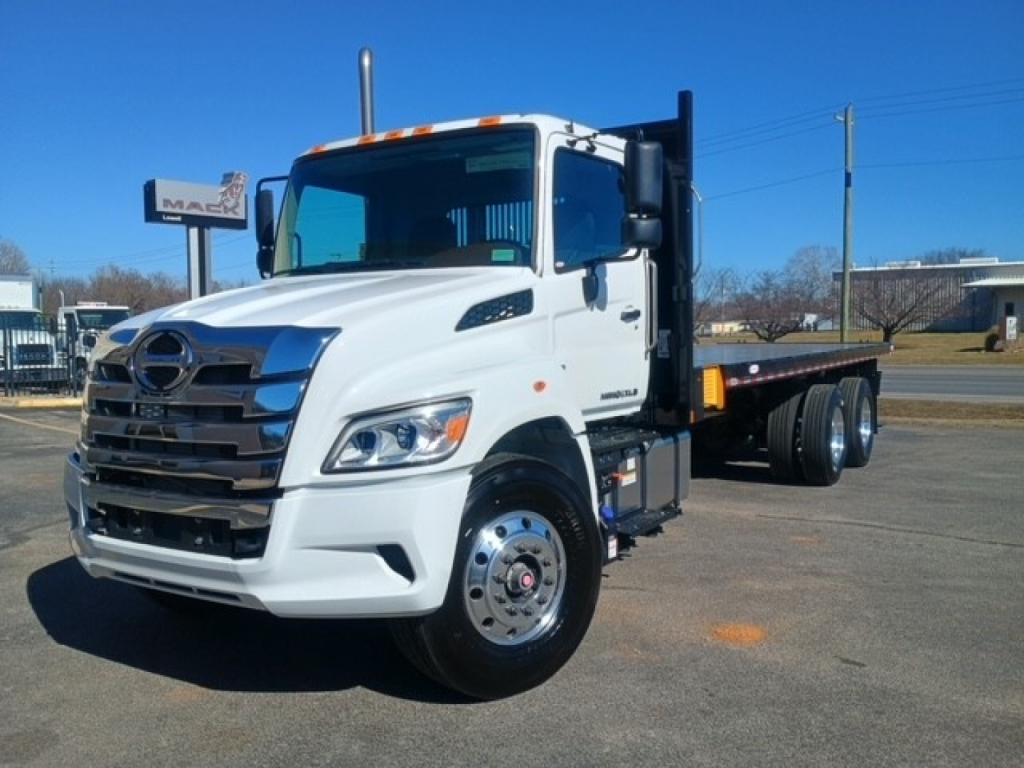
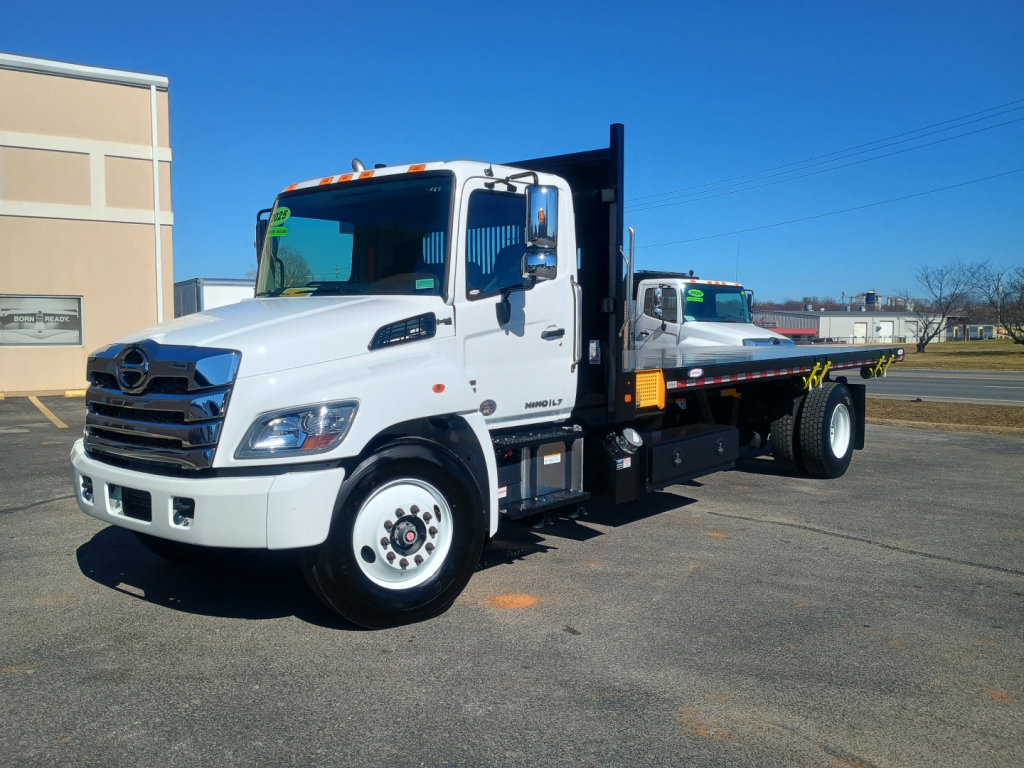
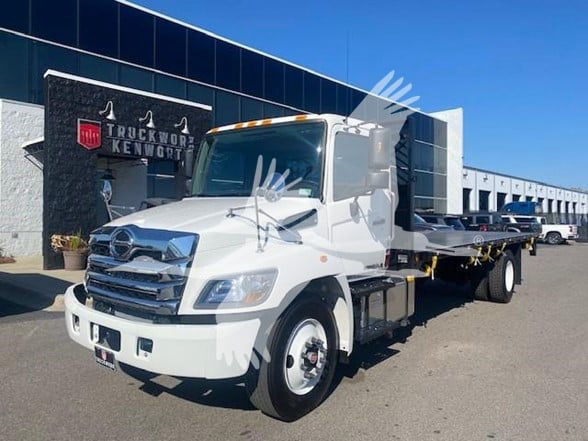
Shop new Hino flatbed trucks built for delivery, building materials, equipment hauling, and vocational upfit flexibility.
Learn more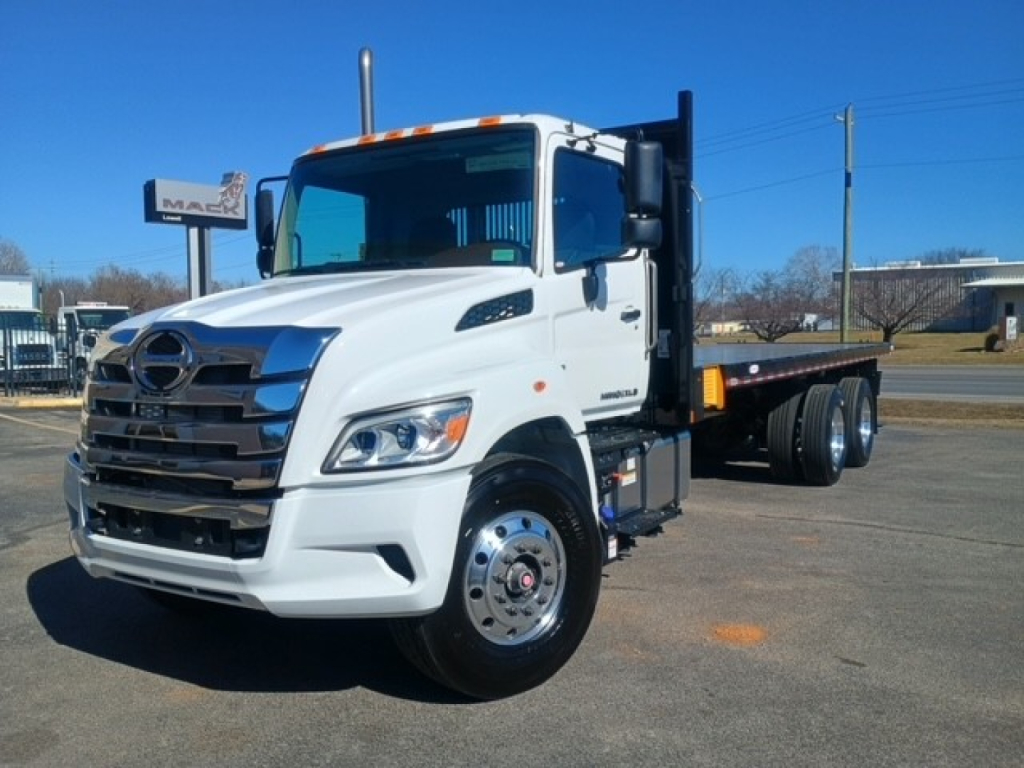
Have new hino flatbed truck to sell? List it here to reach thousands of buyers.
About New Hino Flatbed Trucks
The first decision is usually capacity. Single-axle Hino flatbed trucks such as L6 or L7 configurations are common for lighter payloads, tighter routes, and easier maneuvering in urban delivery work. Tandem-axle XL models move the discussion into heavier applications, including brick, lumber, steel, jobsite equipment, and truck-mounted forklift support. GVWR, front axle rating, rear axle rating, and suspension type matter more than advertised deck length when you are matching a truck to dense freight. Spring suspension is simple and durable for many vocational uses, while air ride can improve ride quality and help protect fragile or high-value loads.
Powertrain choices on new Hino flatbeds often center on Cummins B6.7 or L9 diesel engines paired with Allison automatic transmissions such as the 3000 RDS or 3500 RDS. That combination is popular because it is familiar to fleet maintenance departments, works well in stop-and-go service, and supports PTO-driven equipment when the body calls for it. Buyers should pay close attention to horsepower, rear ratio, wheelbase, and brake configuration because those specs directly affect startability, cruising speed, body fit, and overall drivability. A shorter wheelbase can improve turning radius, while a longer wheelbase may be needed for a 24-foot class body, underbody boxes, or a forklift mounting kit.
Body details can make one Hino flatbed much more useful than another. Common options include wood or steel decking, bulkheads, stake pockets, rub rails, tie-down points, tarping provisions, toolboxes, and Moffett or Princeton forklift kits. Some vocational variations add a tilt deck or lumber dump function, which changes how the truck loads and unloads and may shift the ideal axle and suspension choice. For buyers comparing listings, the practical questions are straightforward: what does the truck need to carry, how often will it load by forklift from the side, does it need to back into tight jobsites, and is the payload bulky or dense. Those answers will usually point you toward the right Hino flatbed chassis, axle setup, and body package faster than model year alone.
Frequently Asked Questions
What is the difference between a Hino L Series flatbed and a Hino XL Series flatbed?
Hino L Series flatbed trucks are typically chosen for medium-duty work with single-axle configurations, lower GVWRs, and better maneuverability for city and regional delivery. Hino XL Series flatbeds are generally aimed at heavier vocational applications and can be configured with tandem axles, higher axle ratings, and more robust suspension options. If the job involves denser payloads, larger bodies, or truck-mounted forklift support, the XL platform is usually the stronger fit.
What body length is common on a new Hino flatbed truck?
Many new Hino flatbed trucks in this class are equipped with bodies around 22 to 24.5 feet, but the usable body length depends on wheelbase, axle placement, and upfit design. A longer deck is not always better if the load is heavy and concentrated, because axle loading can become the limiting factor before deck space does. Buyers should match body length to load dimensions, loading method, and state bridge and weight requirements.
Are Allison automatic transmissions a good choice for flatbed work?
Allison automatic transmissions are widely used in flatbed applications because they perform well in stop-and-go routes, reduce driver fatigue, and offer predictable operation when backing, docking, or maneuvering on jobsites. They are also common in vocational fleets, which helps with service familiarity and parts support. If the truck will run PTO-powered equipment or frequent low-speed delivery cycles, an Allison automatic is often a practical choice.
What should I look for in a flatbed truck if I plan to carry a forklift on the back?
A rear-mounted forklift setup adds weight behind the rear axle, so rear axle rating, frame strength, body design, and wheelbase become critical. The truck should have a properly designed forklift kit, and the added weight must be considered along with the payload on the deck. Buyers should confirm that the chassis and body are rated for the combined operating load, not just the freight alone.
Is spring suspension or air ride better on a Hino flatbed truck?
Spring suspension is common on flatbed trucks because it is durable, straightforward, and well suited for rough vocational use. Air ride can offer a smoother ride, improved load protection, and better handling for certain applications, especially when the truck carries higher-value materials or runs longer regional routes. The right choice depends on load sensitivity, route conditions, maintenance preference, and total operating weight.