
Freightliner Dump Trucks For Sale in New York
Browse Freightliner dump trucks for sale in New York. Compare M2 and vocational specs, GVWR, axle setups, bodies, PTO hydraulics, and plow prep.
Learn more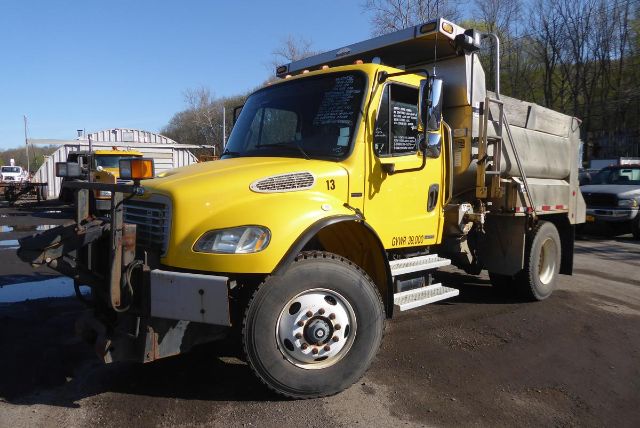
Have freightliner dump truck to sell? List it here to reach thousands of buyers.
About Freightliner Dump Trucks in New York
On this category, the key buying decisions are body setup, hydraulic system, and weight ratings. Many Freightliner dump trucks are equipped with PTO-driven hydraulics for the hoist, and some also include wetline provisions for plows, spreaders, or other seasonal equipment. In New York, that matters. A truck with a working PTO, electric-over-hydraulic controls, and a body suited for salt, sand, or asphalt can cover multiple revenue streams across the year. Stainless dump bodies, air-operated tailgates, tarp systems, and multi-stage hoists are all common vocational features worth checking closely, especially if corrosion resistance and winter use are part of the plan.
Powertrain and gearing should match the job, not just the price. Freightliner dump trucks are commonly spec'd with medium-duty and heavy-duty diesel engines paired to Allison automatic transmissions or manual gearboxes, depending on the intended route and driver preference. Lower rear axle ratios can help with startability and low-speed work in urban or off-road environments, while suspension type, front axle rating, and rear axle capacity determine how well the truck will handle a loaded body, plow gear, or severe-service duty cycle. Wheelbase and cab-to-axle dimensions also matter because they affect body length, turning radius, and bridge-law practicality.
Condition matters more on a dump truck than it does on many highway tractors because these trucks live with body stress, hydraulic wear, and corrosive material exposure. Inspect frame condition, hoist operation, floor and sidewall thickness, hinge points, crossmembers, tailgate seals, and PTO engagement under load. On Freightliner models, buyers also tend to pay attention to brake type, suspension wear, steering play, and cab rust, especially on Northeast trucks. A well-matched Freightliner dump truck can be a productive vocational asset, but the right one is the truck whose axle ratings, body dimensions, hydraulic spec, and local operating fit all line up with the work.
Frequently Asked Questions
What is the best Freightliner dump truck configuration for municipal and snow work in New York?
For many New York municipal applications, a single-axle Freightliner dump truck with PTO hydraulics, plow prep, and spreader capability is a practical setup. It offers better maneuverability on tighter streets and often lower operating costs than a tandem. Buyers should confirm front axle capacity for plow weight, rear axle rating for material loads, and whether the hydraulic system is already configured for dump, plow, and spreader functions.
Are Freightliner M2 dump trucks good for construction use?
Yes, Freightliner M2 dump trucks are widely used in construction, landscaping, and municipal fleets because they balance vocational capability with straightforward serviceability. The M2 platform is commonly spec'd with automatic transmissions, medium-duty diesel engines, and body lengths suited for local hauling. The right fit depends on payload target, axle setup, suspension, and whether the truck will stay on paved roads or spend time on rough jobsites.
What should I inspect first on a used Freightliner dump truck?
Start with the dump body, hoist, PTO system, frame, and corrosion condition. A dump truck can look acceptable in photos and still have expensive wear in the body floor, tailgate hardware, cylinder mounts, or crossmembers. After that, check axle ratings, suspension condition, brake wear, steering components, tire match, and transmission operation. On trucks used for winter service, rust and hydraulic condition deserve extra attention.
Is an automatic transmission a good choice in a Freightliner dump truck?
An automatic transmission is a strong choice for many dump truck applications, especially stop-and-go municipal routes, snow work, and fleets with multiple drivers. Allison automatics are common because they simplify low-speed operation, reduce driver fatigue, and work well with PTO-driven vocational equipment. A manual transmission may still appeal in certain heavier-duty or off-road applications, but many buyers prefer automatics for local vocational use.
How do axle ratings and GVWR affect a Freightliner dump truck purchase?
Axle ratings and GVWR determine the truck's legal and practical working capacity. A dump truck buyer should look beyond advertised body size and confirm front axle rating, rear axle rating, suspension capacity, and overall GVWR because these figures control payload potential and equipment compatibility. They also matter for plow installations, spreader use, and compliance with local road and bridge limits.