
Cross Country Trailers For Sale
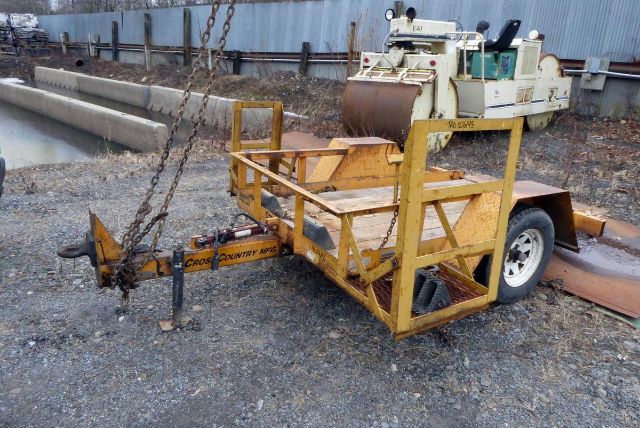
Cross Country trailers include utility and tag-style models with steel construction, tilt decks, electric brakes, and light-duty hauling capacity.
Learn moreBrowse Cross Country Trailers by Category
Have cross country trailer to sell? List it here to reach thousands of buyers.
About Cross Country Trailers
The first decision point is usually deck configuration and loading method. Many Cross Country tag trailers use a mechanical tilt deck, which can simplify loading wheeled equipment without relying on separate ramps. That matters if the trailer will be used frequently for lawn and landscape equipment, small construction tools, or recreational machines. Pay attention to usable deck length, deck width between fenders if applicable, deck height, and actual payload after trailer empty weight is subtracted from GVWR. On older trailers, tilt pivots, latches, hinge points, and deck condition deserve a close inspection because those wear items directly affect loading safety and ease of use.
Running gear and brake condition are just as important as listed capacity. In this category, common specs include spring ride suspension, ST trailer tires, light-duty wheels, electric brakes, and ball-hitch couplers. A buyer should verify axle rating, tire date codes, brake function, wiring condition, hub service history, and whether the trailer tracks straight under load. With used light-duty trailers, non-working electric brakes, aging wood floors, surface rust, and deferred lighting repairs are not unusual, so condition can matter more than model year. Steel construction is durable and repairable, but it should be checked carefully for corrosion at crossmembers, tongue junctions, fender mounts, and rear loading areas.
Cross Country trailers appeal to buyers who need a straightforward tow-behind platform rather than a specialized over-the-road trailer. They are best matched to half-ton and light-duty pickup applications when capacities, hitch class, and brake controller requirements are respected. A good unit in this category should be easy to hook up, stable at road speed, and properly sized for the cargo it will carry most often. The right choice comes down to payload, deck usability, brake performance, and overall structural condition more than cosmetics.
Frequently Asked Questions
What are Cross Country trailers typically used for?
Cross Country trailers in this segment are typically used for hauling small equipment, lawn and landscape machines, ATVs, compact tractors, building materials, and general utility loads. Many are light-duty tag trailers built for local or regional use rather than high-mileage commercial freight work. Their value is in simple operation, lighter empty weight, and practical deck layouts for everyday hauling.
What should I inspect first on a used Cross Country tag trailer?
Start with the frame, tongue, coupler, axle, suspension, brakes, tires, and deck structure. On older light-duty trailers, buyers should look closely for rust at structural connection points, worn spring components, cracked wiring, inoperative lights, weak brake response, and soft or damaged wood flooring. If the trailer has a tilt deck, inspect the pivot, latch, and deck balance because those parts affect safe loading and unloading.
Is a single-axle Cross Country trailer enough for equipment hauling?
A single-axle trailer can be enough if the equipment and cargo stay well within the trailer's GVWR and payload rating. It is commonly a good match for lighter zero-turn mowers, small ATVs, compact jobsite tools, and low-weight utility loads. If the cargo is near the upper end of the trailer's rating on a regular basis, or if better road stability is needed, many buyers move up to a tandem-axle trailer.
Do mechanical tilt trailers have advantages over ramp trailers?
Yes. A mechanical tilt trailer can speed up loading and reduce the need to handle loose ramps. That makes it useful for frequent loading of wheeled equipment such as mowers and small machines. The tradeoff is that the tilt system itself becomes a key wear point, so hinge condition, latch security, and deck movement should be checked carefully on any used trailer.
How important are trailer brakes on this type of trailer?
Trailer brakes are very important, even on lighter tag trailers, because they improve stopping control and overall towing safety. Electric brakes should be tested for proper engagement, even wear, and clean wiring connections. Buyers also need to confirm that the tow vehicle has the correct brake controller setup and towing capacity for the trailer's GVWR and intended payload.