
Used Freightliner Conventional Sleeper Trucks For Sale in Missouri
Shop used Freightliner conventional sleeper trucks in Missouri, including Cascadia models with DD15 power, sleeper cabs, and highway-ready specs.
Learn more
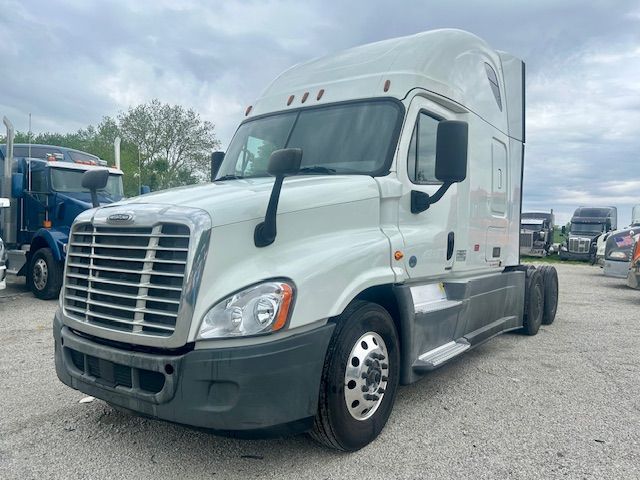
Have used freightliner conventional sleeper truck to sell? List it here to reach thousands of buyers.
About Used Freightliner Conventional Sleeper Trucks in Missouri
Most used Freightliner sleeper trucks on the market are Cascadia 125 models with Detroit DD13 or DD15 engines, and the DD15 is one of the most common choices for over-the-road work. Horsepower ratings often fall in the 400 to 505 HP range, paired with manual, automated manual, or DT12 automated transmissions. A 10-speed manual still appeals to some fleets for simplicity and driver preference, while the DT12 is popular for fuel economy, shift consistency, and reduced driver fatigue. You will also see common highway specs such as 230-inch wheelbases, aerodynamic fairings, tandem rear axles, and rear axle ratios like 2.85, 3.08, or 3.25 depending on the intended cruise speed and load profile.
Sleeper size matters more than many buyers expect. Freightliner conventional sleepers are commonly configured with mid-roof or raised-roof cabs and sleepers in the 60-inch to 72-inch range, though larger condo-style layouts exist. A regional operation may be satisfied with a shorter sleeper and lighter tare weight, while a true over-the-road application usually benefits from more cabinet space, bunk comfort, and room for hotel loads. Buyers should also pay attention to interior wear, idle hours, bunk HVAC operation, and the condition of emissions components, since used sleeper trucks often spend significant time running in all weather conditions.
When evaluating a used Freightliner conventional sleeper, look beyond the badge and focus on operating history. Mileage is important, but maintenance records, fault codes, clutch life, aftertreatment service, and tire and brake condition often tell a more accurate story about remaining value. Freightliner sleeper trucks hold their appeal because they are practical, efficient, and easy to put back to work in general freight, refrigerated, dry van, and dedicated lane service. For many buyers in Missouri, a used Freightliner sleeper is a straightforward way to add a proven road tractor with broad service support and familiar driver acceptance.
Frequently Asked Questions
What engine is most common in used Freightliner conventional sleeper trucks?
The Detroit DD15 is one of the most common engines found in used Freightliner conventional sleeper trucks, especially in Cascadia 125 models built for over-the-road service. It is popular because it balances fuel economy, horsepower, and parts availability, and it is widely supported across dealer and independent service networks. Buyers will also encounter DD13 engines in some lighter or efficiency-focused specs, but the DD15 is typically the benchmark for linehaul work.
Is a DT12 automatic better than a 10-speed manual in a used Freightliner sleeper?
It depends on the operation and driver pool, but many fleets prefer the DT12 automated manual because it improves shift consistency, helps fuel economy, and reduces driver fatigue in long-haul service. A 10-speed manual can still be a strong choice for buyers who want a simpler setup or have drivers who prefer full manual control. On a used truck, the better option is often the one with the stronger maintenance history, smoother operation, and fewer signs of clutch or driveline abuse.
What sleeper size is best for a Freightliner conventional sleeper truck?
The right sleeper size depends on route length, driver schedule, and payload priorities. A shorter sleeper can work well for regional freight where the driver is not spending extended time on the road, while a 60-inch to 72-inch sleeper is common for over-the-road operations that need more storage and better living space. Larger sleepers add comfort, but they can also add weight and affect maneuverability depending on wheelbase and overall tractor spec.
What should I check first on a used Freightliner Cascadia sleeper?
Start with the engine and aftertreatment service history, transmission performance, fault codes, mileage, and idle hours. Then inspect tires, brakes, suspension, bunk HVAC, and signs of interior wear that may indicate heavy use. On Freightliner sleepers, it is also smart to review any emissions repairs, check for consistent preventive maintenance, and confirm that the truck's axle ratio and wheelbase fit the trailer lengths and speeds you plan to run.
Why are used Freightliner sleeper trucks so common in Missouri?
Freightliner sleeper trucks are common in Missouri because the state sits on major freight corridors and supports a high volume of regional and long-haul traffic. Carriers want tractors that are efficient on the highway, easy to service, and accepted by a wide driver base, and Freightliner fits that profile well. Strong dealer presence, broad parts support, and the popularity of the Cascadia platform also help keep used Freightliner sleepers active in the Missouri market.