
Ford Pickup 4wd Trucks For Sale in Vermont
Browse Ford 4WD pickup trucks for sale in Vermont. Compare Super Duty and light-duty models for plowing, towing, farm, and jobsite use.
Learn more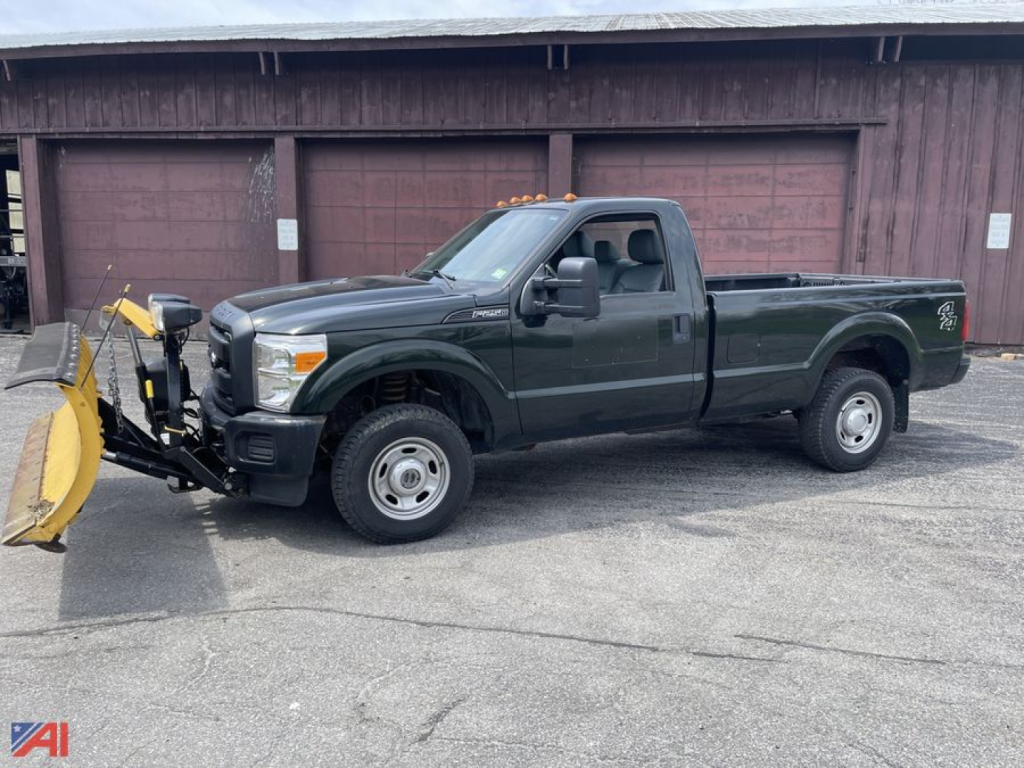
Have ford pickup 4wd truck to sell? List it here to reach thousands of buyers.
About Ford Pickup 4wd Trucks in Vermont
Super Duty Ford pickups are commonly chosen for heavier trailer loads, contractor bodies, salt spreaders, and front plows. They are also known as 4x4 pickup trucks or four-wheel-drive pickups, but the real buying decision usually comes down to payload and front axle capacity. An F-250 may be enough for general equipment hauling and municipal-style snow work, while an F-350 gives more margin for payload, hitch weight, and upfit flexibility. Engine choice matters too. Gas trucks can make sense for lower annual mileage and simpler maintenance, while diesel-equipped trucks are often preferred for frequent towing, higher torque demand, and highway pulling efficiency.
In Vermont, rust and corrosion should be part of every evaluation. Check cab corners, rocker panels, bed supports, brake lines, fuel and transmission lines, spring hangers, and plow mount areas. Buyers should also verify transfer case engagement, 4WD actuator function, hub condition where applicable, and evidence of uneven tire wear that can point to front-end issues. If the truck is intended for towing, confirm receiver rating, brake controller setup, trailer wiring, and the truck's GVWR and GCWR. On higher-mileage units, service history on transmissions, cooling systems, and diesel emissions components can affect long-term operating cost.
A good Ford 4WD pickup should match the work cycle instead of simply offering the biggest badge. Regular plowing, forestry access roads, farm use, and equipment towing all place different demands on suspension, tires, wheelbase, and powertrain. Short beds and extended cabs can be easier in tight towns and job sites, while crew cab long-bed trucks provide better space and load support for crews and tools. The strongest value usually comes from a truck with the right axle, clean drivetrain engagement, solid undercarriage condition, and a configuration that fits both winter duty and year-round hauling.
Frequently Asked Questions
What Ford 4WD pickup is best for plowing and winter work in Vermont?
For regular plowing and heavier winter duty, many buyers look at Ford Super Duty models such as the F-250 or F-350 because they offer stronger front-end components, higher axle capacities, and better support for plow mounts and related electrical loads. The right choice depends on plow size, ballast needs, and whether the truck will also tow or carry spreader weight. A half-ton can handle lighter work, but repeated commercial snow service usually favors a Super Duty chassis.
What should I inspect on a used Ford 4x4 pickup from a rust-belt state?
Rust inspection should go beyond cosmetic panels. Look at rocker panels, cab corners, bed crossmembers, brake and fuel lines, frame sections, leaf spring hangers, shock mounts, and plow attachment points if equipped. On a 4WD truck, also inspect front suspension parts, steering linkage, locking hubs or hub assemblies, transfer case operation, and front differential seals. Corrosion in these areas can turn an otherwise capable truck into a high-repair unit.
Is a gas or diesel Ford 4WD pickup better for towing?
Diesel Ford pickups are generally better for frequent heavy towing because they deliver strong low-end torque and often feel more relaxed under load at highway speed. Gas engines can still be the better value for buyers with lower annual mileage, lighter trailers, or shorter trip cycles because purchase price and maintenance complexity are usually lower. The decision should be based on trailer weight, trip frequency, idle time, and expected repair budget rather than engine preference alone.
How important are axle ratio and cab-bed configuration on a Ford 4WD pickup?
Axle ratio affects launch performance, towing behavior, and highway rpm, so it has a direct impact on how the truck feels with a trailer or plow attached. Cab and bed setup also matter because wheelbase influences turning radius, ride quality, payload distribution, and usable cargo space. A crew cab long bed may suit contractors or farm use, while a shorter wheelbase truck can be easier to maneuver in tight driveways, town streets, and snow-covered job sites.