
Volvo Dump Trucks For Sale in Montana
Shop Volvo dump trucks for sale in Montana. Compare VHD specs, axle ratings, dump bodies, PTO setups, and vocational features for hauling.
Learn more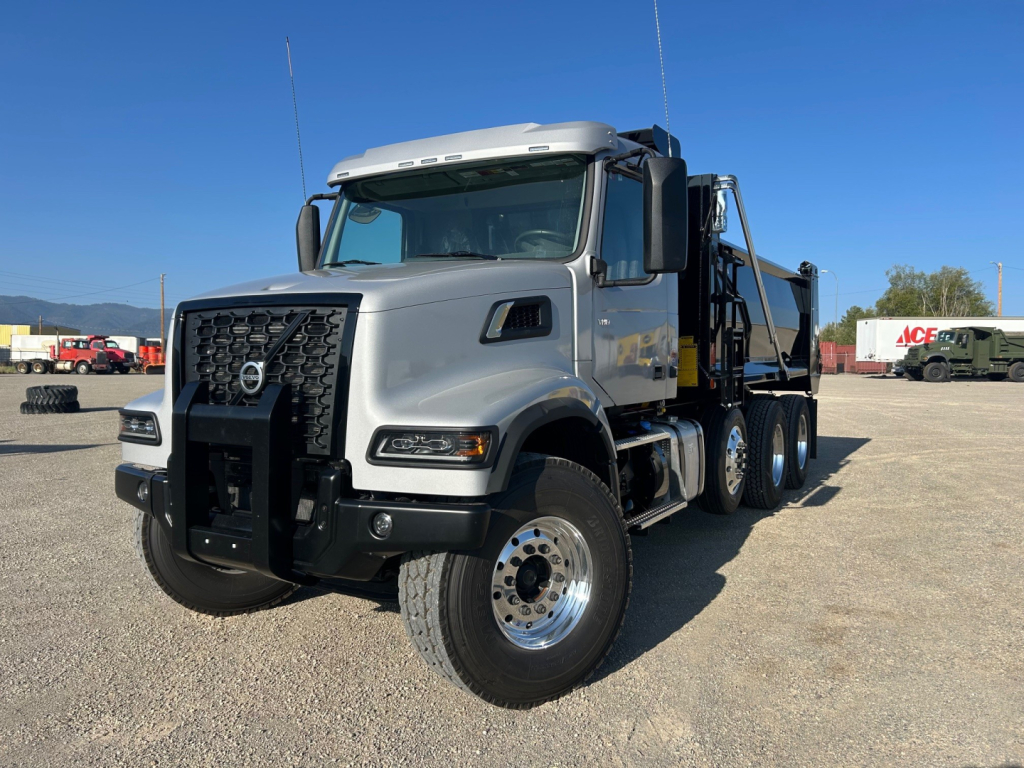
Have volvo dump truck to sell? List it here to reach thousands of buyers.
About Volvo Dump Trucks in Montana
A typical Volvo dump truck in this class is spec’d with the Volvo D13 engine, vocational horsepower ratings, and either a manual, automated manual, or Volvo I-Shift transmission depending on the job cycle. The I-Shift is especially popular for fleets that want easier driver training, smoother shifting under load, and reduced clutch wear in stop-and-go hauling. Front axle ratings around 20,000 pounds and rear axle ratings in the 40,000 to 46,000 pound range are common on tandem and tri-axle setups, with quad axle configurations used when payload laws and application demand more capacity. Buyers should pay close attention to wheelbase, rear ratio, locking differentials, and suspension type. Those specs affect turning radius, startability on loose surfaces, highway cruising, and how the truck transfers weight under a loaded body.
The body spec matters as much as the chassis. Steel dump bodies from builders such as Beau-Roc are common for rock, demolition, and abrasive material, while body length, side height, floor thickness, tailgate style, hoist configuration, and tarp system should match the material being hauled. High-lift tailgates, internal cylinders, and electric tarp systems are frequently chosen for faster cycles and cleaner load control. If the truck will spend time on county roads, gravel pits, or construction entrances, buyers should also look at tire spec, brake type, frame reinforcement, fender coverage, and protection items like grille guards. In colder climates, heated bodies, hydraulic line routing, and easy service access can make a real difference in uptime.
A well-spec’d Volvo dump truck is usually chosen for a mix of payload capability, cab ergonomics, and powertrain efficiency. The Volvo cab is known for a comfortable driving position and good outward visibility, which matters on crowded jobsites and in backing situations. For buyers comparing multiple listings, the most important questions are usually practical ones: what material is the truck built to haul, how often will it run off-road, what axle configuration supports the target payload, and whether the PTO and hydraulic setup match the installed dump body. Answer those correctly, and a Volvo dump truck can be a strong fit for gravel hauling, municipal work, road building, excavation, and general construction service.
Frequently Asked Questions
What makes a Volvo dump truck a good choice for vocational hauling?
Volvo dump trucks are widely chosen for vocational work because the chassis, powertrain, and cab are designed to handle repeated loading cycles, jobsite operation, and highway travel in the same truck. The VHD series in particular is built for severe-service applications and is commonly spec’d with heavy front axles, high-capacity rears, locking differentials, PTO provisions, and dump body compatibility. Buyers also value the driver visibility, ergonomic cab layout, and the availability of the Volvo I-Shift for easier operation in stop-and-go hauling.
What axle configuration should I look for in a Volvo dump truck?
The right axle setup depends on payload target, bridge laws, and the type of work the truck will do. Tandem axle dump trucks are common for general construction and shorter body configurations. Tri-axle and quad axle trucks are often selected when legal payload capacity is a priority or when the truck will haul dense materials such as gravel, rock, or asphalt. Front axle rating, rear axle rating, pusher or tag axle configuration, and suspension design all matter because they affect legal carrying capacity, maneuverability, and durability on rough terrain.
Is the Volvo I-Shift a good transmission for a dump truck?
Yes, the Volvo I-Shift is a strong option for many dump truck applications, especially where the truck sees frequent starts, traffic, changing grades, and multiple drivers. It can improve shift consistency, reduce driver fatigue, and limit clutch-related wear compared with a traditional manual. For vocational work, buyers should confirm the transmission programming, PTO compatibility, low-speed maneuverability, and whether the truck is spec’d for the terrain and load profile it will actually see.
What dump body features are most important on a Volvo dump truck?
Body construction and hoist setup should match the material being hauled. Buyers hauling abrasive aggregates or demolition debris often prioritize steel construction, thicker floors, and durable sidewall design. Body length, side height, tailgate style, cylinder placement, tarp system, and liner options all affect load retention, unload speed, and maintenance costs. A truck hauling asphalt or wet material may need different body and hydraulic considerations than one hauling sand, base, or shot rock.
What should buyers in Montana pay attention to when shopping Volvo dump trucks?
Montana buyers should look closely at gearing, traction equipment, axle locks, and body configuration because trucks may cover long paved distances and still need to perform on gravel roads, steep grades, and soft jobsite surfaces. Cooling performance, cold-weather starting, service access, and corrosion resistance also matter in a climate with winter exposure and temperature swings. A dump truck that is well-matched to regional terrain and haul distance will usually be more productive than one selected on horsepower alone.