
Kenworth Dump Trucks For Sale in Pennsylvania
Shop Kenworth dump trucks for sale in Pennsylvania. Compare T880 specs, axle setups, body options, powertrains, and vocational features.
Learn more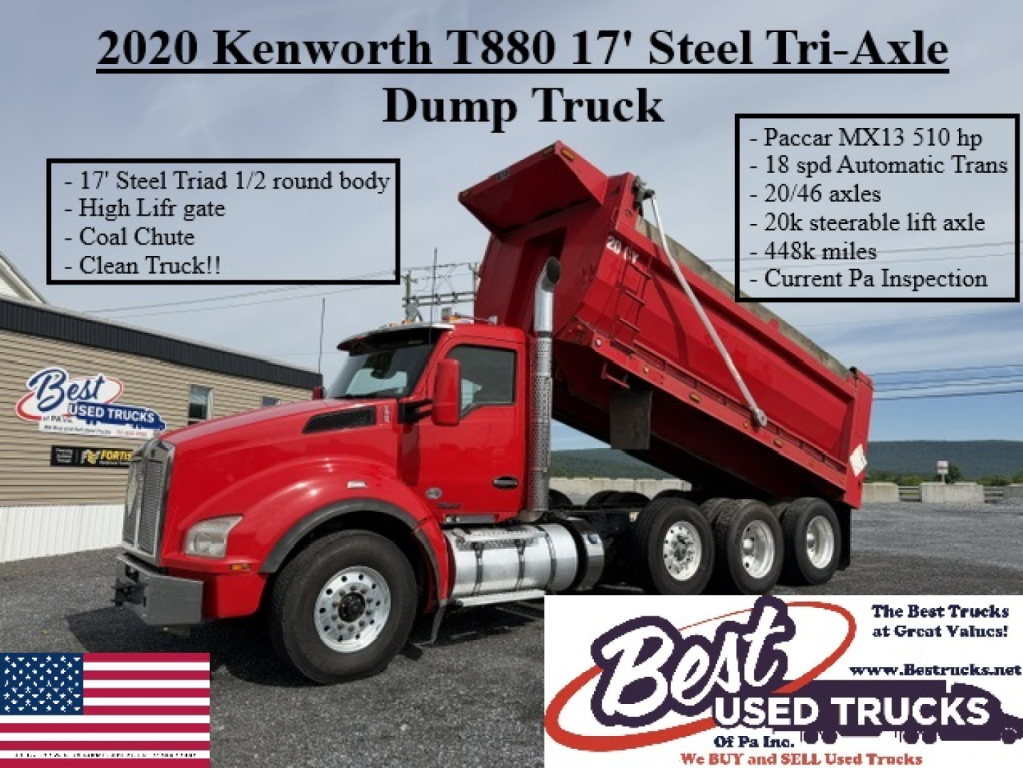
Have kenworth dump truck to sell? List it here to reach thousands of buyers.
About Kenworth Dump Trucks in Pennsylvania
Frequently Asked Questions
What makes a Kenworth dump truck a good fit for Pennsylvania hauling?
Kenworth dump trucks are well suited to Pennsylvania work because they are commonly spec'd for heavy vocational use, including quarry hauling, asphalt work, construction sites, and municipal routes. Buyers in this market usually need a truck that can handle changing road conditions, hilly terrain, and strict bridge and axle weight requirements. A properly spec'd Kenworth with the right wheelbase, axle spacing, lift axle arrangement, and body configuration can support legal payloads while still staying maneuverable on tighter job sites and plant entrances.
Which Kenworth model is most common in dump truck applications?
The Kenworth T880 is one of the most common models in dump truck service because it was designed for vocational applications and can be configured for straight dump, tri-axle, quad-axle, and tractor work. It is known for a strong hood structure, good visibility, and a cab that can be outfitted for severe-duty use. Older Kenworth dump trucks may also appear in W900, T800, and other vocational configurations, but the T880 is typically the benchmark model buyers compare when shopping later-model Kenworth dumps.
What specs matter most when comparing used Kenworth dump trucks?
The most important specs are axle ratings, wheelbase, frame strength, suspension, engine rating, transmission type, dump body construction, and hoist setup. Buyers should also verify body length, side height, tailgate style, liner condition, tarp system, PTO operation, and whether the truck has a steerable or fixed lift axle. For regional hauling, tire size, bridge spacing, and body material also matter because they directly affect legal payload, empty weight, and operating cost. A truck that looks similar on paper can perform very differently depending on how it was originally spec'd.
Is an automatic transmission a good choice in a Kenworth dump truck?
An automatic or automated manual can be a strong choice in a dump truck if the truck operates in traffic, makes frequent stops, or is driven by multiple operators. Automated manuals are common in later-model vocational trucks because they reduce driver fatigue and can improve consistency in stop-and-go work. The tradeoff is that some fleets and owner-operators still prefer a manual for certain off-road conditions or for driver familiarity. The best choice depends on route profile, driver experience, maintenance support, and how much time the truck spends on-road versus in soft or uneven job site conditions.
What dump body features should a buyer check on a Kenworth dump truck?
Body condition is just as important as the chassis. Buyers should inspect floor thickness, sidewall condition, crossmember integrity, hoist performance, hinge wear, and tailgate function. Common vocational features include half-round or square bodies, high-lift gates, air-operated swing gates, coal chutes, tarpers, and body liners. Steel bodies are common for demolition, rock, and abrasive material, while lighter body designs can help maximize payload in aggregate or asphalt service. The right body depends on the material hauled and how much priority is placed on durability versus empty weight.