
Mack Conventional Sleeper Trucks For Sale in New Mexico
Explore Mack conventional sleeper trucks with specs, cab options, powertrain details, and long-haul features built for efficiency and uptime.
Learn more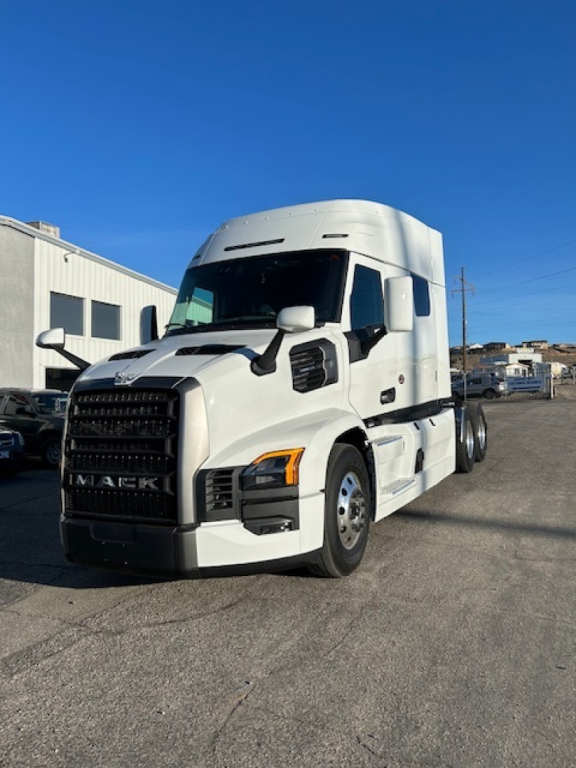
Have mack conventional sleeper truck to sell? List it here to reach thousands of buyers.
About Mack Conventional Sleeper Trucks in New Mexico
A typical Mack conventional sleeper tractor in this class is spec'd with a high-horsepower diesel such as the MP series, paired with an automated manual transmission like the mDrive. Common ratings often fall in the 415 to 505 horsepower range, with torque aimed at pulling van, reefer, flatbed, or tanker freight efficiently at highway speed. Tandem rear axles, air ride suspension, and ratios chosen for fuel economy are common in linehaul specs, while heavier vocational crossover setups may lean toward different axle capacities and gearing. Buyers should pay close attention to wheelbase, front axle capacity, rear suspension rating, and GCWR, especially if the truck will be matched to heavier trailers or operate in mountain territory across New Mexico and the Southwest.
The sleeper itself is a major buying point. Mack conventional sleepers are designed around long days in the cab, so layout, bunk size, storage, insulation, and idle-management strategy deserve a close look. Newer trucks may include battery-based climate systems, improved electrical architecture, and driver-assist features such as adaptive cruise control, active braking, and blind spot coverage. Aerodynamic improvements, downsped drivetrains, and integrated engine-transmission calibration can make a real difference in fuel burn over long runs. If the truck will stay on interstate lanes, a lower rear ratio and overdrive transmission may be the right fit. If it will spend time on grades, in oilfield support, or with heavier gross weights, a buyer may want more aggressive gearing and a higher torque spec.
For Mack sleeper truck buyers, the best value usually comes from matching the truck's spec to the freight instead of chasing the highest horsepower number. A well-matched conventional sleeper should provide enough cab room for the route length, enough axle and suspension capacity for the load profile, and a powertrain tuned for the terrain it will actually see. Look closely at service history, emissions system maintenance, sleeper equipment operation, and software or safety package content, because those details affect downtime as much as the engine and transmission do. In a market where many tractors can handle highway miles, Mack conventional sleeper trucks stand out when the priority is a practical long-haul platform with strong structural design, integrated components, and a fleet-friendly maintenance profile.
Frequently Asked Questions
What is a Mack conventional sleeper truck best suited for?
A Mack conventional sleeper truck is best suited for over-the-road freight, regional linehaul, and dedicated routes that require overnight capability. The sleeper berth adds rest space and storage, making it a better fit than a day cab for longer runs. Depending on the spec, these trucks can be used for dry van, reefer, flatbed, tanker, and some heavier specialized applications.
What engine and transmission specs are common in Mack conventional sleeper trucks?
Many Mack conventional sleeper trucks are equipped with Mack MP series diesel engines and an mDrive automated manual transmission. Horsepower commonly falls in the mid-400 range, while torque is often spec'd to support fuel-efficient highway cruising with full loads. Final configuration varies by application, so axle ratio, transmission gearing, and suspension rating should be reviewed together instead of looking at horsepower alone.
What should I look for when comparing Mack sleeper truck listings?
The most important items to compare are sleeper size, wheelbase, axle ratings, rear ratio, transmission model, and engine torque rating. Buyers should also check emissions system history, mileage, idle-management setup, safety technology, and the condition of the bunk HVAC and electrical systems. These details usually have more impact on long-term operating cost than cosmetic differences.
Are Mack conventional sleeper trucks good for fuel economy?
Mack conventional sleeper trucks can be very competitive on fuel economy when they are spec'd correctly for highway service. Aerodynamic packages, integrated engine and transmission controls, downsped drivetrains, and optimized rear axle ratios all contribute to lower fuel consumption. The best results usually come from matching the truck's gearing and horsepower to the actual gross weight and terrain rather than over-spec'ing the powertrain.
How important is axle ratio on a Mack sleeper tractor?
Axle ratio is one of the most important spec decisions on a sleeper tractor because it affects cruise RPM, gradeability, fuel economy, and startability. A lower numerical ratio can help reduce engine speed and save fuel on flat interstate routes, while a higher numerical ratio can improve pulling performance in hills or with heavier freight. For buyers operating in New Mexico or across the Mountain West, axle ratio should be evaluated with terrain, trailer type, and average gross weight in mind.