
International Conventional Daycab Trucks For Sale in Ohio
Shop International conventional daycab trucks in Ohio. Compare LT and other daycab specs, drivetrains, axle ratings, and regional haul features.
Learn more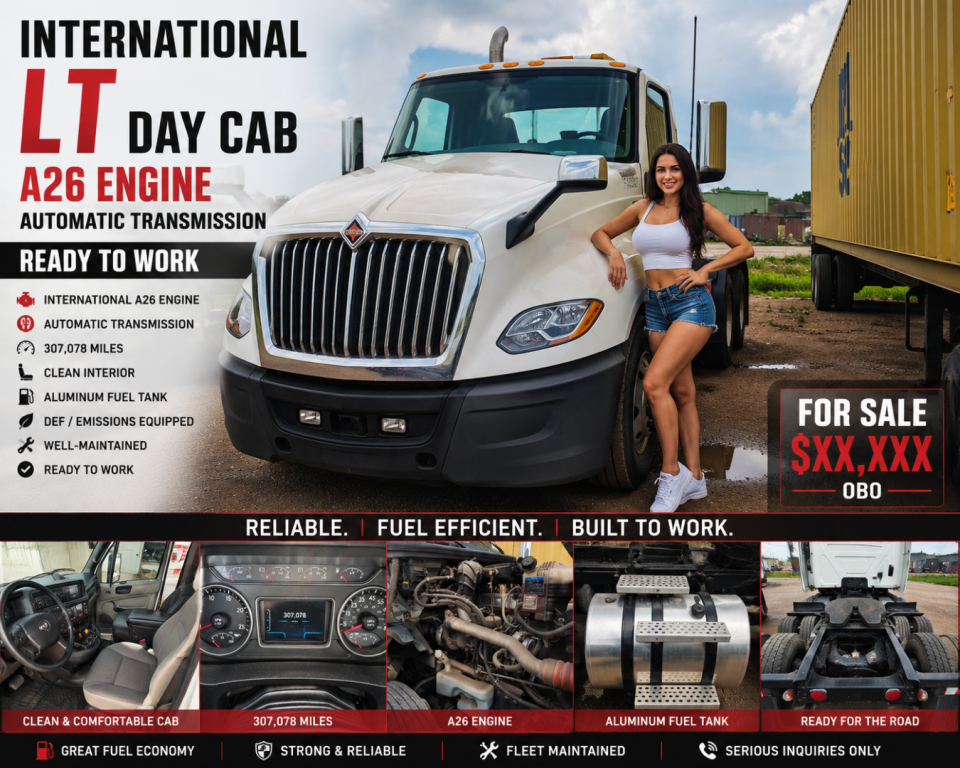
Have international conventional daycab truck to sell? List it here to reach thousands of buyers.
About International Conventional Daycab Trucks in Ohio
On late-model International daycabs, common spec points include the A26 or Cummins X15, paired with automated manual transmissions from Eaton Fuller. Horsepower and torque should be matched to the work. A lighter regional van or reefer operation may do well with a fuel-focused spec, while heavier bulk, tanker, or short-haul work usually benefits from higher torque, aggressive rear axle ratios, and suspension choices that hold up under constant starts, turns, and dock approaches. Buyers should also check front axle and rear axle ratings, fifth wheel height, kingpin setting compatibility, and frame layout if PTO, wet kit, or hydraulic equipment may be added.
Cab configuration matters more on a daycab than many buyers expect. International has put strong emphasis on visibility, driver ergonomics, and easy ingress-egress, which is valuable on multi-stop routes and local work. Look closely at cab suspension, seat spec, HVAC performance, bunk delete factory finish, and control layout if the truck will see long shifts in traffic. If the truck will spend time in northern climates like Ohio, corrosion condition is worth a careful inspection, especially around the frame, crossmembers, battery box, cab mounts, and air tanks. Tire condition, brake wear, emissions service history, and idle hours can tell you as much as the odometer on a regional daycab.
For fleet buyers and owner-operators, International conventional daycabs are often selected for their balance of operating cost, parts support, and straightforward serviceability. The best used spec is the one that fits the lane. A daycab set up for 53-foot dry van work is not automatically the right choice for end dump, container chassis, or tanker service. Pay attention to wheel cut, wheelbase, fuel capacity, fairings, transmission calibration, and any telematics or safety systems already on the truck. When the spec is right, an International daycab can be a productive platform for high-frequency regional freight with lower weight and less complexity than a sleeper tractor.
Frequently Asked Questions
What is an International conventional daycab truck best suited for?
An International conventional daycab truck is best suited for regional and local hauling where a sleeper is not needed. Common applications include dry van, reefer, tanker, container, dedicated route freight, and vocational tractor work. The daycab layout reduces weight, shortens overall tractor length, and improves maneuverability compared with a sleeper, which makes it a strong fit for urban deliveries, terminal-to-terminal runs, and operations where drivers are home daily.
Which International models are common in the daycab category?
The International LT is one of the most common modern conventional daycab platforms. Depending on the application and model year, buyers may also see other International conventional tractors configured as daycabs for regional or vocational use. The model matters, but the actual truck spec matters more. Engine choice, transmission, rear axle ratio, wheelbase, and suspension setup have a greater impact on performance and operating cost than the model name alone.
What specs should I check first on a used International daycab?
Start with engine, transmission, axle ratings, wheelbase, and rear axle ratio because those determine how the truck will pull, turn, and match to your trailer and freight. After that, inspect the emissions system history, brake and tire condition, frame and suspension wear, and any signs of corrosion. Buyers should also verify fifth wheel height, sliding fifth wheel travel, PTO or hydraulic compatibility if needed, and maintenance records for major components such as injectors, turbocharger, aftertreatment parts, and clutch or AMT service.
Is an International daycab a good choice for Ohio freight operations?
Yes, International daycabs are a practical choice for Ohio freight operations because they fit the mix of short regional lanes, warehouse distribution, manufacturing freight, and terminal work common across the state. Buyers in Ohio should pay special attention to cold-weather starting, HVAC function, corrosion exposure from winter road treatment, and gearing that matches mixed highway and stop-and-go use. A properly spec'd daycab can handle interstate runs, city access, and frequent docking efficiently.
How is a daycab different from a sleeper tractor for operating costs?
A daycab typically has lower empty weight, fewer cab components, and less overall complexity than a sleeper tractor. That can improve payload flexibility, simplify maintenance, and reduce purchase cost for the same general class of truck. Fuel economy may also benefit depending on spec and duty cycle. The tradeoff is reduced storage and no sleeping compartment, so a daycab makes the most sense when routes, dispatch patterns, and driver schedules do not require overnight stays.