
International Conventional Daycab Trucks For Sale in Missouri
Shop International conventional daycab trucks for regional haul, local delivery, and vocational use with proven drivetrains and practical spec options.
Learn more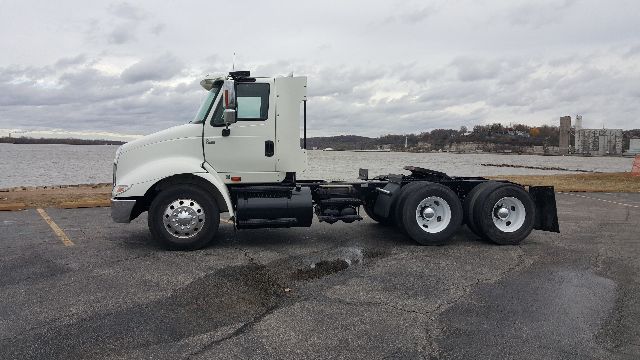
Have international conventional daycab truck to sell? List it here to reach thousands of buyers.
About International Conventional Daycab Trucks in Missouri
International daycabs are commonly found in tandem axle 6x4 and 6x2 configurations, with wheelbases often set to balance trailer swing clearance against dock access and city maneuvering. Typical power choices in this class include International and Cummins diesel engines, frequently paired with Eaton Fuller manual or automated transmissions. Horsepower and gearing should match the job. A shorter-haul regional tractor may be well served by a midrange rating and faster rear ratio for fuel economy, while heavy vocational or bulk hauling work often benefits from more torque, a deeper ratio, double frame construction, and higher rear axle ratings. Suspension type also matters. Air ride is preferred for ride quality and freight protection, while vocational spring setups can make sense for severe-service use.
Cab condition and operating spec matter on a daycab because the driver spends the entire shift in a compact workspace. Look closely at seat condition, HVAC performance, mirror setup, steering feel, dash warning lights, and fifth wheel operation. Fuel capacity is another key decision point. Some daycabs are spec'd with larger dual tanks for regional range, while others keep weight down for short-route efficiency. On used International daycabs, buyers should inspect frame condition, kingpin area wear, suspension components, brake percentages, tire wear patterns, and signs of prior PTO or hydraulic use if the truck came out of vocational service. A clean DOT-ready truck with documented maintenance can be more valuable than a lower-priced unit with deferred repairs.
International has long been a practical choice in the conventional daycab segment because parts support, service familiarity, and straightforward vocational spec'ing are widely available. For buyers comparing listings, the best value usually comes from matching the truck to the lane and trailer, not chasing the highest horsepower number. A regional van or flatbed tractor has different needs than a grain, tanker, or dump transfer setup. The right International daycab should have the axle ratings, gearing, wheelbase, brake configuration, and cab equipment to fit the work without carrying unnecessary cost or complexity.
Frequently Asked Questions
What is an International conventional daycab truck best used for?
An International conventional daycab truck is best suited for local and regional hauling where the driver does not need a sleeper. Common applications include dry van, flatbed, tanker, drayage, farm and feed hauling, dump transfer work, and other dedicated routes that return to base daily. The conventional hood layout gives good service access and a familiar spec platform for fleets and owner-operators.
What specs matter most when buying a used International daycab?
The most important specs are axle configuration, wheelbase, engine and transmission combination, rear axle ratio, suspension type, and fuel capacity. These directly affect maneuverability, payload, gradeability, cruise RPM, and maintenance cost. Buyers should also verify front and rear axle ratings, frame construction, fifth wheel type, brake condition, and tire wear, because those items reveal how well the truck matches the intended trailer and duty cycle.
Is a 6x2 or 6x4 International daycab better?
A 6x4 is generally better for heavier freight, rough weather, mixed terrain, and vocational applications because both rear axles are driven. A 6x2 can reduce weight and sometimes improve fuel economy in regional highway service, but traction is more limited in mud, snow, and uneven surfaces. Missouri buyers running year-round across rural roads or job sites often prefer 6x4 for versatility.
What engine and transmission combinations are common in International daycabs?
Common combinations include International or Cummins diesel engines paired with Eaton Fuller manual transmissions, automated manuals, or some automatic setups depending on the application. Horsepower can range from moderate regional ratings to stronger vocational specs, while transmission choice depends on driver preference, terrain, stop-and-go frequency, and gross combination weight. The best pairing is the one that keeps the engine in the right torque band for the load.
What should I inspect on a used International conventional daycab before purchase?
Inspect the frame rails for cracks, corrosion, and prior repairs, then check suspension wear, brake measurements, tire condition, steering components, and signs of uneven alignment. Confirm engine hours, maintenance records, active fault codes, coolant and oil condition, and clutch or transmission operation. Inside the cab, verify HVAC, gauges, switches, seat base condition, and electrical accessories. A thorough inspection should also include fifth wheel wear, driveline condition, and any evidence of hard vocational service or poor preventive maintenance.