
International Conventional Daycab Trucks For Sale in Florida
Browse International conventional daycab trucks for sale in Florida. Compare specs, wheelbases, engines, axle ratios, and vocational fit.
Learn more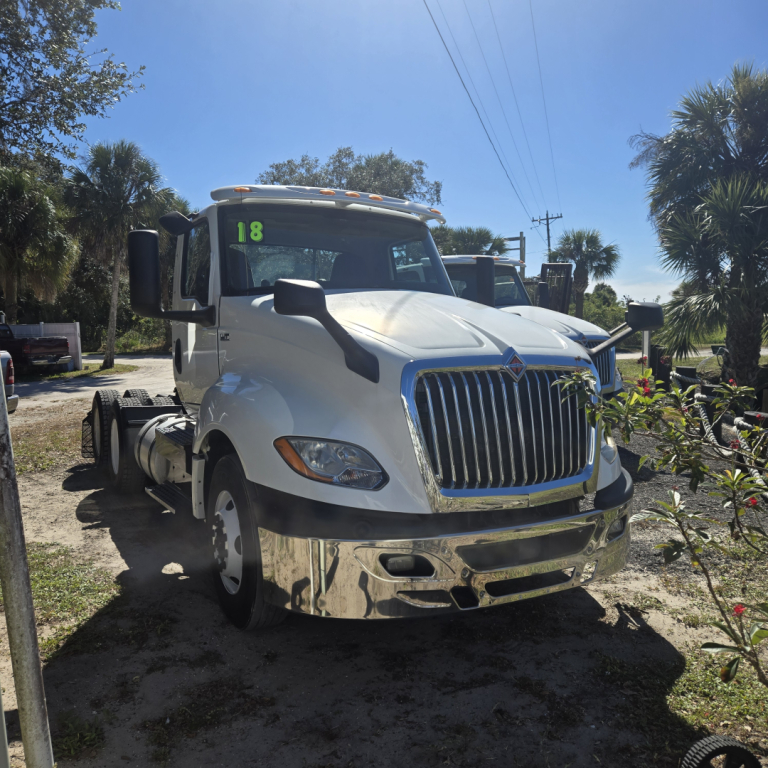
Have international conventional daycab truck to sell? List it here to reach thousands of buyers.
About International Conventional Daycab Trucks in Florida
Within this category, International daycabs are commonly spec'd with heavy-duty diesel engines, manual or automated transmissions, air ride suspension, and tandem rear axles in ratings that support standard highway tractor work. Models such as the International 8600 are typically seen in fleet and linehaul applications with engines in the 350 to 450 horsepower range, 10-speed transmissions, and rear axle ratios selected for a balance of cruise speed and startability. A shorter wheelbase can be a better fit for city and port use, while a longer wheelbase may ride better and leave more room for fuel capacity, deckplate space, and frame-mounted equipment. Air slide fifth wheels are common and give flexibility when matching kingpin settings across different trailers.
Cab layout and driver comfort still matter on a non-sleeper conventional. Look for air conditioning performance, seat condition, steering wheel adjustment, visibility, and switchgear layout, especially on trucks running dense Florida routes where drivers spend full shifts in and out of the cab. Horizontal exhaust, roof fairings, quarter fenders, and aluminum wheels are typical spec details that can reflect intended use and maintenance priorities. Pay attention to tire size, suspension type, and brake configuration as well. Air ride suspensions generally improve ride quality and trailer protection, while the axle rating and ratio tell you more about how the truck was intended to pull.
The best International conventional daycab for a buyer comes down to duty cycle. A highway-oriented daycab pulling van or reefer trailers benefits from a fuel-efficient drivetrain, moderate horsepower, and a fast rear ratio. A heavier local or vocational setup may need more aggressive gearing, higher axle capacity, and a chassis spec suited for repeated starts and variable trailer weights. Service history, engine family, emissions system condition, and signs of fleet maintenance should be reviewed closely on any used International daycab, especially if uptime and compliance are priorities.
Frequently Asked Questions
What is an International conventional daycab truck best used for?
An International conventional daycab is best suited for regional freight, local pickup and delivery, drayage, dedicated route work, and other operations where the driver returns home daily. The conventional hood design provides easier engine access than a cabover, and the daycab configuration reduces weight and length compared with a sleeper tractor. That makes it a practical choice for fleets and owner-operators focused on maneuverability, payload efficiency, and lower complexity.
What specs matter most when buying a used International daycab?
The most important specs are engine rating, transmission type, rear axle ratio, wheelbase, suspension, rear axle capacity, and fifth wheel configuration. Those items determine how the truck starts under load, cruises at highway speed, turns in confined spaces, and matches to the trailers you plan to pull. Buyers should also verify emissions system condition, brake type, tire size, fuel tank capacity, and maintenance records because those details can have a direct effect on operating cost and downtime.
Is a shorter wheelbase better on a conventional daycab?
A shorter wheelbase is usually better for city routes, port service, and operations with tight yards because it improves maneuverability and can simplify trailer spotting. A longer wheelbase can provide a smoother ride, more chassis room for fuel tanks or accessories, and in some cases better weight distribution with certain trailer types. The right choice depends on your trailer lengths, kingpin settings, and the amount of tight-turn work the truck will see.
What horsepower range is common for International conventional daycabs?
Many International conventional daycab tractors are spec'd in the 350 to 450 horsepower range, depending on application. Lower to mid-range horsepower can be enough for regional van and reefer work when paired with the right transmission and axle ratio. Higher horsepower becomes more important when the truck regularly handles heavier gross weights, higher average speeds, or more demanding terrain and stop-and-go duty cycles.
Why does rear axle ratio matter on an International daycab?
Rear axle ratio affects launch performance, cruise rpm, fuel economy, and how the truck feels with different trailer weights. A numerically lower ratio such as 2.47 is generally aimed at highway efficiency and lower engine rpm at speed, while a deeper ratio gives better startability and low-speed pulling power. Buyers should match the ratio to route profile, gross combination weight, transmission gearing, and expected average speed rather than treating it as a standalone number.