
Cab and Chassis Trucks For Sale in Pennsylvania
Browse cab and chassis trucks for sale in Pennsylvania. Compare GVWR, wheelbase, axle setups, engine options, and body-ready specs.

Have cab and chassis truck to sell? List it here to reach thousands of buyers.
Cab and Chassis Trucks in Pennsylvania
In Pennsylvania, application matters because these trucks often work in a mix of highway miles, tight town routes, construction sites, and winter conditions. A shorter wheelbase improves maneuverability for urban delivery or utility work, while a longer wheelbase gives body builders more room for larger boxes, tanks, or hoists. GVWR is one of the first specs to verify, followed by front and rear axle ratings, suspension type, PTO compatibility, and transmission setup. Buyers also look closely at frame condition, rust exposure, and any signs of prior body mounting or frame modification, especially on used units that may have seen municipal or snowbelt service.
Common configurations range from Class 4 and 5 cab and chassis trucks for local delivery up to heavy Class 8 platforms for severe-duty vocational work. Diesel engines remain common in higher-GVWR applications, while gas engines can make sense for lighter-duty fleets with lower upfront cost and simpler maintenance. Day cabs are typical, but some heavy truck cab and chassis models share components with road tractors and can be spec'd with larger cooling packages, heavier rear suspensions, locking differentials, and PTO provisions. If the truck will carry a dump body, crane, or hydraulic package, it is worth confirming frame reinforcement, exhaust routing, fuel tank placement, and clear space for pumps, reservoirs, and outrigger hardware.
A good cab and chassis truck is less about appearance and more about fit for the final build. Buyers should compare usable frame length, cab-to-axle and cab-to-end-of-frame dimensions, brake type, tire size, and gearing against the intended route and payload. The right spec can reduce upfit delays, avoid weight distribution problems, and leave enough axle capacity for tools, materials, and mounted equipment. For fleets, standardizing around a body-ready chassis can also simplify parts sourcing, technician training, and long-term maintenance planning.
Frequently Asked Questions about Cab and Chassis Trucks in Pennsylvania
What is a cab and chassis truck?
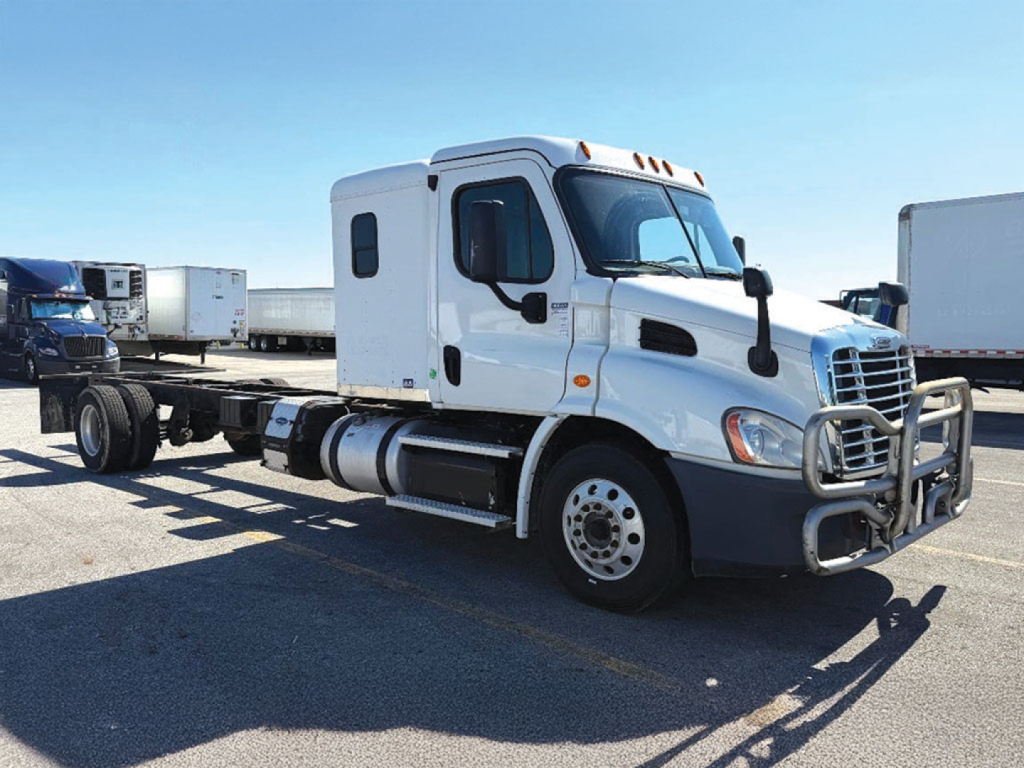
A cab and chassis truck is a truck sold with the cab, engine, drivetrain, and bare frame rails, but without a completed rear body. It is designed to be upfitted for a specific job such as a dump truck, box truck, flatbed, service truck, rollback, utility body, or hooklift. The value of a cab and chassis unit is that the truck can be matched to the body, payload, and equipment requirements instead of forcing the buyer to work around a fixed body configuration.
What measurements matter most when buying a cab and chassis truck?
The most important measurements are wheelbase, cab-to-axle, and cab-to-end-of-frame. These dimensions determine what body length can be installed and how the finished truck will balance weight across the axles. Buyers should also confirm GVWR, front and rear axle ratings, frame height, frame section, and any clearances needed for PTO equipment, toolboxes, hydraulic tanks, or outriggers. A truck can have enough power and still be the wrong chassis if the body dimensions do not line up correctly.
How do I choose the right GVWR for a cab and chassis application?
Start with the weight of the body, the payload, mounted equipment, fuel, driver, and any tools or materials the truck will carry every day. That total needs to fit within the truck's GVWR and within each axle rating, not just the overall number. Buyers should also leave margin for seasonal loads, future equipment additions, and variations in route conditions. In many applications, rear axle capacity becomes the limiting factor before the published GVWR does.
Are used cab and chassis trucks a good choice for upfitting?
Used cab and chassis trucks can be a practical choice if the frame, driveline, and electrical system are suitable for the body you plan to install. The truck should be checked for frame corrosion, previous body-mount holes, weld repairs, suspension wear, PTO provisions, and any wiring changes from prior vocational use. In Pennsylvania and other snowbelt markets, rust and corrosion deserve extra attention because they can affect body installation, brake lines, crossmembers, and long-term durability.
What is the difference between a cab and chassis truck and a straight truck?
A cab and chassis truck is an unfinished platform waiting for a body, while a straight truck already has a permanent body installed from the cab back. Examples of straight trucks include box trucks, dump trucks, and flatbeds. Buyers looking for flexibility or a custom body usually start with cab and chassis, while buyers needing an immediate ready-to-work configuration often shop completed straight trucks.