
International Cab and Chassis Trucks For Sale in Florida
Shop International cab and chassis trucks with specs for body upfitting, wheelbase needs, payload demands, and vocational use in Florida.
Learn more
Have international cab and chassis truck to sell? List it here to reach thousands of buyers.
About International Cab and Chassis Trucks in Florida
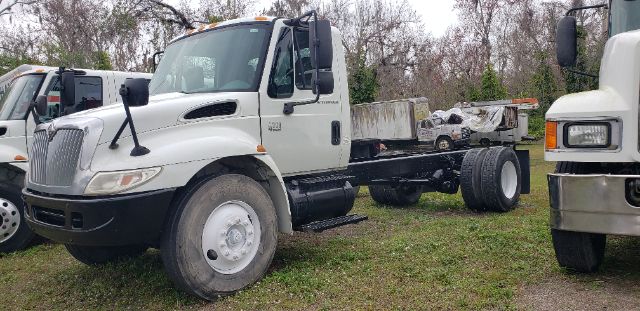
One of the first decisions is class, wheelbase, and frame length. In International cab and chassis trucks, that often means medium-duty models such as the 4300, MV Series, or related platforms, along with heavier chassis in regional haul or vocational configurations. Wheelbase determines what body can be mounted and how the finished truck will balance loaded weight across the axles. Frame height, clear frame space, PTO compatibility, and rear axle rating all matter if the truck will run a dump hoist, compressor, crane, pump, or refrigerated body. Buyers should also confirm cab-to-axle and axle-to-end-of-frame dimensions, because those measurements drive upfit options more than the badge on the hood.
Powertrain matters because these trucks are often bought for a narrow duty cycle. International medium-duty cab and chassis units commonly show up with diesel engines such as the DT466 or newer powerplants paired with automatic or automated transmissions, though some configurations vary by year and application. Florida buyers should pay close attention to cooling system condition, HVAC performance, corrosion around body mounts and electrical connections, and whether the truck spent its life in stop-and-go municipal service or steady highway use. If the chassis came from a fleet, service records, idle hours, PTO history, and prior body removal quality can tell you as much as the odometer.
A good cab and chassis truck should be evaluated as an upfit platform, not just as a used truck. Check frame drill patterns, evidence of frame modifications, suspension type, front axle capacity, brake spec, tire size, and fuel tank placement before assuming a body will fit cleanly. If CDL requirements, bridge laws, or tight urban turning radius are part of the job, those factors should be matched early to the GVWR and axle layout. International remains a practical option for buyers who want a vocational chassis with broad parts support, familiar diesel platforms, and configurations that can be tailored to local delivery, construction, utility, towing, and municipal work.
Frequently Asked Questions
What is an International cab and chassis truck used for?
An International cab and chassis truck is used as a base vehicle for mounting a specialized body or vocational package. Common applications include flatbeds, dump bodies, service bodies, box trucks, tow trucks, utility bodies, landscape bodies, and municipal equipment. The main advantage is flexibility, because the chassis can be matched to a specific body length, payload target, and PTO-driven accessory requirement.
What specs matter most when buying a used cab and chassis truck?
The most important specs are GVWR, front and rear axle ratings, wheelbase, cab-to-axle measurement, axle-to-end-of-frame length, engine and transmission combination, and PTO capability. Buyers should also verify frame condition, suspension type, brake configuration, and tire size. These details determine whether the truck can accept the intended body and carry the expected payload without expensive modifications.
Are International 4300 and similar medium-duty models good for upfitting?
Yes. International 4300 and related medium-duty chassis are widely used for upfits because they offer practical wheelbase options, vocational-friendly frame layouts, and strong support in many commercial service networks. They are commonly selected for box trucks, flatbeds, service trucks, and light to moderate dump applications. Final suitability depends on axle ratings, frame dimensions, PTO setup, and the weight of the finished body and cargo.
What should Florida buyers inspect on a used International cab and chassis?
Florida buyers should inspect the cooling system, air conditioning performance, wiring condition, frame corrosion, and signs of moisture-related issues around connectors and body mounts. It is also smart to check for sun and heat wear in the cab, verify that prior body removal did not damage the frame, and review maintenance records for engine, transmission, and brake system service. Trucks used in municipal or contractor fleets may have low miles but high idle time, which can affect wear patterns.
Can a cab and chassis truck be easier to value than a completed body truck?
In many cases, yes, because the buyer is primarily valuing the chassis as a platform rather than paying for a body that may not match the intended application. A clean frame, correct dimensions, solid drivetrain, and documented maintenance can make a cab and chassis unit attractive for custom upfitting. The key is confirming that the cost of the chassis plus the new body and installation still pencils out against a completed truck already in service.