
Freightliner Box Trucks For Sale in Pennsylvania
Freightliner box trucks for sale in Pennsylvania. Compare M2 106 specs, GVWR, body lengths, liftgates, and delivery-ready options.
Learn more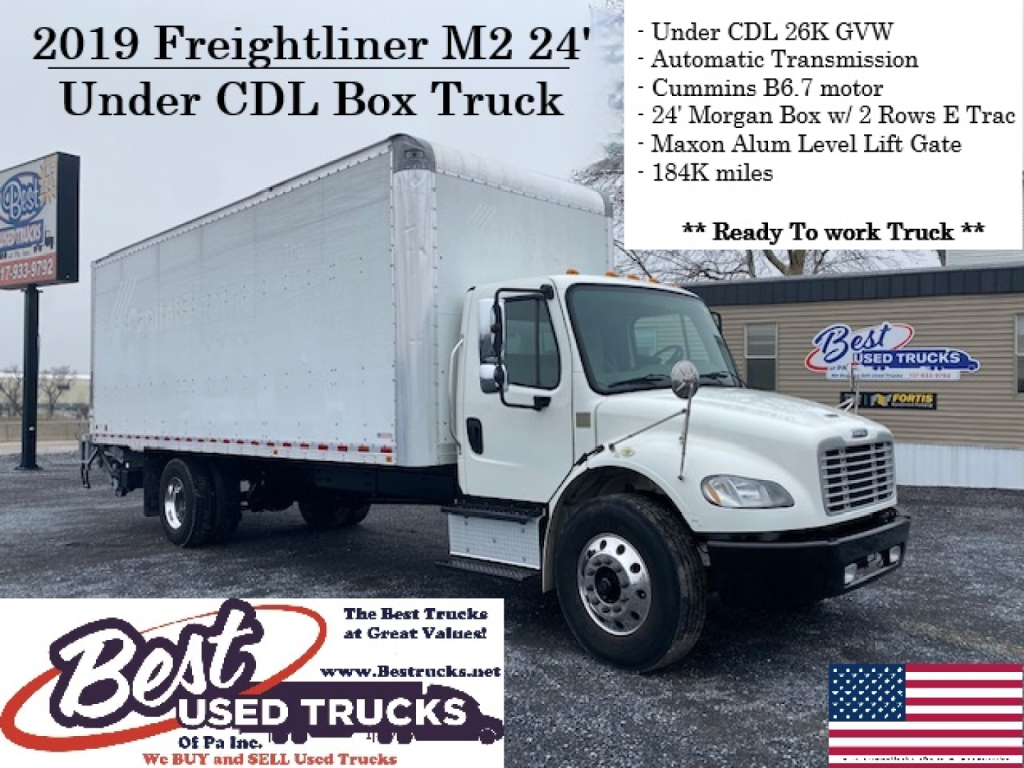
Have freightliner box truck to sell? List it here to reach thousands of buyers.
About Freightliner Box Trucks in Pennsylvania
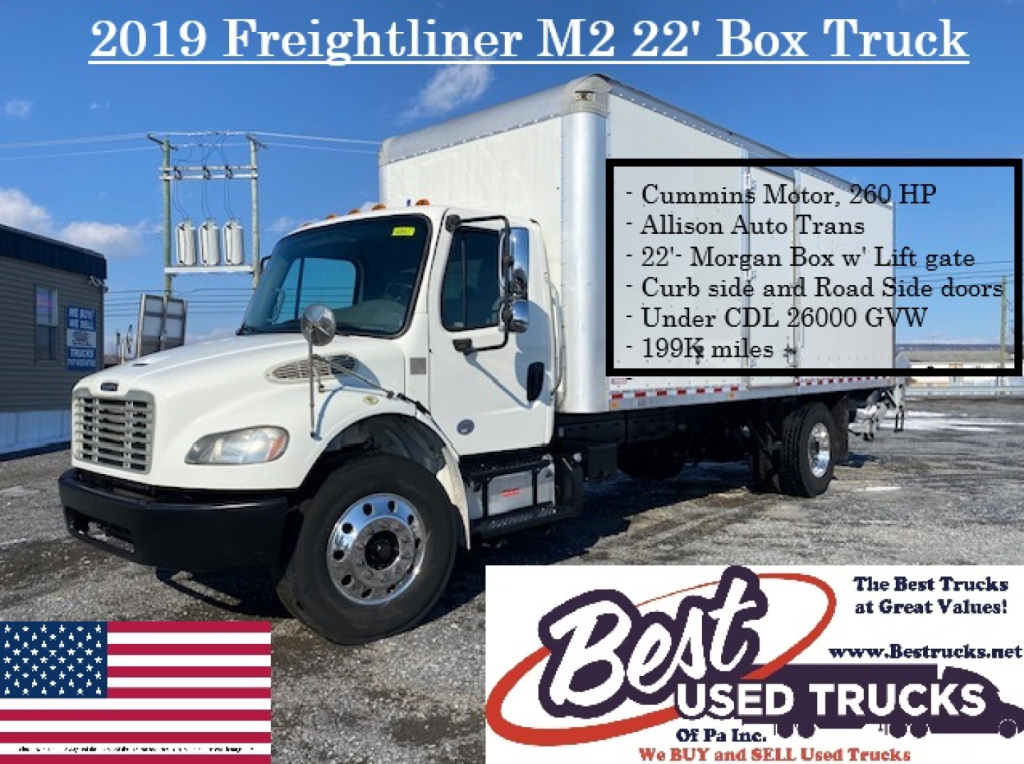
A buyer comparing Freightliner box trucks should pay close attention to axle ratings, wheelbase, and suspension. A typical under-CDL setup may use a 10,000 lb front axle and 19,000 lb rear axle on a 4x2 chassis, with wheelbases often falling in the low- to mid-200-inch range depending on body length. Air ride suspension is a valuable feature for freight protection and ride quality, especially when handling mixed loads or palletized product. Tire size, rear ratio, and transmission model also matter because they affect launch, cruising RPM, fuel economy, and how the truck performs on Pennsylvania routes that include urban delivery, warehouse docks, and hilly secondary roads.
Body equipment can be just as important as the chassis. Many Freightliner box trucks in this category are fitted with Morgan or similar dry van bodies, roll-up rear doors, curbside access doors, liftgates, E-track, interior lighting, and scuff liners or wood scuff plates. Those details directly affect loading efficiency and cargo control. A 3,000 lb liftgate is a common spec for appliance delivery, foodservice, and general freight, while side doors can speed up multi-stop work. Buyers hauling carts, palletized freight, or fragile product should also look at inside width, floor condition, and how the body is laid out for straps, decking, and repeated dock use.
Freightliner has strong appeal in this segment because the cab is driver-friendly and the M2 platform is familiar to many fleets and independent operators. Power windows, power locks, heated or powered mirrors, and in-cab suspension dump controls are more than convenience items on delivery trucks because they help reduce fatigue and speed up dock operations. For used Freightliner box trucks, the smartest evaluation points are service records, DOT inspection status, engine hours versus miles, liftgate function, body leaks, door seal condition, and signs of uneven tire wear or suspension issues. A well-matched Freightliner box truck can be a durable, versatile asset for Pennsylvania delivery work if the chassis, body, and payload needs are aligned from the start.
Frequently Asked Questions
What is the most common GVWR for a Freightliner box truck?
A 26,000 lb GVWR is one of the most common ratings in this category because it allows substantial payload and body capacity while remaining under CDL for most operators. That makes it popular for local delivery, furniture, rental fleets, and general freight. Buyers still need to verify actual empty weight, body size, liftgate weight, and cargo requirements because those factors determine real payload more than the GVWR number alone.
Which Freightliner model is most common for box truck applications?
The Freightliner M2 106 is one of the most widely used models for box truck service. It is commonly spec'd with Cummins B6.7 power, Allison automatic transmissions, and single-axle 4x2 configurations. That platform is popular because it balances maneuverability, serviceability, and enough chassis capacity for 22 foot to 26 foot dry van bodies used in regional and urban delivery.
What body features should matter most on a used Freightliner box truck?
The most important body features depend on the work, but buyers usually focus on body length, door configuration, liftgate capacity, cargo securement, and overall body condition. E-track, scuff liners, interior lighting, side access doors, and a solid roll-up rear door all improve day-to-day usability. It is also important to inspect the roof, floor, corners, door seals, and body mounts because water intrusion and floor damage can create expensive repairs and reduce cargo reliability.
Is air ride suspension worth it on a Freightliner box truck?
Air ride suspension is often worth the added cost for operators hauling palletized freight, fragile goods, electronics, or mixed loads. It typically improves ride quality, helps protect cargo, and can reduce driver fatigue on rougher roads. In delivery service, an in-cab air dump feature is also useful at loading docks because it can simplify trailer-height or dock-height alignment and speed up loading and unloading.
What should buyers in Pennsylvania consider when choosing a Freightliner box truck?
Pennsylvania buyers should consider route density, terrain, bridge and street access, and seasonal operating conditions. Urban delivery in places like Philadelphia or Pittsburgh may favor a shorter wheelbase and strong visibility, while regional work across hilly areas may benefit from the right rear ratio, adequate horsepower, and a transmission calibrated for frequent starts and elevation changes. Rust exposure, frame condition, brake health, and heater-defroster performance also deserve close attention in this market.