
Freightliner Box Trucks For Sale in California
Browse Freightliner box trucks for sale in California. Compare M2 and other models by box length, GVWR, liftgate, engine, and delivery use.
Learn more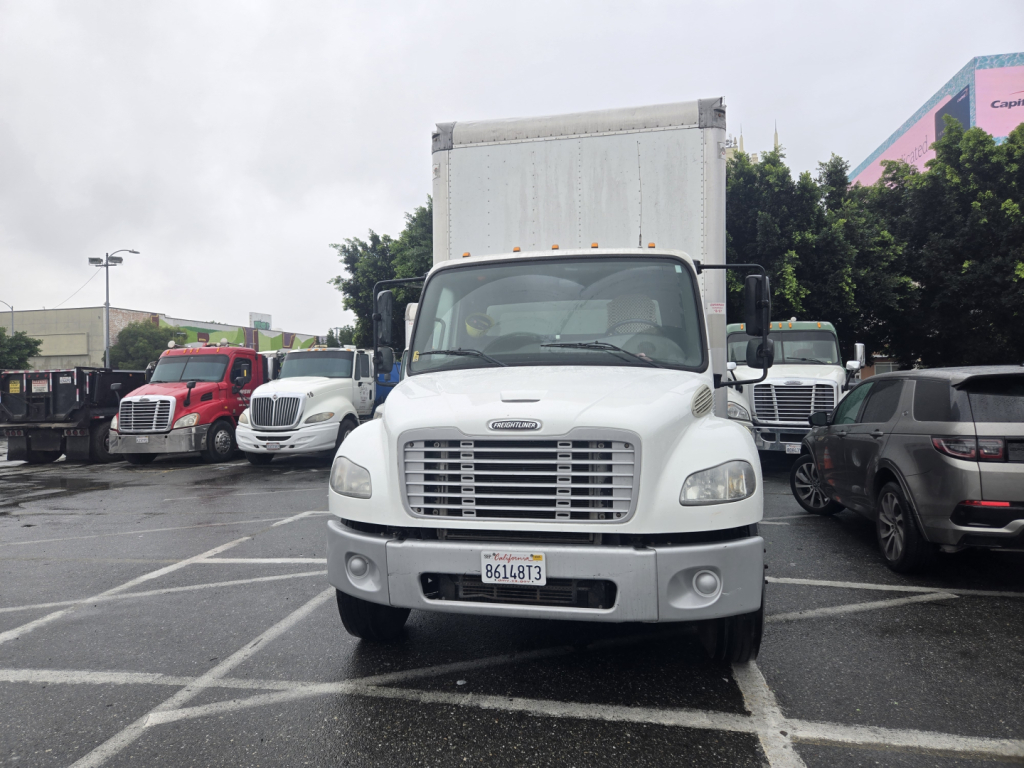

Have freightliner box truck to sell? List it here to reach thousands of buyers.
About Freightliner Box Trucks in California
Freightliner M2 box trucks are popular because parts support is strong, cab ergonomics are familiar to most drivers, and the trucks are available in several GVWR classes. Many used units are spec'd with diesel engines from Cummins or Mercedes-Benz, paired to Allison automatic transmissions. Buyers should verify engine family, horsepower rating, rear axle ratio, and brake type because those details directly affect drivability in stop-and-go work and on grades. California use adds another layer. Emissions compliance, CARB-related requirements, and registration class should be confirmed early, especially on older diesel trucks. A clean-running truck with documented maintenance and clear emissions status can save significant downtime and administrative cost.
Body condition is just as important as chassis condition on a used Freightliner box truck. Check the front wall for impact stress, inspect roof seams and corner caps for leaks, and look closely at the floor around the threshold and liftgate mount area. Scuff liners, logistic track, and swing or roll-up door hardware often show how hard the truck has been worked. If the truck will handle palletized freight, confirm inside width, interior height, and wheel-well layout. A 102-inch wide body and taller inside height can make a real difference for final-mile and route delivery operations. Liftgate capacity should also match the freight profile, especially for heavy carts, appliances, or mixed stop deliveries.
For buyers comparing Freightliner box trucks for sale, the strongest value usually comes from a truck whose spec matches the route. A lighter-duty straight truck may be ideal for dense metro delivery, while a higher GVWR tandem or heavy single-axle setup may suit bulkier loads or longer regional runs. Service records, tire date codes, suspension wear, reefer or body auxiliary equipment if equipped, and signs of overloading all deserve close review. Freightliner remains a practical box truck choice because the chassis is widely understood by fleet shops, easy to source parts for, and adaptable to many body configurations used across California freight and delivery work.
Frequently Asked Questions
What are the most common Freightliner box truck models buyers look for?
The Freightliner M2 is the most common model in the box truck market, especially for medium-duty delivery work. It is widely used with 24-foot and 26-foot van bodies and is often equipped with Allison automatic transmissions and diesel engines from Cummins or Mercedes-Benz. Some heavier Freightliner chassis also appear with box bodies, but the M2 is usually the benchmark for local and regional straight truck applications because it balances payload, maneuverability, and service support.
What should I check first on a used Freightliner box truck in California?
Start with emissions compliance, maintenance history, and body condition. In California, an older diesel truck can create registration or compliance issues if the emissions status is unclear. After that, inspect the engine and transmission spec, verify the GVWR, and check the van body for leaks, floor damage, front wall impact, and liftgate wear. A box truck with a sound chassis but a neglected body can still require expensive repairs before it is ready for route work.
Is a 26-foot Freightliner box truck the best size for delivery work?
A 26-foot box truck is common because it offers strong cargo volume without moving into tractor-trailer territory, but it is not automatically the best choice for every operation. In tight urban California service areas, a shorter body may be easier to route, park, and dock. For palletized freight, furniture, appliances, and multi-stop distribution, a 26-foot body often gives the right mix of cubic capacity and payload. The best size depends on freight density, stop frequency, and site access.
How important is a liftgate on a Freightliner box truck?
A liftgate is critical if the truck will handle freight at locations without a dock. It can expand the truck's usefulness for final-mile delivery, appliance hauling, beverage distribution, and any operation handling carts or pallet jacks. Buyers should confirm the liftgate type, weight rating, and operating condition. Hydraulic leaks, platform corrosion, and weak cycle performance are common issues on hard-worked delivery trucks, and replacement costs can be significant.
What engine and transmission specs matter most on a Freightliner box truck?
The most important drivetrain details are the engine make and rating, the transmission model, and the rear axle ratio. These determine how the truck performs under load, in city traffic, and on grades. Many buyers prefer an Allison automatic for route work because it is well suited to constant stop-and-go driving. A properly matched drivetrain can improve uptime, fuel economy, and driver satisfaction, while an underpowered or poorly geared truck can struggle once the box is fully loaded.