
Used Ford Box Trucks For Sale in Pennsylvania
Shop used Ford box trucks in Pennsylvania. Compare F-550 and F-750 models, body lengths, GVWR, liftgates, cargo features, and powertrains.
Learn more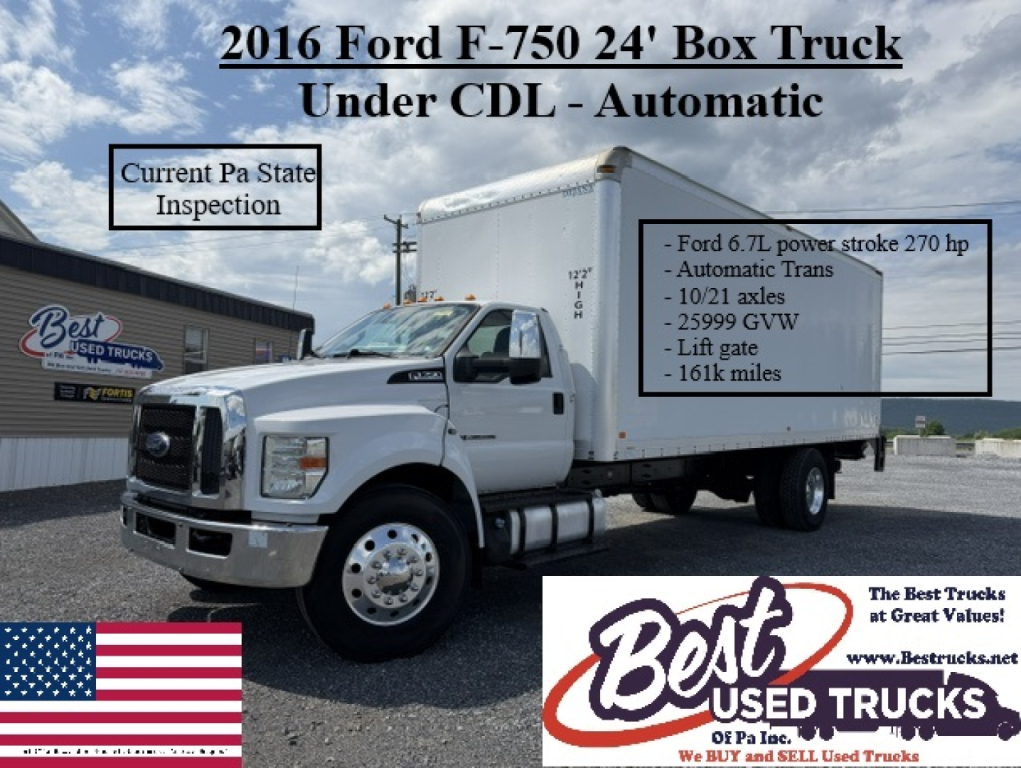
Have used ford box truck to sell? List it here to reach thousands of buyers.
About Used Ford Box Trucks in Pennsylvania
Powertrain choice matters because Ford box trucks can show up with very different operating profiles. Gas-powered units, especially the 7.3L V8, appeal to buyers who want simpler emissions systems, lower upfront cost, and predictable stop-and-go service use. Diesel-powered trucks such as Ford Power Stroke-equipped F-650 and F-750 models are often preferred when payload is heavier, routes are longer, or the truck will spend more time at highway speed. Buyers should look closely at horsepower and torque ratings, transmission pairing, rear axle ratio, and actual GVWR, because two trucks with similar box lengths can perform very differently once loaded.
Cargo body spec is just as important as the chassis. Common features on used Ford box trucks include aluminum or composite bodies, translucent roofs, hardwood or laminated floors, E-track or logistic track, roll-up rear doors, and tuckunder liftgates from brands like Anthony or Maxon. Interior height, body width, and door opening dimensions directly affect what the truck can haul efficiently. A 2,000 to 2,500 lb liftgate may be enough for general freight, appliances, or route deliveries, but heavier palletized freight may call for more gate capacity and attention to rear axle loading. In Pennsylvania, where trucks often see a mix of city streets, suburban stops, and winter weather, buyers also tend to pay attention to tire size, spring suspension condition, brake history, corrosion on crossmembers and body hardware, and current state inspection status.
A good used Ford box truck should be evaluated as a complete package, not just by mileage or year. Check wheelbase relative to box length, confirm if the truck is under 26,001 GVWR for non-CDL use, and inspect the body-to-chassis integration for signs of hard delivery service. Cab ergonomics, visibility, power accessories, and HVAC matter more than they seem on multi-stop routes. For many buyers, Ford stands out for parts availability, familiar service networks, and a broad spread of medium-duty and chassis-cab configurations. That makes used Ford box trucks a strong category for operators who need straightforward maintenance, flexible body options, and a truck that can be matched closely to route density and payload.
Frequently Asked Questions
What is the difference between a Ford F-550 box truck and a Ford F-750 box truck?
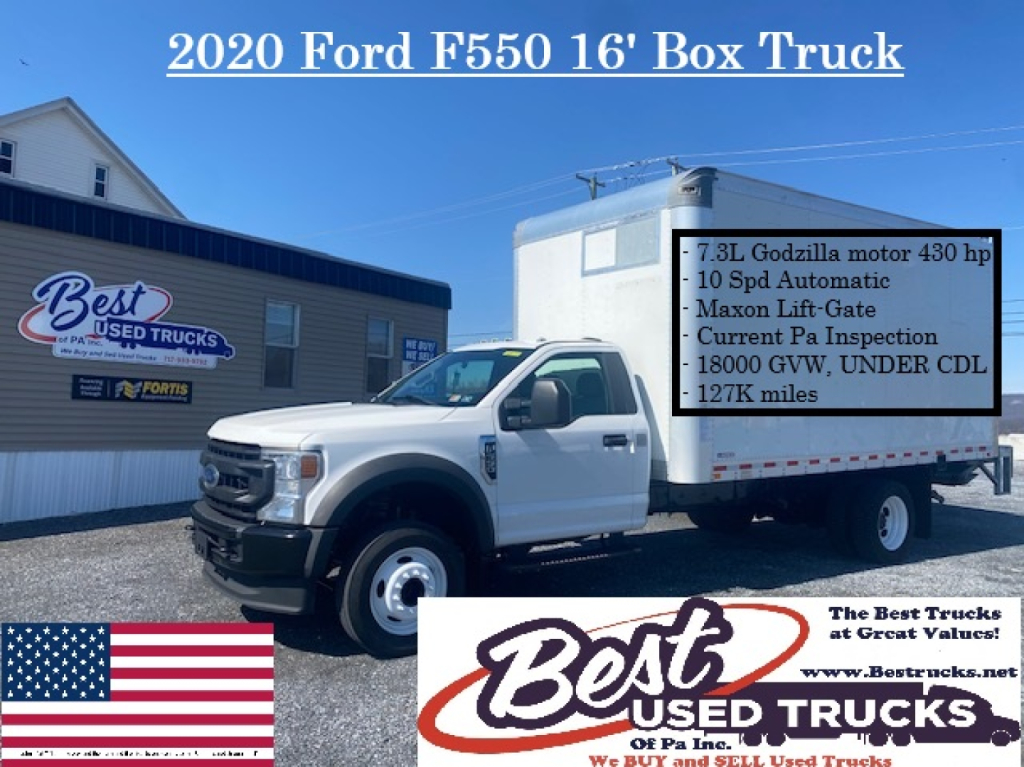
The main differences are GVWR, payload capacity, body size potential, and overall duty cycle. A Ford F-550 box truck is typically used for lighter local delivery work and often carries an under-CDL GVWR around 18,000 to 19,500 pounds, depending on spec. A Ford F-750 box truck is a medium-duty platform built for larger boxes, heavier freight, and more sustained commercial use, with GVWR commonly set near the 25,999-pound under-CDL threshold or higher in CDL-required configurations. The right choice depends on cargo weight, route length, loading method, and maneuverability needs.
Is a used Ford box truck under CDL?
Many used Ford box trucks are configured under CDL, but not all of them. Buyers should verify the exact GVWR on the door sticker or chassis information, because that determines licensing requirements rather than the truck’s appearance or box length alone. It is common to see Ford F-550, F-650, and F-750 box trucks spec'd at 25,999 pounds GVWR to stay under the federal CDL threshold, but some trucks exceed 26,000 pounds and require a CDL depending on use and local regulations.
Are gas or diesel Ford box trucks better for delivery work?
Gas and diesel Ford box trucks each have advantages. Gas engines, especially in lighter chassis like the F-550, are often a strong fit for short-route, stop-and-go delivery because they can offer lower acquisition cost and less emissions-system complexity. Diesel engines are usually the better choice for heavier loads, larger 22-foot to 26-foot bodies, and routes that include more highway mileage or steeper terrain. The better option depends on average payload, annual miles, idle time, and how long the truck will stay in service.
What should I inspect on a used Ford box truck before buying?
Start with GVWR, axle ratings, wheelbase, engine hours if available, and service history. Then inspect the cargo box for roof leaks, floor wear, wall damage, door function, liftgate operation, and corrosion around mounting points and rear structure. On the chassis side, check spring packs, brakes, tires, steering play, driveline vibration, and signs of rust on frame rails or crossmembers, especially in states where road salt is common. It is also smart to verify body dimensions, interior height, and tie-down setup so the truck fits the freight you actually move.
What box length is most common on a used Ford box truck?
Common box lengths on used Ford box trucks are 14, 16, 20, 22, and 24 feet, with 16-foot and 24-foot bodies showing up frequently in the market. Shorter boxes are easier to maneuver in dense delivery areas and often pair with lighter-duty chassis. Longer boxes are more common on medium-duty Ford models and suit furniture, appliances, route freight, and general cargo that cubes out before it weighs out. The best length depends on dock access, turning radius, pallet count, and how much cargo volume matters relative to payload.