
Used Ford Box Trucks For Sale in New York
Browse used Ford box trucks for delivery, service, and moving work. Compare GVWR, body length, engines, cab size, and route-ready specs.
Learn more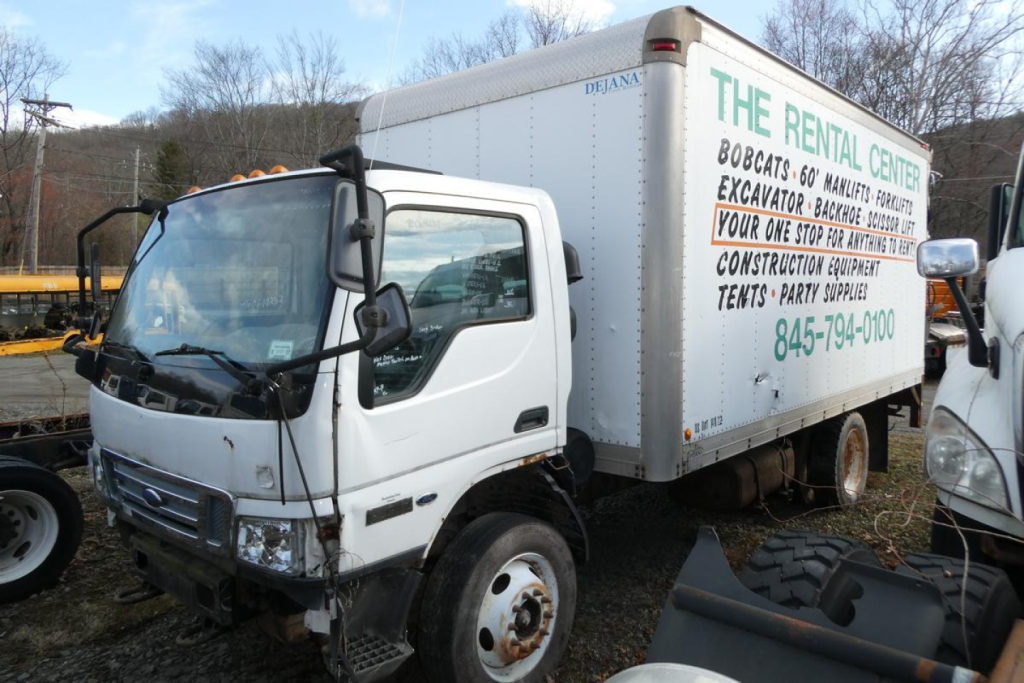
Have used ford box truck to sell? List it here to reach thousands of buyers.
About Used Ford Box Trucks in New York
For local delivery work, maneuverability and dock access matter as much as payload. Shorter wheelbases and 12 foot to 16 foot bodies are easier in tight borough streets, older industrial areas, and mixed residential routes. Larger 18 foot to 26 foot bodies give more cube for furniture, parcel, appliance, and contractor supply work, but they change turning radius, bridge planning, and loading habits. Pay attention to door type, interior height, and body construction. Roll-up doors are common for dock work and route stops, while swing doors can simplify forklift access in some applications. Features like translucent roofs, scuff liners, E-track, liftgates, walk ramps, and hardwood or laminated floors can make a major difference in day-to-day productivity and repair cost.
On the chassis side, Ford box trucks can be gas or diesel depending on model year and platform. Many buyers prefer gasoline power for lower emissions-system complexity and simpler maintenance in lighter-duty use, while diesel still has a place in certain medium-duty applications where torque and heavier body upfit needs are priorities. Transmission type, rear axle ratio, brake system, tire size, and suspension rating all deserve a close look because box trucks often spend their lives in stop-and-go service. A truck with the right engine can still be a poor fit if the axle ratio is wrong for the route or if the suspension is undersized for the body and cargo. Used buyers should also inspect cab-to-axle measurement, wheelbase, roof and corner cap condition, floor softness, subframe corrosion, rear frame extension quality, and signs of water intrusion around the front wall.
Ford remains a practical choice in the used box truck market because parts access, service familiarity, and body-builder support are generally strong. The best unit is usually the one matched to the freight, not simply the biggest box or the lowest odometer. Confirm actual payload after body and liftgate weight, check door opening dimensions against your freight profile, and review maintenance records for brakes, cooling system, front-end wear, and any prior body repairs. In New York service, rust, underbody corrosion, and frequent-start electrical issues deserve extra scrutiny, especially on trucks that have spent years in municipal, delivery, or winter road salt conditions.
Frequently Asked Questions
What size Ford box truck is best for local delivery work?
For dense local routes, many buyers focus on 12 foot to 16 foot bodies on a shorter wheelbase because they are easier to park, turn, and back into alleys or tight docks. For furniture, parcel overflow, appliances, and larger route density, 18 foot to 26 foot bodies offer more cargo volume but require more attention to turning radius, bridge clearance, and loading space. The right size depends on cube needs, pallet count, and how often the truck must work in congested streets versus open suburban or industrial routes.
Are used Ford box trucks better with gas or diesel engines?
Gas engines are often preferred in lighter-duty box truck applications because they can be less complex to maintain and may be a better fit for short-route, stop-and-go service. Diesel engines remain relevant in medium-duty configurations where higher torque, heavier body upfits, or sustained loaded operation matter more. The better choice depends on GVWR, annual mileage, idle time, emissions-system condition, and the skill level of the shop that will maintain the truck.
What should I inspect on a used Ford box truck before buying?
Focus on both the chassis and the body. On the truck side, inspect engine cold-start behavior, transmission shift quality, brake condition, steering play, suspension wear, tire condition, and frame corrosion. On the body side, check the floor for soft spots, inspect the roof and front wall for leaks, examine door operation, and look closely at the subframe, crossmembers, corner caps, and any liftgate mounts. Cab-to-axle dimensions and wheelbase should also be verified to confirm the body was properly matched to the chassis.
What is the difference between a box truck, cube van, and straight truck?
In most used-truck listings, these terms overlap. A box truck is the general term for a truck with an enclosed cargo body mounted behind the cab. Cube van usually refers to a smaller enclosed delivery body, often on a cutaway chassis. Straight truck is a broader industry term for a single-unit truck where the cargo body and chassis are one vehicle, as opposed to a tractor and trailer combination. The exact label often depends more on market usage than on a strict equipment difference.
Why does GVWR matter when comparing used Ford box trucks?
GVWR affects payload capacity, registration class, operating cost, and sometimes driver qualification requirements. It also tells you whether the chassis was built for lighter route work or heavier commercial use. A truck with a long box can still have limited legal payload once the body, liftgate, fuel, and driver are accounted for. Buyers should compare GVWR with actual empty weight to determine true remaining payload, not just advertised cargo volume.