
Ford Box Trucks For Sale in Pennsylvania
Shop Ford box trucks for sale in Pennsylvania. Compare GVWR, body length, liftgates, gas or diesel power, and under-CDL delivery specs.
Learn more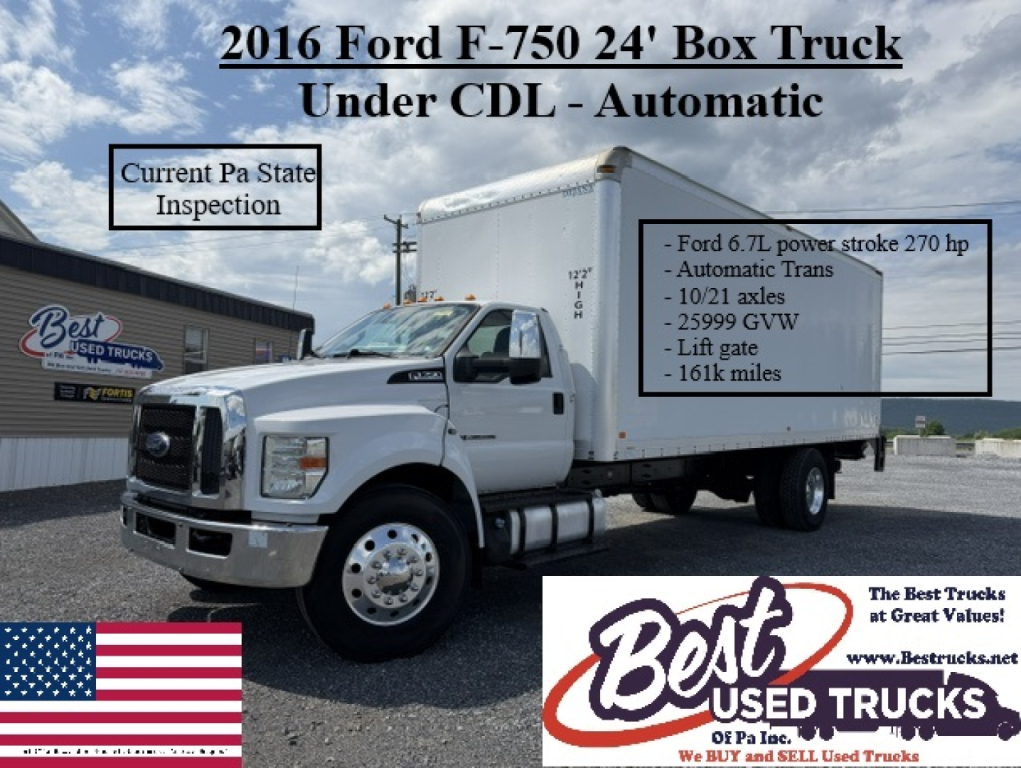
Have ford box truck to sell? List it here to reach thousands of buyers.
About Ford Box Trucks in Pennsylvania
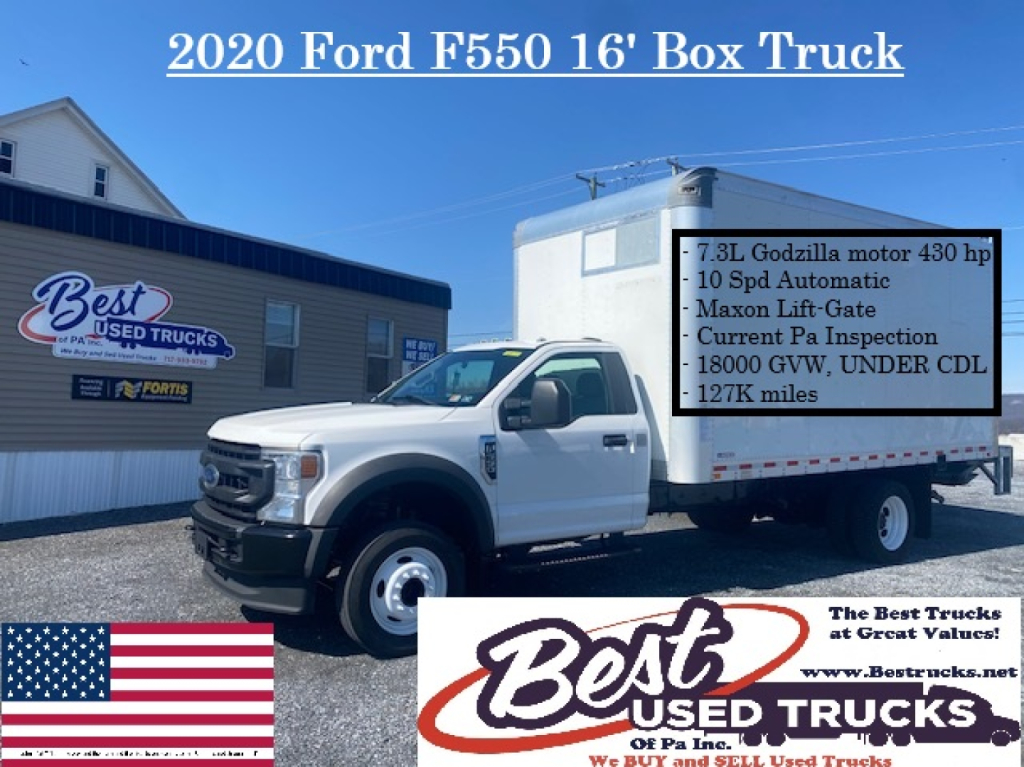
On the lighter end of the market, Ford F-Series box trucks such as the F-550 are often spec'd around 16-foot to 18-foot bodies with roll-up rear doors, spring suspension, and single rear axles. Many fall in the under 26,000 lb GVWR range, which matters for operators who want commercial capability without moving into CDL territory. Common body features include translucent roofs, E-track, hardwood floors, scuff liners, tuck-under or rail liftgates, and curbside access doors. A liftgate can be a major value point if the truck will handle appliances, palletized freight, vending equipment, or route deliveries without dock access. Wheelbase, rear axle ratio, and tire size also matter because they affect turning radius, launch with a loaded body, and highway cruising rpm.
Powertrain choice is a major decision on a Ford box truck. Gas engines such as Ford's 7.3L V8 are popular in medium-duty local service because they offer strong low-speed performance, simpler emissions systems than diesel, and good fit for stop-and-go routes. Diesel options can still make sense for higher annual mileage, heavier payload demand, or more sustained highway use. Buyers should look closely at transmission pairing, axle ratings, and body upfit quality, not just engine output. On a used truck, pay attention to liftgate operation, rear door condition, roof and front wall leaks, floor wear at the threshold, and signs of body-to-chassis stress around mounting points. If the truck spent time in the Northeast, frame condition, brake lines, wiring, and crossmember corrosion deserve a careful inspection.
A good Ford box truck should match the freight first and the route second. Furniture and final-mile delivery often favor longer bodies and liftgates. Contractor and equipment use may prioritize lower body height, secure shelving, and easier urban parking. For Pennsylvania buyers, bridge clearances, winter traction, and municipal delivery patterns can influence the best spec just as much as payload capacity. The strongest value usually comes from a truck with a clean upfit, documented maintenance, and a body configuration that fits the job without carrying unnecessary GVWR, length, or fuel expense.
Frequently Asked Questions
What GVWR should I look for in a Ford box truck?
The right GVWR depends on payload, body size, and whether you need to stay under CDL thresholds. Many Ford box trucks used for local delivery and service work are spec'd below 26,000 lbs GVWR, and some lighter F-Series units sit well below that for easier licensing and urban operation. Buyers should calculate actual cargo weight, the body and liftgate weight, passenger count, and any shelving or equipment in the box before choosing a rating. A truck that looks large enough can still run out of legal payload quickly once the body upfit is included.
Is a gas or diesel Ford box truck better for local delivery work?
For many local and regional box truck applications, a gas engine is a strong choice because it handles stop-and-go routes well and generally avoids the added complexity of modern diesel emissions equipment. Ford's gas medium-duty offerings are often favored by fleets that want lower acquisition cost and straightforward maintenance. Diesel can still be the better fit when the truck runs higher annual miles, carries heavier loads consistently, or spends more time at highway speed. The better choice depends on route profile, payload, and maintenance strategy more than engine preference alone.
What body features matter most on a used Ford box truck?
The highest-value body features are the ones tied directly to your freight and loading method. A roll-up rear door is standard for many delivery applications, while a liftgate is essential if the truck services locations without docks. Buyers should also check the condition of the floor, scuff liners, roof, front wall, door tracks, seals, and any interior tie-down system such as E-track. Water intrusion, floor rot, bent thresholds, and liftgate issues can turn an otherwise solid chassis into an expensive repair project.
Are Ford box trucks good for Pennsylvania routes and conditions?
Ford box trucks are well suited to Pennsylvania because they are commonly used in urban delivery, suburban service work, and short regional runs where maneuverability and service access matter. Buyers in the state should pay extra attention to rust, frame condition, brake components, wiring, and box crossmembers due to winter road treatment and seasonal moisture. Clearance and route planning also matter in older towns, city alleys, and areas with low bridges. A properly spec'd wheelbase, body length, and traction setup can make a noticeable difference in day-to-day usability.
What should I inspect first on a used Ford F-Series box truck?
Start with the basics that affect uptime and legal operation: GVWR tag, axle ratings, tire condition, brake condition, and signs of frame corrosion. Then inspect the box for leaks, floor damage, poor repairs, and mounting issues where the body meets the chassis. If the truck has a liftgate, cycle it fully under load if possible and inspect pins, cylinders, hoses, and platform alignment. Maintenance records, transmission behavior, steering feel, and cold-start performance are also important because box trucks often accumulate hard miles in delivery service even when the cab still presents well.