
Rears Truck Parts For Sale in New York
Shop rears truck parts in New York, including rear axles, housings, carriers, shafts, hubs, and differential components for fleet repairs.
Learn more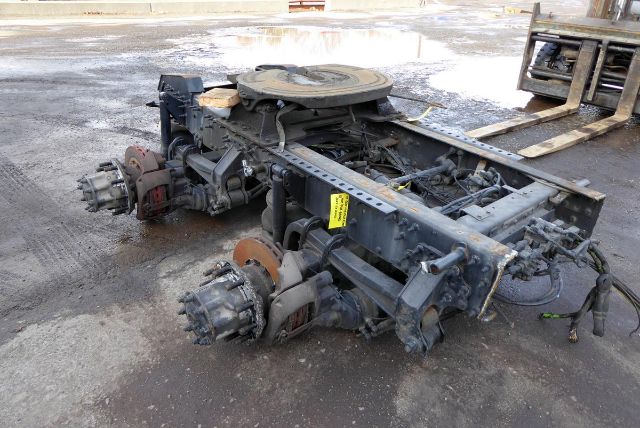
Have rears truck part to sell? List it here to reach thousands of buyers.
About Rears Truck Parts in New York
A replacement rear assembly has to fit the truck’s application, not just bolt pattern. Highway tractors, vocational dumps, mixers, refuse trucks, and regional delivery units place very different demands on the rear axle. A linehaul tractor may prioritize fuel-friendly ratios and lower tare weight, while a severe-duty truck may need heavier housings, full-locking differentials, higher GAWR, and components built for repeated shock loads. Common brands in this category include Meritor, Dana Spicer, Eaton, Mack, and Rockwell, with frequent buyer interest in ratios like 3.55, 3.73, 4.10, and deeper gearing for off-road or stop-and-go work. If the truck runs tandem drives, inter-axle differential setup, power divider condition, and matching rear ratios are all major inspection points.
Condition matters at the component level. Buyers should look closely at ring and pinion wear, carrier bearing condition, axle shaft splines, housing straightness, hub face wear, brake spider condition, and signs of heat or contamination in the differential. On complete rear axle assemblies, verify wheel seal areas, camshaft and slack adjuster condition on drum brake setups, or caliper mount and rotor fitment on disc brake versions. It is also important to confirm ABS sensor style, tone ring compatibility, track width, spring pad spacing, and input yoke specifications so the rear will integrate cleanly with the driveline and chassis. In rust-belt markets like New York, corrosion on housings, mounts, and brake hardware deserves extra attention, especially on parts pulled from older vocational trucks.
For buyers sourcing rears truck parts, the best value usually comes from getting the exact identification numbers off the axle tag and comparing them against the original truck build. That helps avoid mismatched ratios, incorrect axle capacities, and wheel end differences that can turn a straightforward repair into additional downtime. If the goal is a complete rear axle replacement, pay attention to whether the assembly is bare, hub-to-hub, or complete drum-to-drum, since included components can materially change installation cost. A properly matched rear end supports tire life, driveline efficiency, and dependable traction under load, which makes this one of the most important truck parts categories to evaluate carefully.
Frequently Asked Questions
What parts are usually included in the rears category for trucks?
The rears category usually includes complete rear axle assemblies, differential carriers, housings, axle shafts, hubs, ring and pinion sets, wheel end components, and sometimes brake-related hardware attached to the drive axle. Some listings are bare housings or center sections, while others are complete hub-to-hub or drum-to-drum assemblies. Buyers should confirm exactly what is included before comparing prices because the labor and extra parts required can vary significantly.
How do I match a rear axle assembly to my truck?
The most accurate way is to use the axle tag or identification numbers from the original rear end and compare axle rating, gear ratio, spline count, brake configuration, hub type, suspension mount dimensions, and input yoke details. Matching only by truck make, model, or engine is not enough. A rear axle that physically mounts to the chassis can still create driveline, ABS, wheel end, or gearing problems if the specifications do not match the truck’s original setup.
Why is gear ratio so important when buying rears truck parts?
Gear ratio affects launch performance, cruise RPM, fuel economy, gradeability, and compatibility with the transmission and tire size. On tandem-drive trucks, mismatched ratios between front and rear drive axles can cause serious drivetrain damage. A ratio that is too fast or too deep for the application can also hurt operating efficiency, so buyers should confirm the ratio is correct for the truck’s intended work, not just that the part is available.
What should I inspect on a used rear axle or differential?
Key inspection points include ring and pinion tooth wear, metal contamination in the oil, carrier bearing condition, axle shaft spline wear, housing cracks or bends, wheel seal surfaces, and brake mounting condition. Buyers should also check for damaged ABS sensors, worn hubs, excessive backlash, and signs of overheating. In areas where road salt is common, corrosion on housings, spring pads, and brake hardware can be just as important as internal differential condition.
What is the difference between a complete rear assembly and a carrier-only replacement?
A complete rear assembly typically includes the housing, differential, axle shafts, hubs, and often brake and wheel end components, making it the better choice when the housing or multiple related parts are damaged. A carrier-only replacement usually refers to the removable differential center section or third member, depending on the axle design. Carrier-only repairs can reduce parts cost, but they only work when the housing, shafts, and wheel end components remain serviceable.