
Van Trailers For Sale in Wyoming
Shop van trailers for sale in Wyoming. Compare dry van specs, lengths, suspension, floor types, doors, and trailer setup for freight needs.
Learn moreBrowse Van Trailers by Make
Have van trailer to sell? List it here to reach thousands of buyers.
About Van Trailers in Wyoming
Construction details drive long-term cost. Many dry vans use plate or composite sidewalls, aluminum roofs, wood floors, and steel or aluminum wheel setups. Wood floors remain common because they handle forklift traffic well and are straightforward to repair, but floor condition, threshold plate wear, and signs of rot or delamination should be checked closely. Plate trailers such as Dura Plate-style builds are popular because they hold up well in fleet service and resist damage better than thinner sheet-and-post designs. Inside the box, buyers should pay attention to scuff liners, logistic posts, wall condition, roof bows, and previous patchwork. These details affect cargo securement, forklift damage resistance, and how well the trailer will hold up under repeated LTL or multi-stop use.
Running gear and loading flexibility are another major part of the buying decision. Air ride suspension is common on van trailers because it helps protect freight and improves ride quality, while a sliding tandem gives better flexibility for bridge laws, axle spread requirements, and dock positioning. Swing doors are still the standard rear-door setup for full access at the dock, though door frame condition, hinge wear, and lock rod operation deserve a close inspection. Tire size, wheel type, brake condition, landing gear operation, and slider function all affect day-to-day uptime. For buyers running heavy freight or regional lanes with frequent loading, these wear items can matter more than model year alone.
A good van trailer should match the freight, the lanes, and the loading environment. Retail, food packaging, consumer goods, paper products, and many dry commodities all fit well in this category, but trailer specs should line up with how the trailer will actually work. Logistic posts are useful for load bars and decking setups. Scuff liners help if forklift traffic is constant. Closed tandem configurations may appeal to buyers who want a straightforward road trailer, while slider tandems offer more operational flexibility. The best buying approach is to evaluate body integrity, floor life, suspension type, rear frame condition, and securement features together rather than treating a dry van as a simple commodity trailer.
Frequently Asked Questions
What is the most common size for a van trailer?
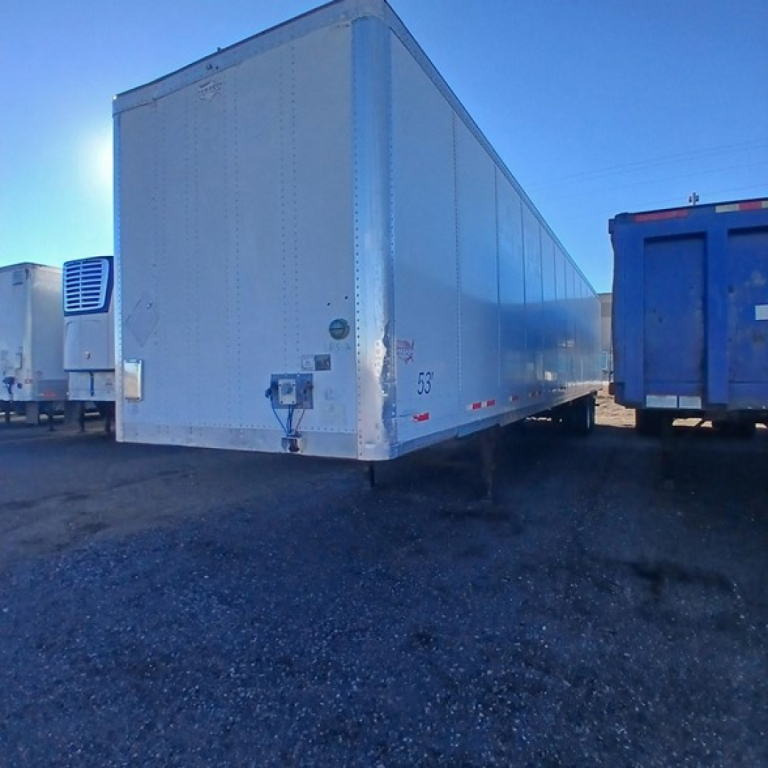
The most common dry van trailer size is 53 feet long and 102 inches wide with tandem axles. That setup is widely used for general freight because it offers strong cubic capacity, broad dock compatibility, and easy integration into standard over-the-road operations. Shorter lengths do exist, but 53-foot vans dominate most fleet and shipper applications.
Is air ride suspension better on a dry van trailer?
Air ride suspension is often preferred on a van trailer because it helps reduce shock transfer to the freight and generally improves ride quality at highway speeds. That matters for palletized consumer goods, packaged products, and loads that can shift or become damaged under a harsher ride. Mechanical suspension can still work for some operations, but air ride is a common choice when cargo protection and smoother handling are priorities.
What should buyers inspect on a used van trailer?
The most important inspection points are floor condition, sidewall damage, roof integrity, rear frame wear, door seals, suspension components, brakes, tires, and slider operation if equipped. Buyers should also look closely at scuff liners, logistic posts, threshold plates, and signs of repeated forklift impact. Water intrusion, patched roof sections, cracked crossmembers, and excessive wear around the rear sill can signal higher future repair costs.
Why do logistic posts and scuff liners matter in a dry van?
Logistic posts give the trailer more cargo securement flexibility by allowing the use of load bars, straps, and decking systems. Scuff liners protect the lower interior walls from forklift and pallet contact, which helps preserve sidewall integrity over time. These features are especially useful in multi-stop freight, LTL work, and any operation with frequent loading and unloading.
Are sliding tandems important on van trailers?
Sliding tandems are important for many buyers because they allow axle position adjustments to help with bridge law compliance, weight distribution, and dock approach needs. A slider adds operational flexibility across different states and loading conditions, which can be useful on long regional or over-the-road routes. A fixed or closed tandem setup can still suit dedicated lanes, but sliders are often preferred when freight weights and route requirements vary.