
Utility Van Trailers For Sale in Texas
Browse Utility van trailers for sale, including 4000D-X dry vans with air ride, sliding tandems, logistics posts, and durable interior lining.
Learn more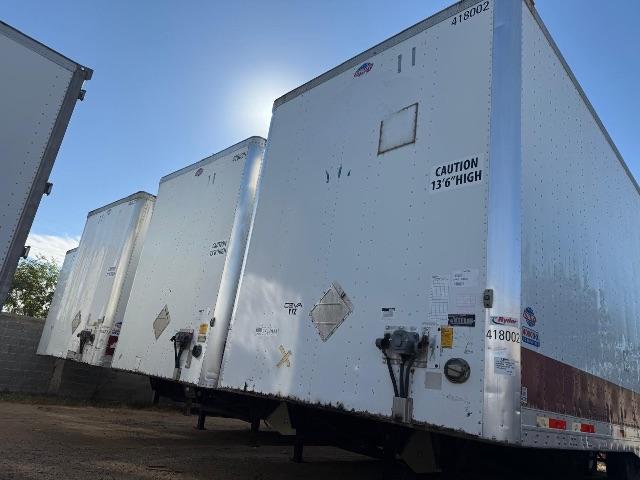
Have utility van trailer to sell? List it here to reach thousands of buyers.
About Utility Van Trailers in Texas
In this class, 53-foot trailers are the standard for over-the-road dry freight, while some regional and specialized applications may use 57-foot configurations where regulations and route profiles allow. Common dry van dimensions are 102 inches wide and 13 feet 6 inches high, which keeps them compatible with standard shipping docks and cube-driven freight. Utility vans are often spec'd with wood floors, aluminum or composite interior liners, aluminum scuff plates, and threshold plates to handle forklift traffic and reduce wall damage. Logistics posts or full logistics track matter if you haul mixed freight, retail loads, or high-volume LTL because they expand securement options and help protect cargo claims.
Suspension and running gear deserve close attention on a used Utility van trailer. Air ride suspension is popular because it improves ride quality for palletized consumer goods, packaged food, and other damage-sensitive freight. Sliding tandems give operators flexibility for bridge law compliance, weight distribution, and tight dock approaches. Tire setup can vary between standard duals and super singles, and some units include tire inflation systems that can lower irregular wear and roadside downtime. Door style is another practical spec choice. Swing doors are simple and common for full rear access, while roll-up doors can be useful in multi-stop delivery work where dock clearance or repeated opening cycles are part of the job.
For Texas operations, dry van buyers often prioritize corrosion resistance, brake and tire condition, and roof integrity because heat, long miles, and constant loading cycles can expose weak points quickly. A stainless steel rear door frame, lined interior, undertray storage, and aluminum wheels are all useful specs for fleets trying to control lifecycle cost. When comparing Utility van trailers for sale, inspect floor wear, sidewall condition, crossmembers, kingpin area, rear impact guard, and signs of prior roof or nose repairs. A well-maintained Utility dry van, also known simply as a van trailer or dry van trailer, remains one of the most liquid and versatile trailer categories in the market.
Frequently Asked Questions
What is the most common size for a Utility van trailer?
The most common size is a 53-foot by 102-inch dry van with a 13-foot 6-inch overall height. That configuration is widely accepted across dock networks, warehouse operations, and long-haul freight lanes. Some Utility van trailers are built in longer lengths such as 57 feet for specific operations, but 53 feet remains the standard choice for broad freight compatibility and resale strength.
What should I inspect first on a used Utility 4000D-X dry van?
Start with the floor, roof, sidewalls, rear frame, and suspension. Forklift wear in the wood floor, punctures or waviness in the lining, patched roof seams, cracked rear thresholds, and damage around the kingpin or tandem area can indicate expensive repairs ahead. Also check door seals, brake condition, tire wear patterns, and any tire inflation system components to see whether the trailer has been maintained consistently.
Are Utility van trailers good for general freight?
Yes. Utility van trailers are built for broad dry freight use including palletized consumer goods, packaged products, retail freight, and many dock-to-dock applications. Features like logistics posts, scuff liners, durable flooring, and air ride suspension make them especially useful for carriers that need one trailer type to handle a wide range of customer freight with minimal cargo exposure.
Which is better on a dry van trailer, swing doors or a roll-up door?
The better choice depends on the work. Swing doors usually provide full rear opening width and are common in linehaul and standard dock freight. Roll-up doors can be useful in urban, route-delivery, or tight-dock situations because they do not swing outward, but they add weight and introduce more moving parts. Buyers should match the door style to loading frequency, dock space, and maintenance preferences.
Why do sliding tandems matter on a Utility van trailer?
Sliding tandems help with axle weight distribution, bridge law compliance, and maneuverability at loading docks. Being able to shift the tandem position can make it easier to scale loads legally and adapt the trailer to different state regulations or shipper requirements. On a used trailer, the tandem slide rails, locking pins, and suspension components should be checked carefully because excessive wear in that area affects both safety and day-to-day usability.