
Stoughton Van Trailers For Sale in Ontario
Browse Stoughton van trailers for sale in Ontario. Compare 28-foot pup vans to 53-foot dry vans with roll-up doors, air ride, logistics posts, and more.
Learn more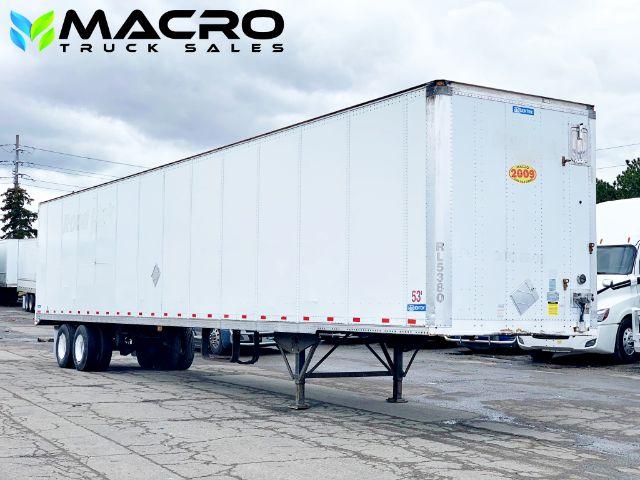
Have stoughton van trailer to sell? List it here to reach thousands of buyers.
About Stoughton Van Trailers in Ontario
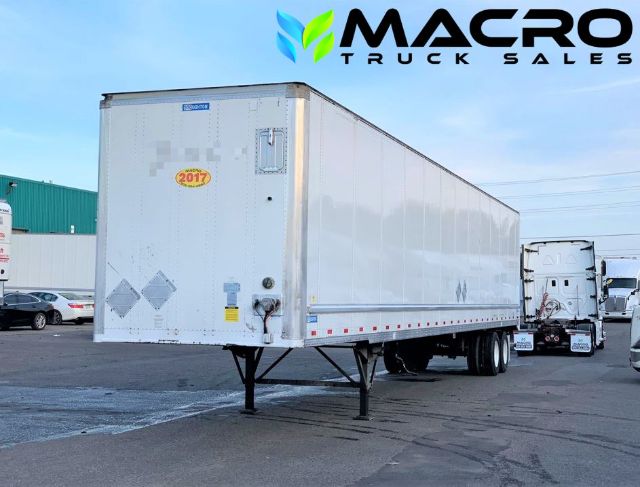
One of the first buying decisions is trailer size and axle configuration. A 28-foot Stoughton pup with a fixed single axle is built for doubles service, city work, and tighter terminal environments, while 45-foot and 53-foot vans with sliding tandems are better suited for dock freight, palletized loads, and highway lanes that demand bridge law flexibility. Suspension type matters too. Spring suspension can be a simpler, lower-cost choice for certain fleets, while air ride is preferred when load protection, ride quality, and dock consistency are higher priorities. In Ontario, buyers should also pay attention to overall height, door opening dimensions, and whether the trailer is set up for cross-border freight patterns or local fleet use.
Construction details drive operating cost over time. Stoughton dry vans are often spec'd with aluminum roofs, galvanized or corrosion-resistant rear frame components, wood-over-steel floors, scuff liners, threshold plates, logistics posts, and E-track. Those features matter if the trailer will see regular forklift traffic, mixed pallet sizes, or high-touch loading. Roll-up doors are common on these trailers because they work well at busy docks and city stops, but door condition, cable condition, and rear frame wear should always be checked closely on used units. Tire inflation systems, side skirts, and low-profile 22.5 tires may also appear, especially on later-model highway vans where fuel economy and tire life are part of the spec.
For a buyer comparing listings, the important questions are usually tare weight, floor condition, lining or scuff protection, suspension type, tandem adjustability, and the trailer's prior duty cycle. A lightly built logistics-spec 53-footer serves a different job than a 28-foot pup designed to pull doubles every day. Check for roof repairs, wall straightness, door seal condition, crossmember integrity, and signs of concentrated forklift wear near the rear threshold and first third of the floor. If the trailer will run in Ontario year-round, corrosion resistance, brake condition, tire spec, and parts availability deserve extra attention, especially on older units that have seen winter road exposure.
Frequently Asked Questions
What lengths are common for Stoughton van trailers?
Stoughton van trailers commonly appear in 28-foot, 45-foot, and 53-foot lengths. A 28-foot van is typically used as a pup trailer for P&D routes, terminal work, or doubles service. A 45-foot or 53-foot van is more common in dock freight, regional distribution, and over-the-road dry freight applications where pallet count and cubic capacity matter more.
What should I inspect first on a used Stoughton dry van?
Start with the floor, rear frame, roll-up door, roof, and suspension. Floor wear from repeated forklift traffic can be expensive to correct, and rear frame damage often shows up around the threshold plate and door opening. Check wall condition, roof bows, crossmembers, brake components, tire wear, and any tire inflation system if equipped. On pup trailers, also confirm the axle setup and doubles-related hardware are appropriate for the intended use.
Is air ride better than spring suspension on a Stoughton van trailer?
Air ride is generally preferred when the freight is sensitive, the route quality is inconsistent, or the fleet wants better ride quality and loading dock consistency. Spring suspension can still be a practical option for certain operations because it is straightforward and often less expensive to maintain. The right choice depends on cargo type, route profile, maintenance philosophy, and how much emphasis is placed on load protection.
What features matter most on a 53-foot Stoughton van trailer?
On a 53-foot Stoughton van, many buyers focus on sliding tandems, logistics posts or E-track, scuff liners, floor composition, rear door type, and overall tare weight. A sliding tandem helps with bridge compliance and load distribution. Logistics equipment improves cargo securement flexibility, while floor and wall protection become important if the trailer will handle frequent palletized freight and repeated dock loading.
Are Stoughton 28-foot van trailers suitable for doubles service?
Many 28-foot Stoughton van trailers are built specifically for doubles applications and terminal-based freight work. Buyers should verify that the trailer is equipped and rated appropriately, including axle configuration, air brake setup, and any converter dolly compatibility requirements used in the fleet. In doubles service, structural condition and rear door functionality are especially important because these trailers often see frequent coupling, uncoupling, and urban stop density.