
Hyundai Van Trailers For Sale in Ontario
Shop Hyundai van trailers for sale in Ontario. Compare 53-foot dry vans with logistics posts, roll-up or swing doors, and sliding tandems.
Learn more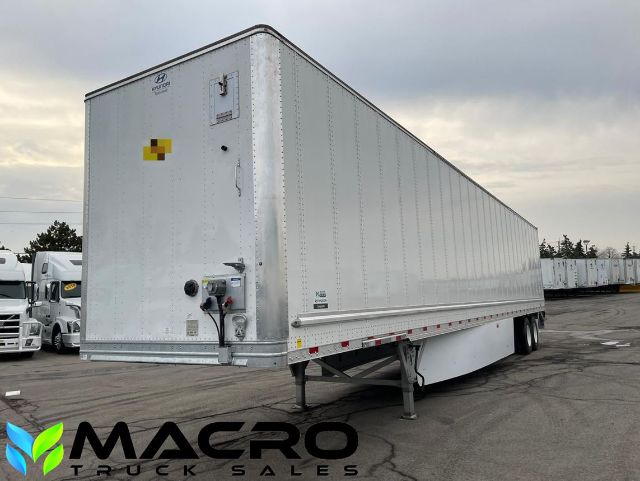
Have hyundai van trailer to sell? List it here to reach thousands of buyers.
About Hyundai Van Trailers in Ontario
A buyer should start with interior configuration before focusing on age or cosmetics. Logistics posts or E-track matter if freight securement flexibility is important, especially for mixed LTL, retail, or high-cube consumer loads. Scuff liners, scuff plate, and threshold plate condition tell you a lot about how the trailer was used and how well it will hold up under forklift traffic. Wood floors remain common because they are easy to repair and work well for general freight, while lined walls and vented bodies can be an advantage for protecting cargo and reducing moisture buildup. Inside height also matters. Many Hyundai vans are listed around 13 feet 2 inches to 13 feet 6 inches overall height, with interior height varying by specification, so door opening and cube should be checked against the freight profile.
Door style and running gear can change how well a trailer fits your operation. Roll-up doors are popular in urban delivery and multi-stop work because they speed dock access and reduce swing clearance issues. Swing doors are simpler, lighter, and often preferred in linehaul service where maximum rear opening is useful. Air ride suspension is common on later Hyundai vans and helps protect sensitive freight, while spring suspension may still appear on some fleet units. Sliding tandems are standard on many 53-foot vans because they help with bridge law compliance, axle distribution, and dock positioning. Buyers should also look for common efficiency and maintenance features such as tire inflation systems, side skirts, low-profile 22.5 tires, and wheel type, since these details affect tire life, fuel economy, and service costs over time.
For Ontario buyers, trailer condition should be evaluated with climate and compliance in mind. Floor wear, roof integrity, door seals, lower rail corrosion, crossmember condition, and rear frame repairs deserve close attention because winter roads and heavy dock cycles can accelerate wear. It is also smart to verify VIN history, prior fleet maintenance, and any signs of accident repair around the nose, side panels, tandem assembly, and kingpin area. A well-spec'd Hyundai van trailer can be a strong value in the used market if the structural components are sound and the trailer matches the freight, lane, and loading practices of the fleet.
Frequently Asked Questions
What are the most common specs on a Hyundai van trailer?
Most Hyundai van trailers in the used market are 53-foot dry vans with a 102-inch exterior width, tandem sliding suspension, wood floor, aluminum body construction, and either swing or roll-up rear doors. Many fleet-spec units also include scuff liners, threshold plates, logistics posts or E-track, low-profile 22.5 tires, and air ride suspension. Exact interior height, lining, and aero equipment can vary by year and original fleet order.
Is a Hyundai Translead dry van a good choice for general freight?
Yes. Hyundai Translead dry vans are widely used in fleet service because they are typically lightweight, straightforward to maintain, and available with practical freight-handling specs. They are a strong fit for palletized dry goods, packaged freight, retail freight, and distribution work where enclosed protection, full dock height, and good cargo cube are priorities. The right trailer still depends on floor condition, door style, lining, and how the prior owner used it.
Should I choose a roll-up door or swing doors on a Hyundai van trailer?
Roll-up doors are often preferred for city and multi-stop applications because they open quickly and do not need space behind the trailer. Swing doors are common in linehaul and dock-to-dock work because they provide a full rear opening, simpler hardware, and lower repair complexity in many cases. The better choice depends on your docks, stop frequency, and how often the trailer is loaded by forklift at crowded facilities.
What should I inspect first on a used Hyundai van trailer in Ontario?
Start with the floor, roof, rear frame, door seals, tandem slider, brakes, tires, and lower side structure. In Ontario service, corrosion around the undercarriage, crossmembers, rear sill, and suspension components deserves careful attention because winter conditions can be hard on trailers. Also inspect the kingpin area, sidewall repairs, interior lining damage, and evidence of heavy forklift impact near the threshold and scuff plate.
Why do sliding tandems matter on a 53-foot Hyundai van trailer?
Sliding tandems give the operator flexibility to adjust axle position for bridge law compliance, weight distribution, and loading dock requirements. That matters on 53-foot vans because freight density and lane requirements can vary from load to load. A slider in good condition also makes it easier to balance legal axle weights and improve day-to-day usability across different shippers and receivers.