
Fruehauf Van Trailers For Sale in Tennessee
Browse Fruehauf van trailers for sale in Tennessee, including 53-foot dry vans for storage, short-haul freight, and general cargo use.
Learn more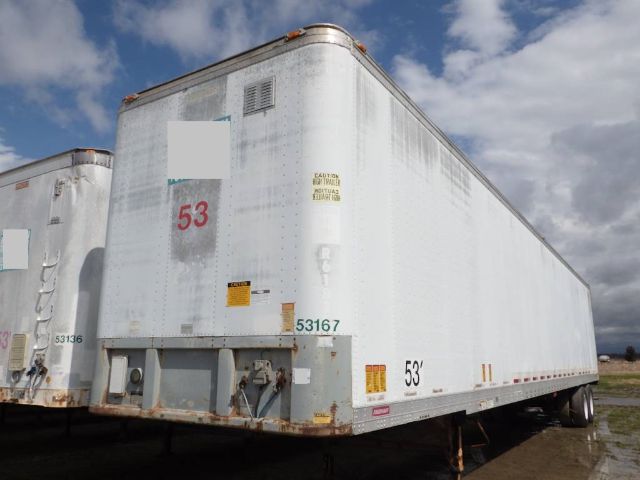
Have fruehauf van trailer to sell? List it here to reach thousands of buyers.
About Fruehauf Van Trailers in Tennessee
The first buying decision is usually application. For dock loading and regular freight movement, look closely at floor condition, rear frame integrity, door seals, and tandem slide function. For storage use, buyers tend to focus more on roof condition, wall lining, moisture intrusion, and whether the trailer will stay parked on stable ground. Plywood lining, threshold plates, and front and rear vents are common features on older van trailers and can add value depending on the cargo. Air ride suspension is another desirable spec because it helps protect palletized or fragile freight and is still preferred by many shippers over spring ride for ride quality.
On an older Fruehauf van trailer, condition matters more than brand familiarity alone. Check crossmembers, kingpin area, landing gear mounts, and the rear sill for corrosion, repairs, or fatigue. Wood floors should be inspected for rot, forklift damage, and soft spots, especially near the rear entry. Tire size, wheel type, and brake spec also affect running cost and serviceability. Some units may have 22.5 low-profile tires, disc wheels, or logistics posts already installed, which can be useful for short regional runs and warehouse support. If the trailer will operate on Tennessee highways instead of sitting as storage, make sure lighting, brakes, suspension components, and DOT-required items are up to current roadworthy standards.
Fruehauf dry vans generally appeal to buyers who want functional enclosed capacity rather than high-spec over-the-road equipment. They are often used for warehouse overflow, onsite storage, agricultural supply storage, local cartage, and dedicated short-haul lanes. A well-maintained older van trailer can still be productive if the structure is sound and the specification matches the work. For most buyers, the smartest comparison points are overall trailer length, door style, suspension type, floor condition, and how much reconditioning will be needed before the trailer goes to work.
Frequently Asked Questions
What should I inspect first on a used Fruehauf van trailer?
Start with the structural areas that are expensive to repair: the roof, front wall, rear frame, crossmembers, kingpin plate, and floor. On older dry vans, water intrusion and forklift damage are common issues, so check for soft floor sections, patched roof panels, damaged lining, and corrosion around the rear sill and door frame. Suspension condition, brake wear, tire age, and tandem slide operation are also critical if the trailer will be used on the road.
Are older Fruehauf van trailers better suited for storage or active freight service?
They can work for either use, but the right fit depends on condition and specification. A structurally sound trailer with good brakes, tires, lights, and suspension can still serve well in local or short-haul freight. Units with more cosmetic wear or deferred running gear maintenance are often better suited for stationary storage. Buyers should match the trailer's actual condition to the intended duty cycle rather than assuming every older dry van is road-ready.
What size Fruehauf van trailer is most common?
The 53-foot dry van is the most common size in the market because it offers maximum legal cargo space for many general freight applications. Some older units may also appear in 48-foot lengths. Standard width is typically 102 inches, and overall height is often 13 feet 6 inches, though exact dimensions should always be verified on the individual trailer.
Is air ride suspension important on a dry van trailer?
Air ride is a valuable feature for many buyers because it improves ride quality and helps reduce shock to palletized, packaged, or fragile cargo. It is especially useful in short-haul and regional applications where freight may be loaded tightly and handled frequently. Spring ride can still be serviceable for certain uses, but air ride is generally preferred when cargo protection and dock-to-dock consistency matter.