
Reefer Trailers For Sale in New Jersey
Browse reefer trailers for sale in New Jersey, including common specs, refrigeration options, insulation features, and regional buying considerations.
Learn moreBrowse Reefer Trailers by Make
Have reefer trailer to sell? List it here to reach thousands of buyers.
About Reefer Trailers in New Jersey
In New Jersey, reefer trailer buyers often need equipment that can handle dense delivery schedules, food distribution, port-related freight, and cold-chain work moving through the Northeast corridor. That makes door style and unloading pattern especially important. Swing doors are still the most common on over-the-road refrigerated trailers, but some operations prefer roll-up doors for frequent dock stops, retail drops, or tighter urban deliveries. Interior details matter just as much. Scuff liners, duct floors or flat floors, logistics posts, and bulkhead compatibility can all affect how well the trailer handles mixed loads, airflow, and palletized freight.
Refrigeration units vary widely by age, emissions tier, fuel type, and electric standby capability. Electric standby can be a strong fit for warehouses, drop lots, and facilities that want to reduce diesel runtime while the trailer is parked. Buyers should also look at unit brand support in their service area, controller type, defrost performance, and the ability to hold setpoint under frequent door openings. If the trailer will haul produce, frozen food, dairy, pharmaceuticals, or floral freight, pay attention to temperature pull-down performance, return air management, and the condition of door seals, drains, and interior lining.
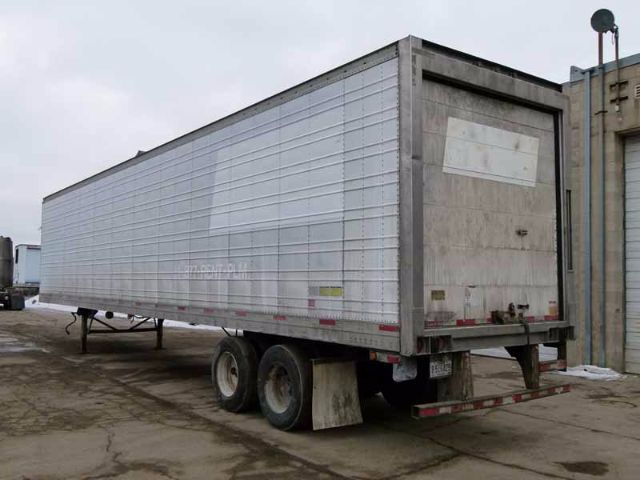
Frame condition, floor wear, sidewall damage, suspension type, tire condition, and rear impact guard integrity all deserve a close inspection on any reefer trailer. Refrigerated trailers tend to stay in demanding service for years, so corrosion around the front wall, crossmembers, thresholds, and underside should be checked carefully, especially in Northeast conditions where road salt is a factor. Buyers comparing reefer trailers for sale should focus on lane length, stop frequency, product temperature requirements, and service access for the refrigeration unit. The right trailer is not just cold. It holds temperature consistently, loads efficiently, and fits the freight profile without adding unnecessary downtime.
Frequently Asked Questions
What should I inspect first on a used reefer trailer?
Start with the refrigeration unit hours, the condition of the insulated body, and the trailer floor and door seals. A reefer can look decent outside and still have costly issues if the insulation has been compromised, the floor restricts airflow, or the unit struggles to maintain setpoint. Check for signs of water intrusion, patched interior lining, corrosion at the front wall and crossmembers, and uneven temperature performance during operation.
Is a 48-foot reefer trailer still a practical choice?
Yes, a 48-foot reefer trailer can still be a practical fit for certain lanes, customer docks, and regional operations. It may be easier to maneuver in tighter delivery environments and can match legacy fleet specs or facility limitations. The tradeoff is reduced cubic capacity compared with a 53-foot trailer, so buyers should compare payload volume, route density, and dock compatibility before deciding.
What is electric standby on a reefer trailer?
Electric standby allows the refrigeration unit to run from shore power when the trailer is parked at a facility equipped with the correct electrical service. This can reduce diesel consumption, lower engine runtime, and help maintain product temperature during loading, staging, or storage. It is especially useful in operations with frequent drop trailer use or warehouse dwell time, but buyers need to confirm voltage compatibility and site infrastructure.
Which reefer trailer features matter most for multi-stop delivery work?
For multi-stop delivery, buyers should pay close attention to door configuration, airflow design, and how quickly the unit can recover temperature after repeated openings. Roll-up doors can be useful for frequent stops, while strong door seals and proper bulkhead setup help limit temperature loss. Interior scuff liners, logistics tracks, and a floor design that supports consistent air movement also become more important when freight changes throughout the route.
How do reefer trailers differ from dry vans?
A reefer trailer has insulated walls, roof, and doors plus a refrigeration unit designed to maintain a controlled cargo temperature. A dry van is built for general freight and does not have the insulated body or cooling system needed for perishable or temperature-sensitive loads. Reefer trailers are heavier, more complex, and more expensive to maintain, but they are essential for freight that must stay chilled, frozen, or within a narrow temperature range.