
Used Trail-Eze Lowboy Trailers For Sale
Browse used Trail-Eze lowboy trailers built for heavy equipment hauling, with low deck heights, ramp options, and payload-focused configurations.
Learn more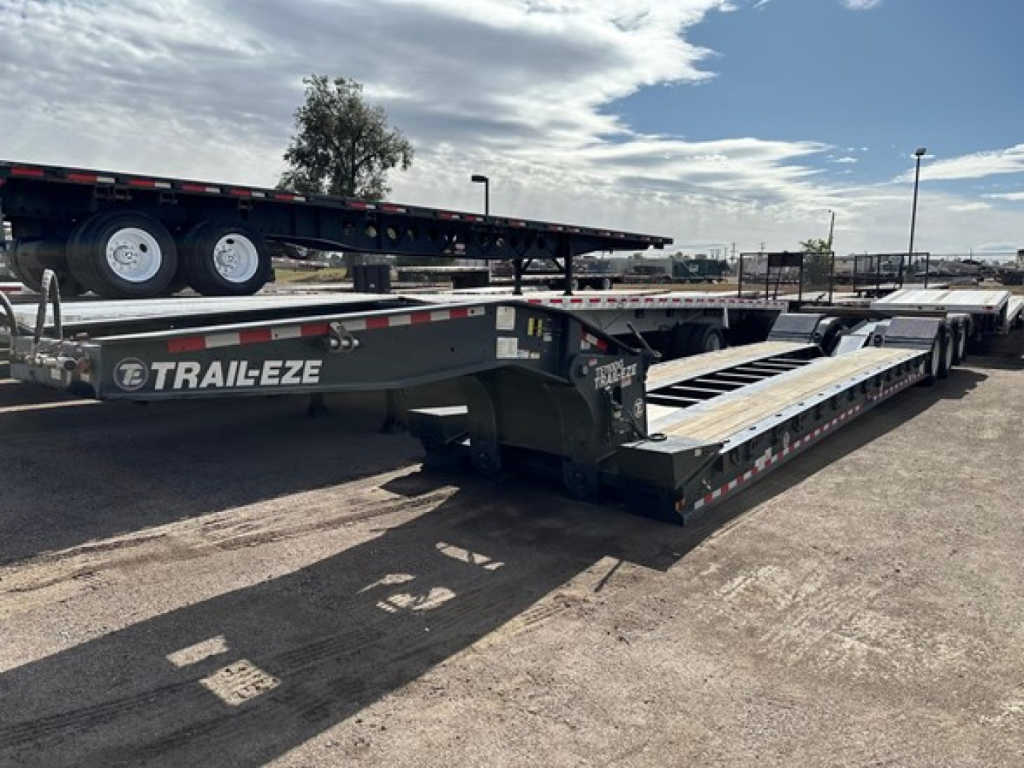
Have used trail-eze lowboy trailer to sell? List it here to reach thousands of buyers.
About Used Trail-Eze Lowboy Trailers
A lowboy trailer, also called a low-bed, double-drop, or equipment trailer depending on the configuration, earns its value from deck height and weight distribution. A lower deck helps keep overall loaded height under bridge limits while improving stability in transit. On used Trail-Eze units, important checkpoints include deck length in the well, loaded deck height, apitong or oak flooring condition, ramp or neck hydraulics, suspension type, and axle spacing. Buyers should also verify tire size, brake condition, wheel-end service history, and whether the trailer uses fixed axles, a spread axle setup, a jeep-compatible configuration, or a flip axle arrangement for higher legal payloads.
Detachable gooseneck lowboys deserve extra attention because neck style directly affects how the trailer is loaded and how efficiently operators can cycle equipment on and off. Mechanical detachable neck and hydraulic detachable neck designs each have their place. Hydraulic necks can speed loading and reduce operator effort, while mechanical systems are often simpler to maintain. Trail-Eze trailers are often found with outriggers, traction aids, chain slots, D-rings, winch provisions, and beam-style deck construction intended for concentrated machine loads rather than general freight. For buyers moving iron every day, frame condition, neck fit, pin and bushing wear, crossmember integrity, and signs of stress around suspension hangers matter more than cosmetic appearance.
Capacity labels on a used lowboy do not tell the whole story, so it is smart to match the trailer to the actual machine fleet and the states where it will run. A trailer that works well for a 30-ton excavator on local jobs may not be the right fit for multi-state permitting, paving spreads, or oversize agricultural transport. Check kingpin setting, loaded axle weights, deck width, rear bridge measurement, and the availability of booster or flip axle options if your operation regularly pushes legal limits. The right used Trail-Eze lowboy should fit your freight profile, loading method, permit strategy, and shop's ability to maintain hydraulic, brake, and suspension systems over the long term.
Frequently Asked Questions
What is the main advantage of a lowboy trailer over a standard flatbed for equipment hauling?
A lowboy trailer provides a much lower deck height, which helps keep overall loaded height legal when hauling tall equipment such as excavators, dozers, and wheel loaders. That lower center of gravity also improves stability during transport and loading. For heavy machinery with substantial operating weight and height, a lowboy is generally the more practical and legally flexible choice than a standard flatbed or step deck.
What should I inspect first on a used Trail-Eze lowboy trailer?
Start with the structural components and load-critical systems. Look closely at the main frame, deck support structure, crossmembers, neck connection points, suspension hangers, axle alignment, brake components, tires, and wheel ends. On detachable neck models, inspect hydraulic cylinders, hoses, locking mechanisms, pins, and bushing wear. Flooring condition, signs of cracked welds, and any evidence of past overloading or poor repairs should be evaluated before cosmetic details.
How do I choose the right axle configuration on a used lowboy?
The right axle setup depends on the weight and footprint of the equipment you haul, plus the permit environment where you operate. Two-axle and three-axle lowboys are common for everyday equipment hauling, while heavier applications may require additional axles, a flip axle, or a booster to meet bridge and axle weight rules. Buyers should compare machine operating weights, track or tire contact points, and expected route restrictions against the trailer's actual axle spread and legal carrying capacity.
Are hydraulic detachable gooseneck lowboys better than mechanical detachable neck trailers?
Hydraulic detachable gooseneck trailers usually make loading faster and less labor-intensive, especially in frequent load-unload cycles. Mechanical detachable neck trailers can be simpler and may be easier for some fleets to maintain with fewer hydraulic components. Neither is automatically better in every application. The better choice depends on operator preference, maintenance capability, loading frequency, and the type of equipment being moved.
What industries commonly use Trail-Eze lowboy trailers?
Trail-Eze lowboy trailers are commonly used in construction, roadbuilding, aggregate, utility, agriculture, municipal, and equipment rental fleets. They are designed for hauling machinery with heavy concentrated loads and taller profiles that require a low deck. Common cargo includes excavators, bulldozers, skid steers, compact track loaders, rollers, pavers, backhoes, and other off-road equipment.