
Trail-Eze Lowboy Trailers For Sale in Colorado
Shop Trail-Eze lowboy trailers for heavy equipment hauling in Colorado. Compare capacities, deck styles, axle setups, and loading features.
Learn more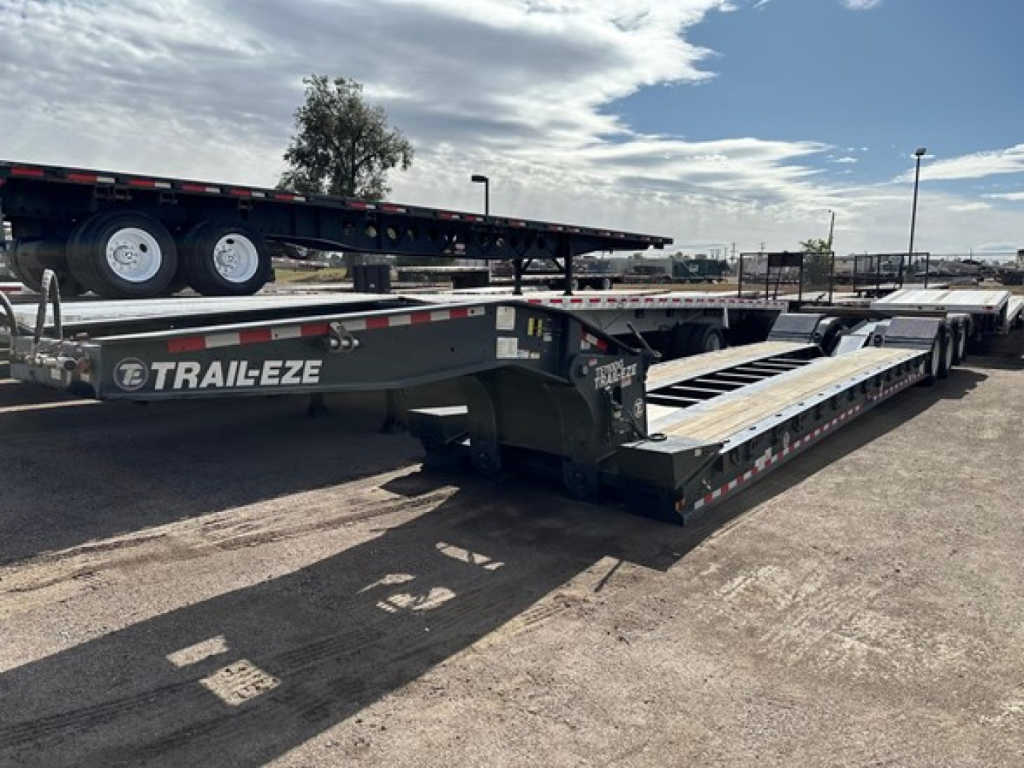
Have trail-eze lowboy trailer to sell? List it here to reach thousands of buyers.
About Trail-Eze Lowboy Trailers in Colorado
Capacity ranges, axle layout, and detach style are the main spec decisions. A fixed neck lowboy can be a practical fit for fleets loading with ramps, while a detachable gooseneck, often called a removable gooseneck or RGN, speeds up loading for tracked equipment and lowers the climb angle. In Colorado, terrain and route planning matter more than they do in flatter states. Grades, winter conditions, and mixed highway to jobsite travel put more value on proper axle spread, brake condition, suspension type, and tire spec. Many buyers also pay close attention to loaded deck length, well width, rear bridge measurement, and kingpin setting because those details affect both legal compliance and how well a trailer balances with the tractor.
Trail-Eze trailers are well known in heavy haul circles for practical construction and equipment-focused design. Depending on model and age, common features can include hydraulic detachable necks, outriggers, apitong or hardwood flooring, chain wells, D-rings, multiple tie-down points, deck inserts, and flip axles or jeep compatibility on heavier setups. A serious buyer should inspect the neck structure, deck crossmembers, main beam condition, hydraulic system, landing gear, and any signs of frame repair around high-stress areas. On used lowboys, deck wear, bushing condition, suspension alignment, and brake and lighting systems deserve the same attention as rated capacity.
For Colorado buyers, the right lowboy is not just about maximum tonnage. It is about hauling the target equipment efficiently across mountain corridors, county roads, and active construction sites without creating unnecessary permit issues or loading delays. A lower deck height can be more valuable than extra deck length if your freight is tall. A detachable neck can save time every day if you load tracked iron frequently. The best Trail-Eze lowboy is the one sized for your machine weights, axle group requirements, and route demands, with enough structural life left to stay productive under real heavy haul use.
Frequently Asked Questions
What is the main advantage of a Trail-Eze lowboy trailer?
The main advantage of a Trail-Eze lowboy is its ability to haul tall and heavy equipment at a lower loaded height than a standard flatbed or deck-over trailer. That lower deck helps keep machines within legal height limits and improves stability in transit. For many equipment fleets, that makes a lowboy the practical choice for moving excavators, dozers, loaders, and similar machinery.
Should I choose a fixed neck or detachable gooseneck lowboy?
That depends on how you load and unload equipment. A fixed neck lowboy can work well if you use ramps and haul wheeled equipment or lighter machines on a regular basis. A detachable gooseneck lowboy, also known as an RGN, is usually preferred for tracked machines because it allows drive-on loading from the ground and reduces loading angle. If your operation moves crawlers, paving equipment, or other low-clearance machinery often, a detachable neck usually adds real day-to-day value.
What specs matter most when comparing used lowboy trailers?
The key specs are rated capacity, loaded deck height, well length, well width, axle configuration, suspension type, and neck style. Beyond those basics, buyers should also look at kingpin setting, rear bridge dimension, tire size, brake setup, and tie-down layout. On a used trailer, structural condition is critical, so inspect the main beams, crossmembers, deck, neck attachment points, hydraulic components, and any evidence of repairs or cracking.
Are Trail-Eze lowboy trailers a good fit for Colorado hauling conditions?
They can be a strong fit for Colorado because equipment haulers in the state often deal with elevation changes, steep grades, and mixed road conditions. A properly spec'd lowboy helps manage loaded height, weight distribution, and machine stability on mountain routes and jobsite access roads. Buyers in Colorado should pay particular attention to axle spread, brake condition, suspension, and tire condition because those details matter more when the trailer will see long grades and variable weather.
What equipment is commonly hauled on a lowboy trailer?
Lowboy trailers are commonly used for construction and road-building equipment that is too heavy, too tall, or too awkward for a standard trailer. Typical loads include excavators, bulldozers, wheel loaders, backhoes, pavers, rollers, skid steers, and some agricultural or industrial machines. The exact machine size a trailer can handle depends on its capacity rating, deck dimensions, axle setup, and how the load is positioned for axle compliance.