
Kalyn Siebert Lowboy Trailers For Sale in Pennsylvania
Shop Kalyn Siebert lowboy trailers for heavy equipment hauling, with removable goosenecks, low deck heights, strong capacity, and jobsite-ready design.
Learn more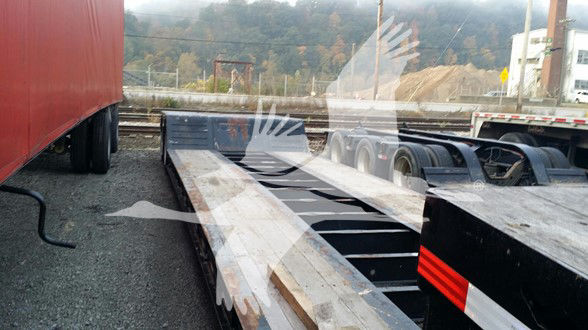
Have kalyn siebert lowboy trailer to sell? List it here to reach thousands of buyers.
About Kalyn Siebert Lowboy Trailers in Pennsylvania
Kalyn Siebert has a strong reputation in construction, paving, utility, and equipment rental fleets because these trailers are typically spec'd for real jobsite use instead of occasional machine moves. Common specs buyers compare include ton rating, concentrated load rating, loaded deck height, ground clearance, main deck length, overall well length, axle count, suspension type, and whether the trailer has fixed or swing-out outriggers. In Pennsylvania and surrounding states, those details matter because weight distribution, bridge laws, permit routing, and mixed highway-to-jobsite conditions can change what works best. A 35-ton class trailer may suit many excavators, dozers, and loaders, but buyers should match capacity to actual machine weight, attachment weight, and how that weight sits across the deck.
The deck and running gear deserve close attention on any used Kalyn Siebert lowboy. Look at the condition of the main beams, neck area, crossmembers, bucket well, outriggers, apitong or hardwood decking, suspension components, and axle alignment. Tire size, brake type, and hub configuration affect maintenance cost and parts availability, especially for fleets trying to standardize service. Mechanical detachable models are often valued for simpler systems and lower long-term complexity, while hydraulic detach trailers can improve loading convenience for operators moving equipment frequently. Ground clearance and loaded deck height are especially important if the trailer will see rough access roads, steep transitions, or pavers and other machines with low approach geometry.
A good Kalyn Siebert lowboy trailer should match the machines, the permits, and the terrain, not just the listed tonnage. Buyers comparing listings should pay attention to neck style, kingpin setting, deck length, axle spread, and any reinforcements or repairs that suggest the kind of work the trailer has done. For many heavy-haul operations, the value of this category comes from dependable load securement options, predictable loading, and a structure that holds up under repeated concentrated loads. When the spec is right, a Kalyn Siebert lowboy can be a very effective trailer for moving construction equipment, agricultural machinery, paving equipment, and other over-dimensional loads that need a low center of gravity and practical field loading.
Frequently Asked Questions
What is the difference between a mechanical removable gooseneck and a hydraulic removable gooseneck on a Kalyn Siebert lowboy?
A mechanical removable gooseneck uses a simpler detach system that typically requires more manual setup but has fewer hydraulic components to maintain. A hydraulic removable gooseneck allows faster, easier loading and unloading, especially for fleets moving equipment often. The better choice depends on loading frequency, driver preference, maintenance resources, and the kinds of jobsites where the trailer will operate.
What capacity lowboy trailer is typical for hauling construction equipment?
A 35-ton lowboy is a common starting point for many excavators, dozers, and loaders, but trailer capacity should always be matched to the actual machine weight and how that weight is distributed on the deck. Attachments, counterweights, and concentrated axle loads can push a machine beyond what a trailer is designed to handle even if the published operating weight seems close. Buyers should compare distributed capacity, concentrated load rating, axle configuration, and permit requirements before deciding.
Why does deck height matter on a lowboy trailer?
Deck height is one of the main reasons buyers choose a lowboy instead of a flatbed or step deck. A lower loaded deck height helps keep tall equipment within legal overall height limits and improves stability by lowering the center of gravity. It also affects loading angle, jobsite access, and clearance over uneven ground, so it is a practical spec, not just a number on paper.
What should I inspect on a used Kalyn Siebert lowboy trailer?
The most important inspection points are the gooseneck structure, main beams, crossmembers, deck condition, outriggers, suspension, axles, brakes, tires, and signs of frame cracking or past repairs. Buyers should also check kingpin wear, neck fitment, axle alignment, lighting, air system condition, and any areas that show concentrated load stress. A lowboy that has spent years hauling heavy iron can still be a strong trailer, but structural condition matters more than appearance.
Are Kalyn Siebert lowboy trailers a good fit for Pennsylvania hauling conditions?
They can be, especially for fleets moving equipment across a mix of highways, secondary roads, and active jobsites. Pennsylvania buyers often need to think carefully about bridge formulas, state permit limits, axle spacing, and the transition from paved roads to rough entrances. A properly spec'd Kalyn Siebert lowboy with the right axle group, deck length, and clearance can work well for regional heavy equipment hauling in that environment.