
Fontaine Lowboy Trailers For Sale in Illinois
Browse Fontaine lowboy trailers for heavy equipment hauling, with removable goosenecks, low deck heights, tri-axle setups, and 55-ton class capacity.
Learn more
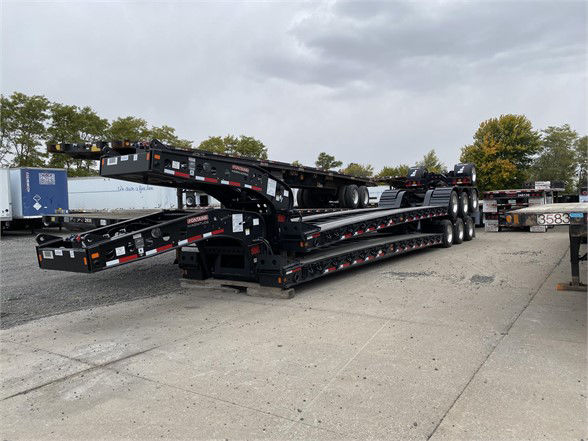
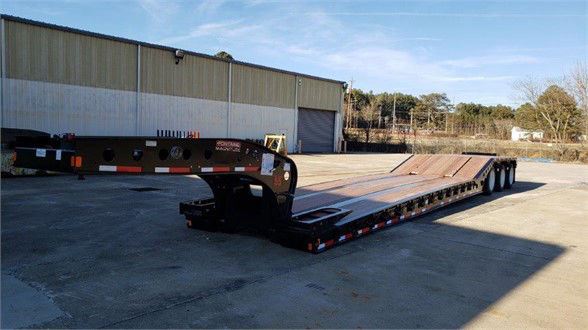
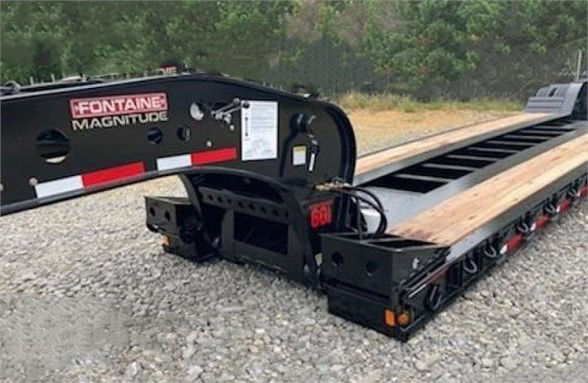
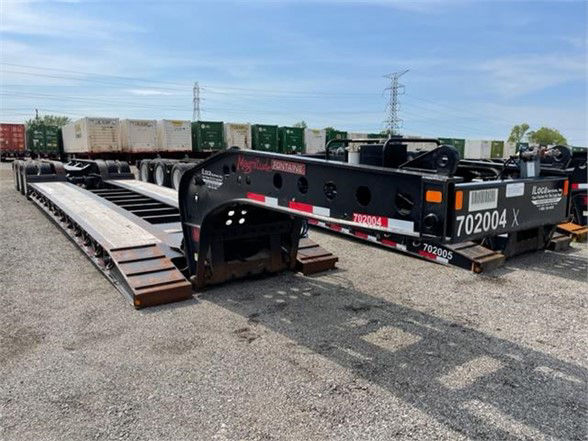
Have fontaine lowboy trailer to sell? List it here to reach thousands of buyers.
About Fontaine Lowboy Trailers in Illinois
The spec decisions that matter most start with deck style and loaded deck height. A flat low deck is a strong choice for general equipment hauling when you need a clear, usable deck and broad machine compatibility. A roller paver or paver-specialized lowboy uses tapered main beams and gentler load angles to help load low-clearance machines without dragging frames, screeds, or undercarriage components. Buyers should compare deck length, boom well dimensions, swing clearance, axle spread, and neck design closely. Features such as ratcheted multi-position necks, ride height adjustment, flip-down front ramps, covered rear bogies, and full outriggers can make a major difference in day-to-day loading flexibility and load securement options.
Capacity ratings on Fontaine lowboys are commonly stated over a defined length, such as 110,000 pounds in 13 to 16 feet depending on the model. That number only tells part of the story. The real buying question is how the trailer carries your actual load footprint, axle group, and center of gravity. A buyer moving excavators may focus on boom well placement and concentrated load strength, while a paving contractor may care more about approach angle, deck transition, and machine clearance. Rear axle compatibility, axle spread, suspension type, aluminum versus steel wheels, and provision for a close-coupled flip axle or third axle lift also matter, especially for operators running under state permit rules across Illinois and the Midwest.
Fontaine remains a popular name in specialized hauling because these trailers are designed around practical fleet use. Steel construction, lockable tool storage, weld-on wheel covers, scuff-resistant components, and accessible service points all support uptime in demanding work. When comparing Fontaine lowboy trailers for sale, pay attention to empty weight versus payload, legal configuration in your operating states, and how the trailer matches the exact machines you haul most often. The right lowboy is not just about maximum tonnage. It is about loading angle, deck usability, permit efficiency, and how quickly the trailer can be turned for the next move.
Frequently Asked Questions
What is the difference between a Fontaine flat low deck and a roller paver lowboy?
A Fontaine flat low deck lowboy is a general-purpose heavy equipment trailer with a clear deck designed for a wide range of machines. A roller paver lowboy is built with tapered main beams and a gentler load angle to handle low-ground-clearance equipment such as pavers, rollers, and similar machinery that can bottom out on a steeper deck transition. If your freight mix includes paving equipment or machines with long, low frames, the roller paver style is usually the better fit.
How much can a Fontaine 55-ton lowboy actually haul?
A 55-ton Fontaine lowboy is typically rated by capacity over a specific deck length, often around 110,000 pounds in a stated section of the deck depending on the exact model and axle setup. Actual legal payload depends on trailer configuration, tractor, axle group, state bridge laws, permit limits, and load placement. Buyers should read the manufacturer rating together with the GAWR, axle spacing, and the states where the trailer will operate rather than relying on the ton rating alone.
Why does deck height matter on a lowboy trailer?
Deck height directly affects legal loaded height and loading stability. A lower loaded deck height helps keep tall equipment under permit thresholds and lowers the machine’s center of gravity during transport. On heavy haul jobs in Illinois and neighboring states, even a few inches can determine whether a load moves more easily under route restrictions. Lower decks can also improve machine fit, but they must be balanced with ground clearance and approach angle for the equipment being loaded.
When should I look for outriggers or a flip axle on a Fontaine lowboy?
Outriggers are useful when hauling wider equipment or when you need additional deck width and better load securement options. A flip axle is typically considered when you need more capacity, better weight distribution, or compliance with bridge and permit requirements. For operators moving multiple machine types or running across several states, a trailer prepped for outriggers and auxiliary axle options usually offers better long-term flexibility than a fixed basic configuration.
Are Fontaine lowboys a good choice for Midwest heavy haul work?
Fontaine lowboys are a strong fit for Midwest heavy haul applications because they are available in practical configurations for construction, paving, and general equipment transport. Features such as tri-axle bogies, detachable goosenecks, low deck heights, and specialized deck designs suit the mix of roadbuilding, site development, and contractor hauling common in Illinois. The best result comes from matching the trailer to your permit environment, tractor spec, and the exact dimensions and weight distribution of your regular loads.