
Fontaine Flatbed Trailers For Sale in Connecticut
Shop Fontaine flatbed trailers for sale in Connecticut. Compare aluminum flatbed specs, deck lengths, axle setups, weight, and securement features.
Learn more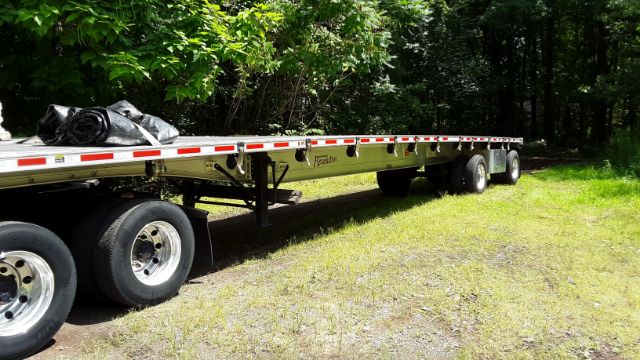
Have fontaine flatbed trailer to sell? List it here to reach thousands of buyers.
About Fontaine Flatbed Trailers in Connecticut
The key buying decisions usually come down to deck length, axle spread, deck type, and securement layout. Common lengths include 48-foot and 53-foot flatbeds, with tandem axle setups being the standard for most applications. Buyers should look closely at the floor system, crossmember spacing, main beam design, and the condition of the trailer neck and rear frame, especially on used units that have seen concentrated forklift loading. Deck material and traction matter too. Aluminum floors help keep weight down, while options like apitong flooring can improve durability in high-contact loading zones. Coil package availability, sliding winches, winch tracks, rub rails, chain spools, and stake pockets all affect how flexible the trailer will be across different freight types.
Fontaine models such as the Revolution series are often chosen by fleets and owner-operators who want a lightweight flatbed trailer without giving up structural integrity. Suspension type, wheel end specification, tire size, and brake package deserve a careful look, particularly if the trailer will run heavy miles in the Northeast. Corrosion resistance is another practical advantage in a state like Connecticut, where winter road treatment can be hard on steel components, air system hardware, and wiring. Buyers should inspect aluminum for repair quality and fatigue around high-stress areas, and verify that lights, ABS, landing gear, and air ride components are in sound working order.
A good flatbed trailer has to match the freight first, then the route, then the loading method. If the work involves frequent side loading, lumber, or bundled material, deck access and securement placement become just as important as gross capacity. If the lane mix includes machinery or irregular freight, look at concentrated load ratings, deck height, and tie-down versatility. Fontaine flatbed trailers generally appeal to buyers who want a lighter trailer with broad freight compatibility, and the best choice is usually the one with the right combination of weight rating, deck spec, and securement equipment for the freight you haul most often.
Frequently Asked Questions
What makes a Fontaine flatbed trailer a strong choice for general freight?
Fontaine flatbed trailers are widely recognized for lightweight construction, especially in aluminum and combo designs, which helps increase legal payload without moving into specialized trailer territory. They are commonly used for building products, machinery, steel, and palletized freight because they offer a practical mix of low empty weight, dependable frame design, and standard flatbed securement features such as stake pockets, rub rails, and winch systems.
What should I inspect first on a used Fontaine flatbed trailer?
Start with the frame, crossmembers, floor condition, suspension, brakes, tires, and all securement points. On an aluminum flatbed, inspect for cracks, poor-quality repairs, corrosion around mixed-metal contact points, and fatigue near the neck, axle area, and rear impact section. Also check landing gear operation, ABS function, air lines, lights, and the condition of the rub rail, stake pockets, and winch track because those parts see constant use and directly affect day-to-day load securement.
Are Fontaine flatbed trailers usually aluminum or steel?
Many Fontaine flatbed trailers are aluminum or aluminum-steel combo designs rather than full steel construction. Aluminum helps reduce tare weight and improve payload efficiency, while combo trailers use steel in selected high-stress areas for strength and durability. The best choice depends on the freight, loading methods, road conditions, and how much emphasis you place on empty weight versus long-term resistance to concentrated wear.
What trailer length is most common for a Fontaine flatbed?
The most common flatbed lengths are 48 feet and 53 feet, with tandem axles being the standard setup in many operations. A 48-foot flatbed remains a common choice for versatile freight and easier maneuvering, while a 53-foot model can provide added deck space for lighter or longer loads. Buyers should match trailer length to the freight profile, state bridge laws, customer dock access, and route restrictions rather than choosing length on deck space alone.
Which specs matter most when comparing Fontaine flatbed trailers?
The most important specs are empty weight, GVWR, deck length, deck height, axle configuration, floor type, suspension, brake system, tire size, and securement equipment. Buyers should also pay attention to concentrated load capability, crossmember spacing, kingpin setting, and the number and placement of winches, chain ties, stake pockets, and rub rail options. Those details determine how efficiently the trailer handles real freight, not just what it looks like on paper.