
Used Clark Flatbed Trailers For Sale
Browse used Clark flatbed trailers with specs buyers want, including deck length, axle setup, suspension, securement options, and frame design.
Learn more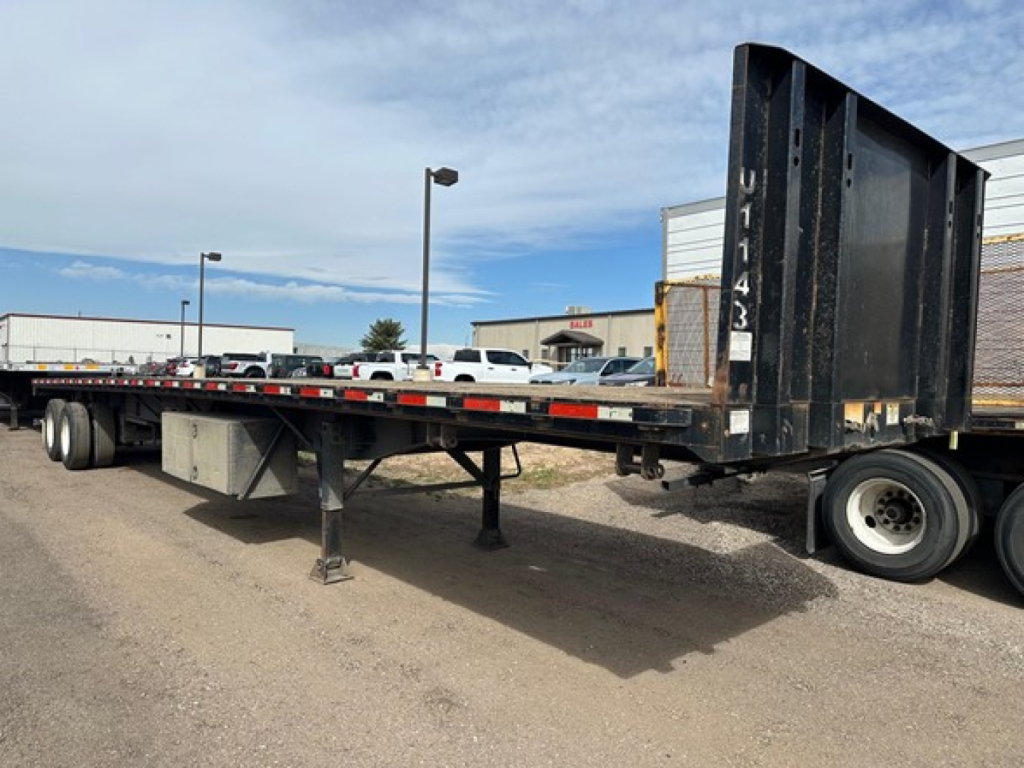
Have used clark flatbed trailer to sell? List it here to reach thousands of buyers.
About Used Clark Flatbed Trailers
On a used Clark flatbed, the details around the trailer's structure and running gear tell you how it will hold up in service. Check for frame condition around crossmembers, rail integrity, deck wear, and any signs of repairs near the suspension mounts or slider assembly. Many buyers prefer air ride with a sliding tandem for load protection and axle positioning flexibility, especially when bridge law and kingpin settings matter on regional and over-the-road routes. Wheel and tire spec also affects operating cost, with 22.5 low-profile rubber being common on general freight flatbeds.
Securement layout is a major buying point in this segment. Stake pockets, rub rails, sliding winches, chain spools, and bulkheads all change how quickly a driver can load, tarp, and tie down freight. A bulkhead can add protection when hauling certain forward-shifting loads, while a clean rub rail and functional winch track make day-to-day securement more efficient. Buyers comparing used flatbeds should also look at toolbox provision, ICC bumper condition, lighting, and the overall usability of the deck for forklifts, cranes, and side loading.
Clark flatbed trailers appeal to fleets and owner-operators who want a no-nonsense platform trailer for general commodity hauling. The best used units are the ones with a straight frame, solid deck, consistent tire wear, and securement hardware that matches the freight profile. If the trailer will spend time in steel, pipe, or construction service, pay close attention to deck fasteners, rail damage, and evidence of concentrated load stress. A well-kept used Clark flatbed can be a practical option for buyers who need a versatile trailer, also known in many operations simply as a platform trailer, that is easy to maintain and adaptable across multiple lanes.
Frequently Asked Questions
What should I inspect first on a used Clark flatbed trailer?
Start with the frame, main beams, crossmembers, and deck condition because those areas determine the trailer's structural value. Then inspect the suspension, slider, axle alignment, brakes, tires, lighting, and securement components such as stake pockets, rub rails, and winches. Uneven tire wear, cracked welds, bent rails, or deck rot can point to costly repairs or a trailer that has seen hard concentrated loading.
What deck and securement features are common on Clark flatbed trailers?
Used Clark flatbeds often show up with wood decks, steel main beams, stake pockets, rub rails, sliding winches, and pipe spools. Some units also include a bulkhead and one or more toolboxes. These features matter because they affect how easily the trailer can handle mixed freight, chain and strap securement, and day-to-day loading in construction, steel, and general commodity service.
Is a sliding tandem important on a used flatbed?
A sliding tandem is valuable for many buyers because it gives flexibility in axle weight distribution and helps with bridge compliance. It can also make the trailer easier to position for different freight lengths and loading patterns. On a used trailer, confirm that the slider pins engage properly, the rails are not excessively worn, and there is no visible damage around the suspension mounting points.
What freight is a Clark flatbed trailer best suited for?
Clark flatbed trailers are typically suited for general freight that loads from the side, top, or rear and does not require enclosure. Common applications include lumber, steel products, pipe, machinery, building materials, crated freight, and palletized loads. The exact fit depends on deck condition, trailer length, securement layout, and whether the trailer has features like a bulkhead or specialized spool and winch arrangements.