
Clark Flatbed Trailers For Sale in Colorado
Shop Clark flatbed trailers for sale in Colorado. Compare 48-foot steel flatbeds, deck specs, tandem setups, and securement features.
Learn more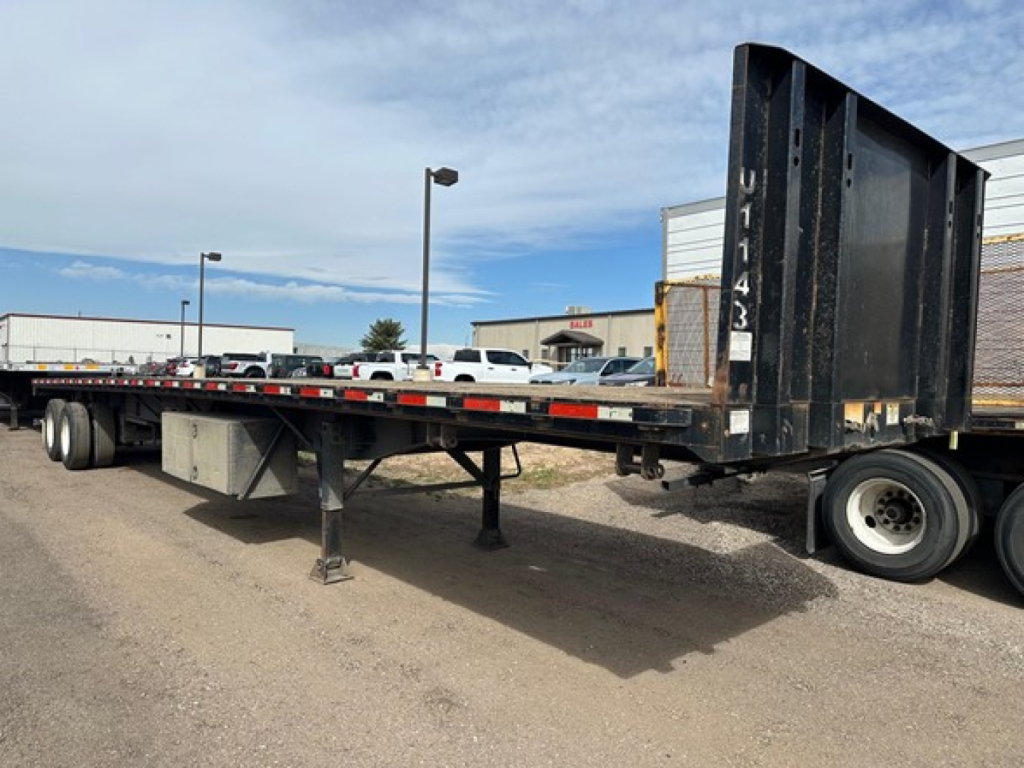
Have clark flatbed trailer to sell? List it here to reach thousands of buyers.
About Clark Flatbed Trailers in Colorado
The first buying decision is usually structure and deck configuration. Steel flatbeds tend to appeal to buyers who prioritize ruggedness and simpler repair work after hard use, especially in fleets that regularly load dense freight or operate on rough yards and job sites. A wood deck remains common because it offers good friction for cargo, is familiar to shippers and drivers, and is easier to replace in sections when wear shows up. Buyers should look closely at main beam condition, crossmember spacing, rail integrity, deck wear, and any signs of impact damage around the rear frame, bulkhead, and landing gear mounts. If a trailer includes pipe spools, stake pockets, and sliding winches, that usually points to a unit set up for versatile securement across different load profiles.
Suspension and axle layout are just as important as deck specs. Closed tandem configurations are common on flatbeds used in general freight service, and an air ride suspension can help protect cargo while improving ride quality over uneven roads. A slider adds flexibility for bridge law compliance and weight distribution, which matters when load lengths and commodity weights vary from trip to trip. Tire size, wheel type, brake condition, and slider operation all deserve a close inspection, especially on used trailers that may have spent time in seasonal climates. In Colorado, buyers should also pay attention to corrosion, moisture exposure, brake system condition, and how the trailer has held up to elevation changes, winter roads, and frequent load securement cycles.
A good Clark flatbed trailer is usually defined by how well it matches the freight, not by extras alone. Bulkheads can add value for certain commodity mixes, while tool boxes, ICC bumpers, and practical winch placement improve day-to-day usability. Buyers comparing listings should focus on legal payload potential, deck usability, securement flexibility, suspension type, and evidence of structural maintenance. For operators moving steel, lumber, equipment, pipe, or building products, a well-kept Clark flatbed can be a practical trailer choice with the familiar specifications most shippers and drivers expect from a standard platform trailer, also known simply as a flatbed trailer.
Frequently Asked Questions
What should I look for first when buying a used Clark flatbed trailer?
Start with the trailer's structural condition. Inspect the main beams, crossmembers, outer rails, kingpin area, suspension mounts, and rear frame for cracks, repairs, bends, or corrosion. Then evaluate the deck, especially if it is wood, for rot, soft spots, broken boards, and fastener issues. After that, check the sliding winches, stake pockets, tandem slider, brakes, tires, and air system. A flatbed can look acceptable at a glance but still have expensive structural or running gear problems that affect safety, payload, and maintenance costs.
Are steel flatbed trailers a good choice for Colorado hauling?
Steel flatbed trailers can be a strong fit for Colorado operations because they are generally durable, straightforward to repair, and well suited to mixed-duty freight. They often perform well in construction, steel, pipe, and equipment applications where trailers see rough loading conditions or uneven job sites. The tradeoff is weight. A steel trailer may weigh more than an aluminum-spec trailer, which can reduce net payload depending on the freight. Buyers should match trailer tare weight to the commodities they plan to haul most often.
Why do sliding winches and stake pockets matter on a flatbed trailer?
Sliding winches and stake pockets give a flatbed more securement flexibility. They allow the driver to position straps and chains where the load requires them instead of being limited to fixed points. That matters when hauling mixed freight, partial loads, pipe, lumber, machinery, or irregular freight with different tie-down patterns. A trailer with a practical securement layout is usually easier to dispatch across more load types and can reduce loading delays caused by poor tie-down placement.
What is the benefit of an air ride slider tandem on a flatbed?
An air ride slider tandem helps in two key ways. Air ride can reduce shock transmitted to the cargo, which is helpful for freight that is sensitive to road vibration or rough pavement. A sliding tandem allows adjustment of axle position for bridge law compliance and better weight distribution across the tractor and trailer. That flexibility is useful when freight lengths and weights change from load to load. Buyers should make sure the slider locks engage properly and that the suspension and air components are in sound condition.
What freight is a Clark flatbed trailer commonly used for?
Clark flatbed trailers in this class are commonly used for building materials, structural steel, pipe, machinery, palletized freight, and general commodities that need open-deck access. A standard 48-foot by 102-inch flatbed works well when freight must be loaded from the side, top, or rear by forklift or crane. Features like bulkheads, pipe spools, and winch tracks can make the trailer more useful for specific cargo types, but the main advantage of a flatbed remains its versatility across a wide range of non-enclosed freight.