
East Dump Trailers For Sale in Kansas
Browse East dump trailers for sale in Kansas. Compare end dump specs, frame styles, axle setups, tarp systems, liners, and condition details.
Learn more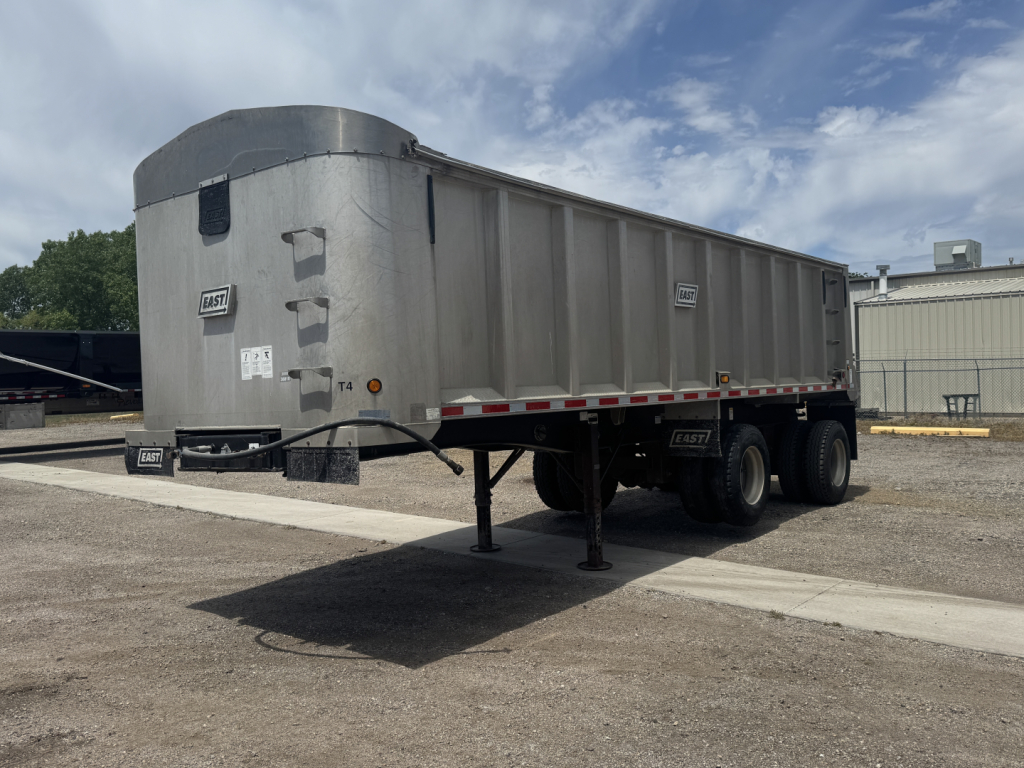
Have east dump trailer to sell? List it here to reach thousands of buyers.
About East Dump Trailers in Kansas
An East end dump, also known simply as an end dump trailer, is built to unload from the rear by raising the body with a hydraulic hoist. That makes it a practical fit for stockpiling gravel, sand, millings, dirt, and other free-flowing materials where fast dump cycles matter. Buyers should look closely at suspension type, axle spread, and lift axle configuration, especially if the trailer will run under Kansas bridge and weight limits. Air ride suspension is common and helps protect both the trailer and the load on mixed road conditions. Axle spread, wheel setup, brake condition, and tire remaining life all affect operating cost right away, so those are not small details on a used dump trailer.
Spec details on East dump trailers can make a big difference in day-to-day usability. A manual or electric tarp system is important for load control and compliance. A liner can be valuable when hauling asphalt, sticky material, or abrasive rock because it improves cleanout and reduces body wear. Tailgate style matters too. A top-hinged tailgate is common for aggregate and demolition applications, while other gate setups may suit different discharge preferences. Buyers should also inspect the hoist, hinge points, crossmembers, landing gear, kingpin area, and any signs of cracking around stress points. On an aluminum-bodied trailer, check for prior weld repairs and overall straightness of the tub. On steel-frame units, corrosion and previous reinforcement work deserve a close look.
For Kansas operators, an East dump trailer often needs to cover both highway miles and uneven jobsite access, so matching the trailer to the route is just as important as matching it to the material. A lighter trailer may improve payload on regional aggregate runs, while a heavier full-frame setup may hold up better in severe service. If the trailer will spend time on soft ground or uneven dump sites, overall stability, suspension condition, and body geometry deserve extra attention. The best East dump trailer for sale is usually the one with the right combination of capacity, weight, structural condition, and spec for the material you haul every day.
Frequently Asked Questions
What should I look for first when buying a used East dump trailer?
Start with the structural condition of the tub, frame, hoist, and suspension. On an East dump trailer, buyers should inspect the kingpin area, hinge assembly, crossmembers, landing gear mounts, tailgate hardware, and any repaired cracks or welds. Tire and brake condition affect immediate operating cost, but the more expensive problems are usually in the body structure, hoist system, or frame alignment.
Are East end dump trailers better in aluminum or steel-frame configurations?
That depends on the application. An aluminum East dump trailer usually offers lower tare weight and better payload potential, which matters in aggregate and grain hauling. A steel frame or full-frame configuration can add durability in severe service, especially on rough job sites or when hauling demolition debris and other punishing materials. Buyers should match the build to the material, road conditions, and expected duty cycle rather than assume one setup is always better.
Why does axle spread matter on an East dump trailer?
Axle spread affects bridge law compliance, weight distribution, and maneuverability. In Kansas, axle configuration can influence how much payload you can legally carry and how the trailer tracks on both pavement and job sites. A wider spread can help with legal weight distribution, while lift axles can add flexibility depending on the load. It is important to compare axle spacing with your typical route, permit needs, and loading practices.
What trailer options are most useful on an East dump trailer?
Tarp systems, liners, lift axles, suspension choice, and tailgate design are among the most useful options. A tarp helps with load securement and road compliance. A liner helps material release and protects the body when hauling abrasive or sticky loads. Air ride suspension is common for ride quality and trailer protection. Tailgate style should match the way you dump, because discharge control can affect both safety and productivity.
Is a full-frame East end dump a good choice for construction work?
A full-frame East end dump can be a strong fit for construction and demolition service where the trailer sees rough access roads, uneven ground, and repeated heavy loading. Full-frame construction generally adds strength and can improve durability in hard use, although it often comes with more weight than a lighter configuration. Buyers need to balance durability against payload, because the right answer depends on whether the trailer spends more time on the highway or in severe off-road conditions.