
Drop Deck Trailers For Sale in Iowa
Browse drop deck trailers for sale in Iowa. Compare step deck specs, lengths, axle setups, deck height, suspension, and load capacity.
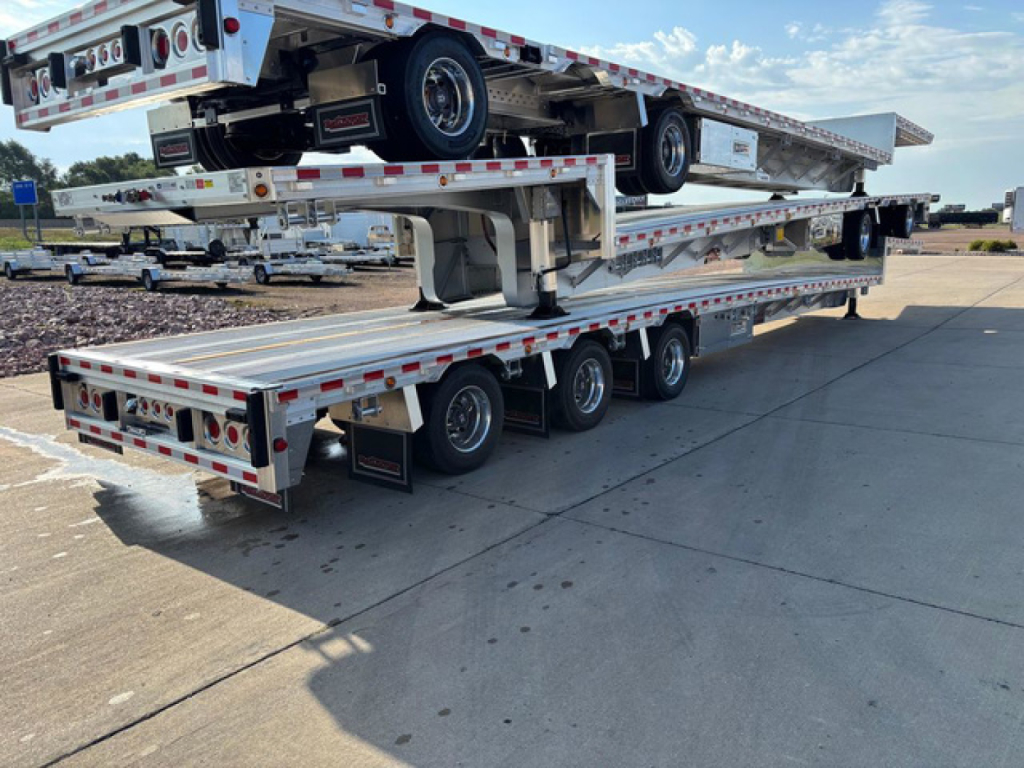

Have drop deck trailer to sell? List it here to reach thousands of buyers.
Drop Deck Trailers in Iowa
A buyer should pay close attention to deck dimensions, loaded deck height, axle configuration, and suspension. In Iowa and across the Midwest, a step deck often sees mixed freight, so versatility matters. Air ride suspension is common because it helps protect sensitive cargo and improves ride quality over long hauls. Sliding axles or spread axle arrangements can help with bridge compliance and load placement, but they also affect maneuverability and tire wear. Trailer weight matters too. A lighter aluminum wheel package or a lighter trailer spec can preserve payload, while steel construction remains popular for durability in hard daily use.
Structural details separate a light-duty trailer from a real workhorse. Buyers often compare main beam design, crossmember spacing, apitong or hardwood flooring, winch track placement, chain slots, and the number and style of tie-down points. On many drop decks, the upper deck must be usable enough to carry partial freight while still leaving room for equipment loading on the lower deck. Ramps, ramp brackets, toolboxes, and coil package options may be important depending on the cargo. Widespread axles, air-ride suspensions, and heavy-duty landing gear are common specs on trailers expected to handle construction equipment, industrial freight, and regional building materials.
The right drop deck comes down to freight mix and operating lanes. A carrier hauling forklifts, skid steers, and compact equipment may prioritize ramp setup, concentrated load rating, and lower deck length. A buyer focused on general commodity freight may care more about tare weight, securement options, and ease of loading from docks or the ground. In Iowa, where agricultural, construction, and manufacturing freight all overlap, a well-specced drop deck trailer can cover a wide range of applications while keeping taller loads legal and easier to book.
Frequently Asked Questions about Drop Deck Trailers in Iowa
What is the difference between a drop deck trailer and a flatbed trailer?
A drop deck trailer has two deck levels, an upper deck and a lower main deck, which allows taller freight to ride lower than it would on a standard flatbed. That lower deck height is the main reason buyers choose a step deck. It helps keep loads within legal height limits while still providing open-deck loading from the sides, rear, or overhead.
What freight is commonly hauled on a drop deck trailer?
Drop deck trailers are commonly used for equipment, tractors, forklifts, palletized material, lumber, steel products, pipe, and crated industrial freight. They are especially useful for cargo that is too tall for a flatbed but does not need the very low deck height of a lowboy. Many fleets use them as a flexible trailer for mixed freight because they can handle both machinery and standard open-deck loads.
What specs matter most when buying a drop deck trailer?
The most important specs usually include overall length, lower deck length, deck height, width, axle spread or slider setup, suspension type, and tare weight. Buyers should also review flooring, crossmember spacing, concentrated load rating, and securement equipment such as winch tracks, chain ties, and rub rails. Those details affect legal loading, payload, durability, and how many different freight types the trailer can handle.
Are spread axle drop deck trailers better than tandem axle models?
A spread axle drop deck can improve weight distribution and help with certain bridge law requirements, which is useful for heavier or irregularly positioned freight. A tandem axle trailer is often easier to maneuver in tighter yards and urban delivery points. The better choice depends on where the trailer runs, how often heavy concentrated loads are hauled, and how important turning radius and tire wear are to the operation.
Is air ride suspension worth it on a step deck trailer?
Air ride suspension is a popular choice because it gives better ride quality and helps protect machinery, finished products, and other sensitive cargo. It is especially valuable for fleets hauling mixed freight over long distances or rougher regional roads. Mechanical suspension can still make sense for some applications, but air ride is often preferred for cargo protection, driver acceptance, and resale appeal.