
Fontaine Drop Deck Trailers For Sale in New Mexico
Shop Fontaine drop deck trailers for sale in New Mexico. Compare aluminum and steel specs, deck length, axle setups, tie-down options, and payload fit.
Learn more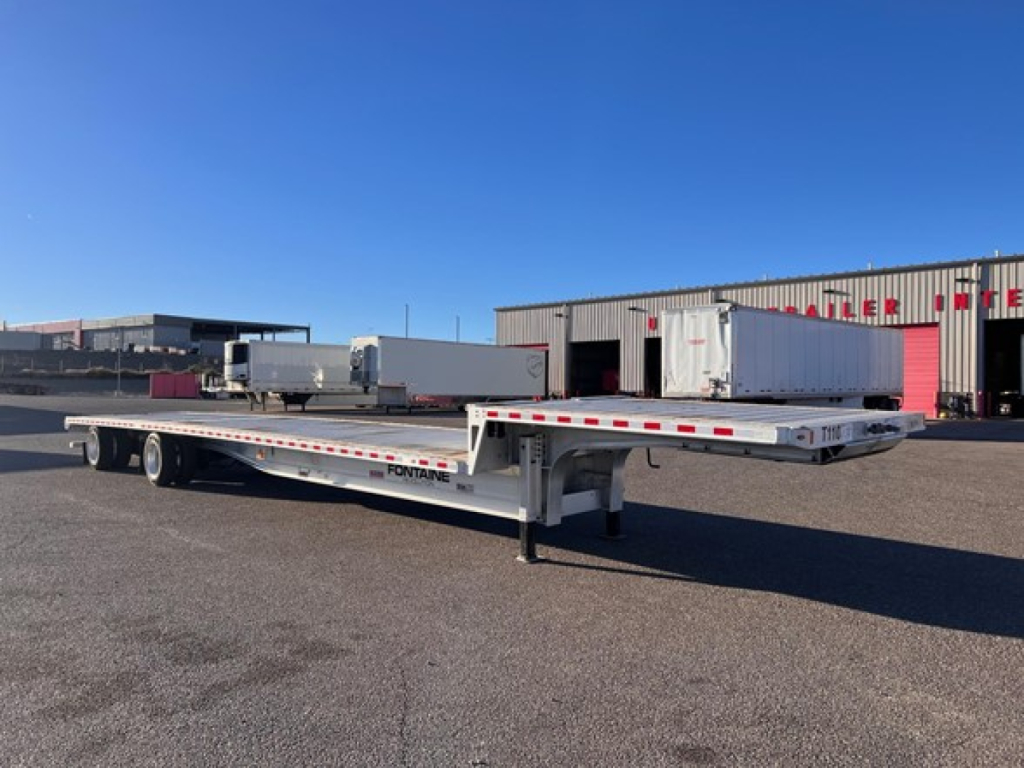
Have fontaine drop deck trailer to sell? List it here to reach thousands of buyers.
About Fontaine Drop Deck Trailers in New Mexico
One of the first decisions is construction. Fontaine is well known for aluminum and aluminum-combo designs that help reduce tare weight and improve payload capacity, especially on 53-foot trailers. Buyers comparing used and newer Fontaine step decks often look closely at main beam material, crossmember spacing, deck condition, and rail design. Features like nail strips, aluminum floors, coil packages, chain pull-outs, winch tracks, sliding winches, and rear sliding axles can make a big difference depending on the freight mix. Air ride suspension is common on this category because it helps protect sensitive cargo and improves ride quality on rougher roads.
Deck dimensions and axle configuration drive day-to-day usability. A typical Fontaine drop deck may have a 10 to 11 foot upper deck and a lower deck around 37 to 43 feet, with legal width at 102 inches. Tandem axle setups are common, but spread axles and sliding axle arrangements also show up depending on bridge law needs and load distribution. Buyers should verify loaded deck height, loaded kingpin setting, tire size, suspension type, and the condition of wear items like brakes, bushings, air bags, and tires. On a used trailer, look for damage around the transition area, deck repair history, cracked welds, and signs of overloading near the suspension and axle slider.
If the work involves oilfield support, equipment hauling, agricultural freight, or construction materials across New Mexico and surrounding states, tie-down flexibility is usually as important as trailer weight. Fontaine step decks are often spec'd with combination chain and strap securement, rub rails, stake pockets, and tool storage to support different cargo types on the same trailer. The best match comes down to freight profile, target payload, route restrictions, and how often the trailer needs to handle forklifts, concentrated loads, or irregular machines. A properly spec'd Fontaine drop deck can cover a wide range of legal-height freight while staying versatile enough for regional and over-the-road flatbed work.
Frequently Asked Questions
What is the difference between a Fontaine drop deck trailer and a standard flatbed?
A Fontaine drop deck trailer has two deck levels, with the rear deck sitting lower than the front deck. That lower deck height allows taller freight to move legally without requiring a lowboy in many situations. A standard flatbed has a single deck height, which limits the legal load height for taller machines, stacked materials, and crated equipment.
Are Fontaine drop deck trailers typically aluminum or steel?
Fontaine drop deck trailers are commonly found in aluminum and aluminum-combo configurations, though exact construction depends on the model and original spec. Aluminum designs reduce empty weight and can improve payload capacity, while steel components may be used in high-stress areas for durability. Buyers should confirm main beam material, floor type, and rail construction because those details affect tare weight, repair cost, and long-term application fit.
What should I inspect on a used Fontaine step deck trailer?
The most important inspection points are the main beams, crossmembers, transition area between upper and lower deck, suspension, axle slider, brakes, tires, and deck surface. Look for cracked welds, bent rails, previous repairs, corrosion, and wear around securement points like winch tracks, chain pulls, and stake pockets. It is also smart to verify the VIN plate, axle ratings, tire size, and any signs that the trailer regularly carried concentrated or off-center loads.
What freight is a Fontaine drop deck trailer best suited for?
This trailer class is well suited for freight that exceeds standard flatbed height limits but does not require a detachable lowboy. Common loads include tractors, skid steers, lifts, bundled steel, pipe, lumber packs, palletized materials, and crated industrial equipment. The lower deck gives more vertical clearance, while the open sides and multiple tie-down options keep it versatile for mixed freight.
Do sliding axles and air ride matter on a drop deck trailer?
Yes, both can be valuable depending on the lanes and freight. A sliding axle helps with bridge law compliance, load distribution, and kingpin adjustment, which can be important when hauling freight with uneven weight concentration. Air ride suspension improves cargo protection and ride quality, making it a strong choice for machinery, finished products, and loads that do not handle road shock well.