
New Kenworth Dump Trucks For Sale
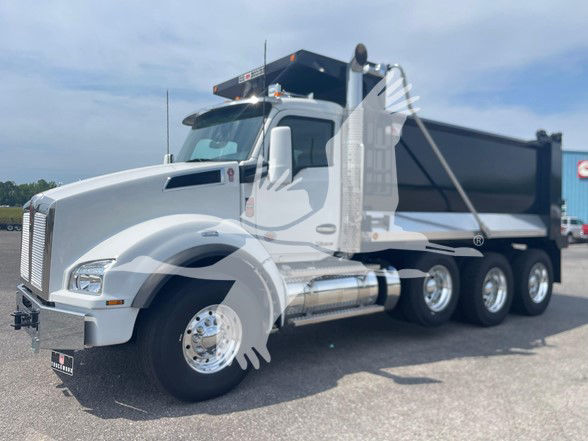
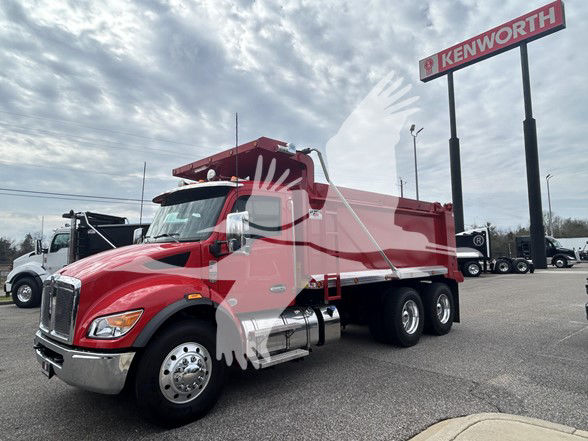
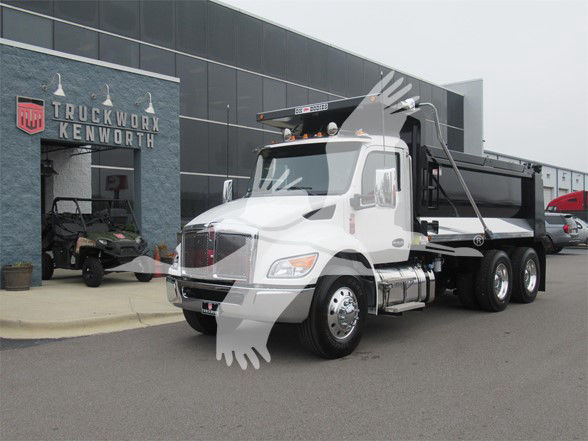
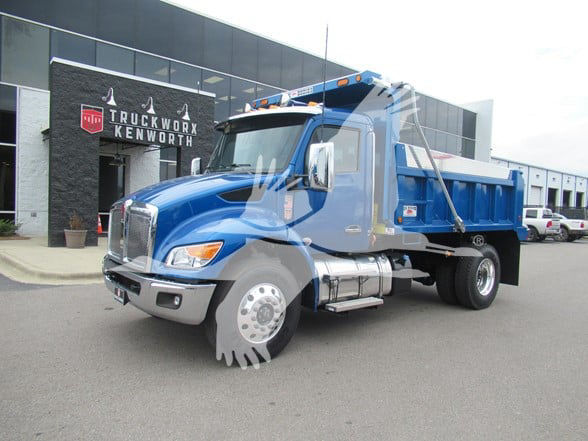
Shop new Kenworth dump trucks including T380, T480, and T880 models with vocational specs for construction, aggregate, and municipal hauling.
Learn more
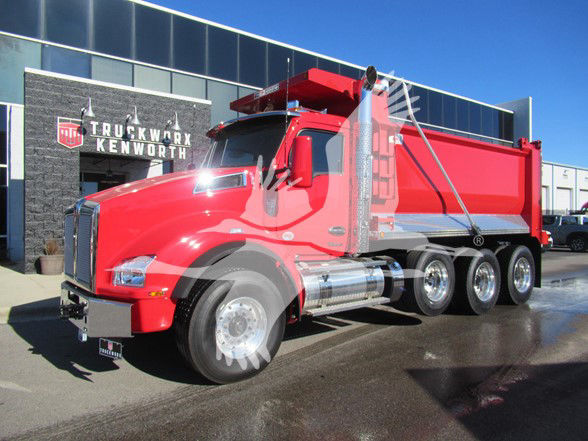
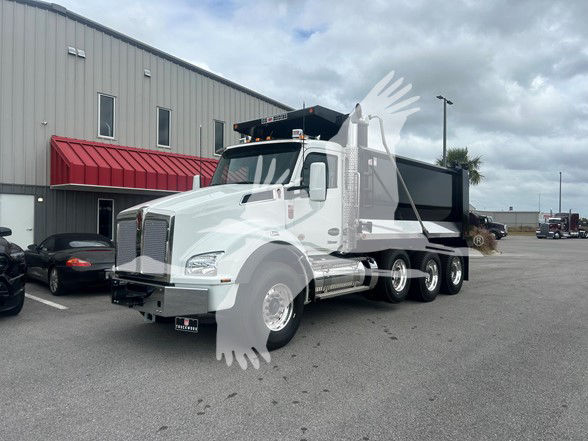
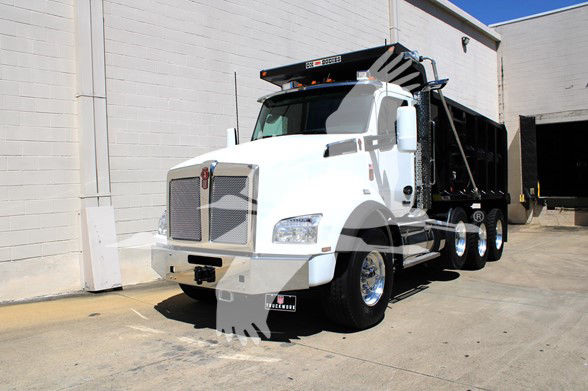
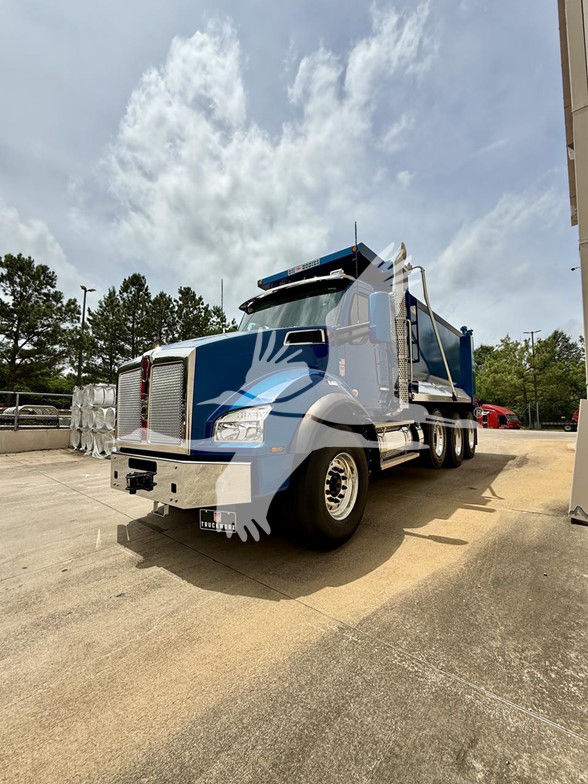
Have new kenworth dump truck to sell? List it here to reach thousands of buyers.
About New Kenworth Dump Trucks
A lot of the buying decision comes down to axle configuration, wheelbase, suspension, and gearing. Single-axle trucks with wheelbases around 170 inches are easier to maneuver and fit jobs that need a shorter body and lower operating weight. Tandem and tri-axle Kenworth dump trucks, often in the 200-inch plus wheelbase range, are better suited for larger bodies, heavier legal payloads, and more demanding terrain. Common vocational suspensions such as Chalmers or Reyco are popular because they hold up well under off-road use and repeated loading cycles. Rear axle ratios like 4.56, 4.78, and 5.57 tell you a lot about the truck's intended role, with deeper ratios generally favoring startability, gradeability, and stop-and-go jobsite performance over highway speed.
Engine and transmission choices are just as important. New Kenworth dump trucks in this class are often powered by PACCAR PX9 or Cummins X15 engines, with horsepower commonly ranging from the low-300s in lighter single-axle units to 500 HP or more in severe-duty T880 configurations. A PX9-powered T380 or T480 can be a strong fit for municipal fleets, asphalt crews, and regional material hauling where weight balance and simpler packaging matter. A Cummins X15 in a T880 is more in line with deep aggregate work, heavy bodies, and tri-axle specs that need strong torque and durability. Buyers should also pay attention to transmission type. Automatic options such as an Allison 4500 RDS are popular in dump service because they improve drivability in traffic, reduce driver fatigue, and perform well in frequent starts, backing, and PTO-related work.
Body setup still drives the truck's usefulness. Steel bodies are common for demolition, rock, and abrasive material, while lighter configurations may make sense for sand, topsoil, or municipal use. Details like side height, floor thickness, hoist capacity, tailgate style, and slope-front versus straight-front body design affect both payload and loading behavior. Tire size, typically 22.5 or 24.5 in this class, also changes ride height, gearing feel, and body clearance. If the truck will spend real time off pavement, look closely at frame reinforcement, crossmember spec, lift axle arrangement, and PTO and hydraulic integration. The right new Kenworth dump truck is less about badge loyalty than matching the chassis, engine, suspension, and body to the material being hauled and the legal weight rules in the territory where it will work.
Frequently Asked Questions
What is the difference between a Kenworth T380, T480, and T880 dump truck?
The main difference is duty class and intended workload. A Kenworth T380 is commonly used as a single-axle dump truck for municipal service, paving support, and lighter construction hauling. The T480 is a step up for heavier tandem-axle vocational work. The T880 is Kenworth's severe-duty platform and is typically chosen for tandem or tri-axle dump applications that involve higher gross weights, rough jobsite conditions, larger bodies, and more demanding daily cycles.
What axle configuration is best for a new Kenworth dump truck?
That depends on the payload target, bridge laws, and the type of route the truck will run. A single-axle dump truck is easier to maneuver, weighs less, and fits many city and municipal jobs. A tandem-axle truck gives better legal payload capacity and is a common fit for general construction. A tri-axle dump truck is usually the choice when maximizing legal weight is critical, especially in states where additional lift axle capacity materially improves payload.
Is a PACCAR PX9 or Cummins X15 better for dump truck service?
Both can be good choices, but they fit different applications. The PACCAR PX9 is often selected for lighter and medium-heavy vocational work where a lower curb weight and adequate horsepower are priorities. The Cummins X15 is better suited to severe-duty dump applications that need higher horsepower and torque, especially in tri-axle trucks, heavy aggregate hauling, and demanding off-road conditions. The best engine is the one sized to the body, axle package, terrain, and average payload.
Are automatic transmissions a good choice in a Kenworth dump truck?
Yes, especially in work that involves constant stopping, backing, and maneuvering on jobsites or in traffic. Fully automatic transmissions such as the Allison 4500 RDS are widely used in dump service because they improve ease of operation, reduce clutch wear, and help with driver recruitment in fleets that need broader driver compatibility. For some applications, an automated manual may still be considered, but many dump buyers prefer a true automatic for vocational consistency and PTO-friendly operation.
What specs matter most when buying a new Kenworth dump truck?
The most important specs are axle configuration, wheelbase, rear axle ratio, suspension, engine, transmission, and body design. Those choices determine maneuverability, legal payload, gradeability, durability, and how well the truck fits the material being hauled. Buyers should also review tire size, frame rating, lift axle setup, PTO and hydraulic package, and the body details such as steel thickness, hoist, and tailgate style. In dump service, the truck works best when the chassis and body are spec'd as one system rather than chosen separately.