
Freightliner Conventional Daycab Trucks For Sale in Ohio
Browse Freightliner conventional daycab trucks in Ohio, including Cascadia specs, drivetrains, wheelbases, and local haul applications.
Learn more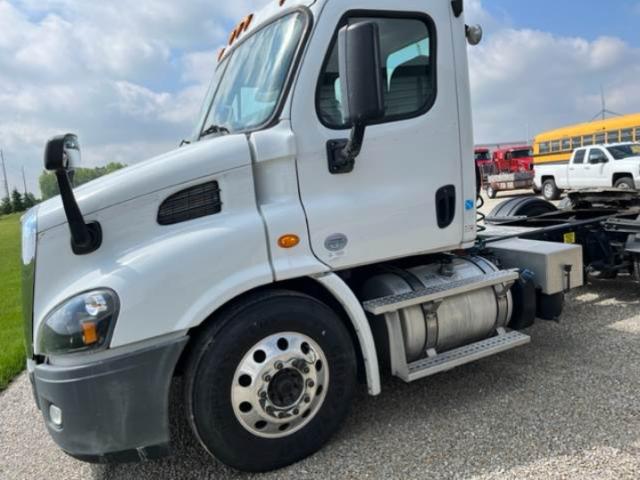
Have freightliner conventional daycab truck to sell? List it here to reach thousands of buyers.
About Freightliner Conventional Daycab Trucks in Ohio
The first buying decision is usually the powertrain. Many Freightliner daycabs are spec'd with Detroit engines such as the DD13 or DD15, paired with Eaton manual, automated manual, or Detroit DT12 transmissions. Horsepower and rear axle ratio need to match the job. A 450 hp daycab with a 10-speed and a mid-3 rear ratio can be a solid setup for mixed regional hauling, while heavier stop-and-go or vocational work may call for a different ratio, wheelbase, suspension, and axle package. Buyers should also pay attention to fuel tank capacity, PTO provisions, front axle rating, and whether the truck runs duals or super singles, since those details directly affect route flexibility and operating cost.
Cab and chassis layout matters just as much as engine specs. Wheelbase, fifth wheel placement, frame length, and kingpin setting all affect bridge compliance, trailer swing clearance, and turning radius. For fleets pulling dry vans, flatbeds, tanks, or intermodal chassis, the right daycab setup can improve loading efficiency and reduce tire scrub in tight yards. Many later-model Freightliner daycabs also include features buyers now expect, such as collision mitigation systems, LED lighting, air ride cabs, and tire inflation systems. In northern states like Ohio, it is also worth checking for corrosion around the frame, crossmembers, cab mounts, battery boxes, and air tank brackets, especially on trucks that have seen heavy winter road treatment.
A well-matched Freightliner daycab can be a cost-effective tractor for operations that need a dependable highway truck without the extra weight and length of a sleeper. Focus on service history, engine hours versus miles, emissions system maintenance, suspension condition, and how the truck was previously used. A regional highway daycab will age differently than a yard, refuse, or heavy stop-start unit. When the spec aligns with the freight, route density, and trailer type, a Freightliner conventional daycab remains one of the most versatile choices in the used Class 8 market.
Frequently Asked Questions
What is a Freightliner conventional daycab truck best used for?
A Freightliner conventional daycab is best suited for local and regional hauling where drivers return home daily and do not need a sleeper. Common applications include dedicated freight lanes, drayage, tanker work, flatbed service, short-haul dry van runs, and terminal-to-terminal operations. The daycab configuration reduces overall weight and length, which can improve maneuverability and payload efficiency compared with a sleeper tractor.
What engine and transmission combinations are common in Freightliner daycabs?
Freightliner daycabs are commonly equipped with Detroit engines such as the DD13 and DD15, matched to Eaton manual or automated manual transmissions, or Detroit DT12 automated transmissions. The right combination depends on gross weight, terrain, traffic conditions, and average trip length. Buyers should compare horsepower, torque, rear axle ratio, and transmission gearing together rather than looking at any one number in isolation.
Why does wheelbase matter on a conventional daycab?
Wheelbase affects turning radius, fifth wheel position, trailer gap, bridge law compliance, and overall chassis versatility. A shorter wheelbase is typically easier to maneuver in tight urban or yard environments, while a longer wheelbase may be needed for certain body, tank, or equipment clearances. On a daycab tractor, the wheelbase should be evaluated with the intended trailer type and kingpin setting to avoid fitment and handling issues.
What should buyers inspect on a used Freightliner daycab in Ohio?
In Ohio, buyers should pay close attention to rust and corrosion caused by winter road salt, especially on the frame, crossmembers, cab mounts, battery box area, and air system brackets. It is also important to review emissions system service records, check for excessive idle hours, inspect suspension and steering wear, and verify tire condition and alignment. A truck that looks clean cosmetically can still have hidden wear in the chassis and aftertreatment system if maintenance was inconsistent.
Are Freightliner Cascadia daycabs a good choice for regional fleet work?
Freightliner Cascadia daycabs are often a strong choice for regional fleet work because they balance fuel efficiency, driver comfort, and serviceability. They are widely supported in the market, and many are spec'd with modern safety and efficiency features such as collision mitigation, aerodynamic packages, LED lighting, and tire inflation systems. The key is choosing a spec that matches the lane, trailer type, and duty cycle rather than relying on model name alone.