
Double Drop Deck Trailers For Sale in Colorado
Shop double drop deck trailers for heavy equipment and overheight freight. Compare detach styles, deck length, axle setups, and capacity.
Learn moreBrowse Double Drop Deck Trailers by Make
Have double drop deck trailer to sell? List it here to reach thousands of buyers.
About Double Drop Deck Trailers in Colorado
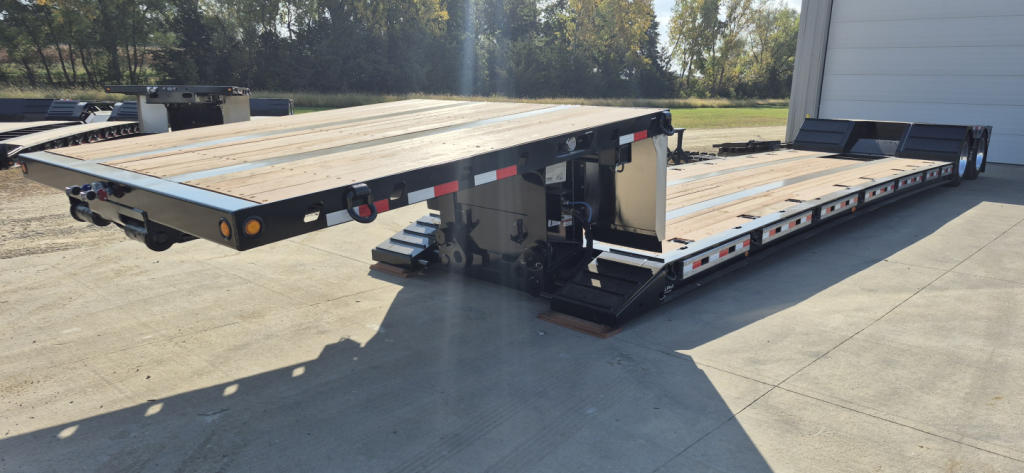
Detach style is a major buying decision in this category. Mechanical detachable gooseneck trailers are straightforward, durable, and often favored by fleets that want a simpler setup with fewer hydraulic components to maintain. Hydraulic detachable gooseneck trailers speed up loading and unloading and are especially useful when the trailer sees frequent equipment moves. Main deck lengths often fall around the high-20-foot to low-30-foot range, with upper decks around 10 feet, and some models add slide-outs for wider machinery or specialized freight. If you regularly haul excavators, dozers, paving equipment, cranes, or industrial components, pay close attention to deck width, swing clearance, ramp design, and whether the trailer is prepped for a flip axle or additional axle configuration.
Capacity and securement details matter as much as deck dimensions. Many double drop deck trailers in this class are built around 40-ton ratings, but real-world suitability depends on axle group, bridge compliance, and how the load sits in the well. Tandem axle setups are common, often paired with air ride suspension, drum brakes, and 255/70R22.5 tires. Features like chain drops on regular centers, multiple D-rings per side, recessed lighting, pull-out lights, toolboxes, and onboard scale systems can improve both load securement and day-to-day productivity. Steel construction remains common because buyers in this segment prioritize durability and concentrated load handling over weight savings.
A good double drop deck trailer should match your freight profile, permit environment, and loading routine. Buyers running in Colorado and other mountain or western states should think about route grades, braking performance, weather exposure, and how axle configuration affects legal weight distribution on state and interstate routes. If your loads vary, a trailer with slide-outs, strong tie-down provisions, and flip axle readiness offers more flexibility. If your work is repetitive and machine-focused, deck geometry and detach reliability usually matter more than extra accessories. The best choice is the one that keeps equipment low, loads efficiently, and fits the legal and operational realities of your lanes.
Frequently Asked Questions
What is a double drop deck trailer used for?
A double drop deck trailer is used to haul tall or heavy freight that needs more deck height clearance than a flatbed or step deck can provide. Common loads include excavators, dozers, loaders, paving machines, agricultural equipment, tanks, and industrial machinery. The lowered center deck allows taller cargo to ride lower, which helps keep overall load height within legal limits or reduces the amount of permitting required.
What is the difference between a double drop deck trailer and a lowboy?
In everyday trucking terms, buyers and operators often use the terms interchangeably, but the exact design can vary by manufacturer and region. A double drop deck trailer has an upper deck, a dropped main deck or well, and a rear deck over the axles. Many equipment haulers refer to detachable gooseneck double drops as lowboys because they are designed to carry heavy, overheight equipment low to the ground. The important buying point is the deck height, well length, detach style, and axle capacity rather than the label alone.
Should I choose a mechanical detach or hydraulic detach double drop trailer?
A mechanical detach is typically simpler, durable, and easier to maintain, which appeals to fleets that value straightforward operation and lower system complexity. A hydraulic detach is faster and more convenient for frequent loading and unloading, especially when one trailer is used all day for equipment moves. The right choice depends on loading frequency, shop support, driver preference, and how much value you place on speed versus mechanical simplicity.
What specs matter most when buying a double drop deck trailer?
The key specs are rated capacity, loaded deck height, well length, overall trailer length, deck width, axle configuration, and detach type. Buyers should also verify tire size, suspension type, brake setup, kingpin and neck design, swing clearance, and whether the trailer is configured for a flip axle or wider loads with slide-outs. Securement hardware like D-rings and chain drops should match the type of equipment you haul, because the right tie-down layout saves time and supports safer load placement.
Are double drop deck trailers a good fit for Colorado hauling conditions?
They can be an excellent fit for Colorado freight because equipment hauling in that market often involves elevation changes, strict route planning, and a mix of interstate and jobsite travel. A properly spec'd double drop deck trailer helps keep tall machinery lower and more stable, which is useful when dealing with mountain corridors and permit-sensitive loads. Buyers should pay close attention to brake condition, suspension, axle spacing, and overall weight distribution, since those factors affect both legal compliance and downhill control.