
Clark Flatbed Trailers For Sale
Browse Clark flatbed trailers for sale. Compare 48-foot and 53-foot specs, deck options, sliding tandems, tie-down features, and payload fit.
Learn more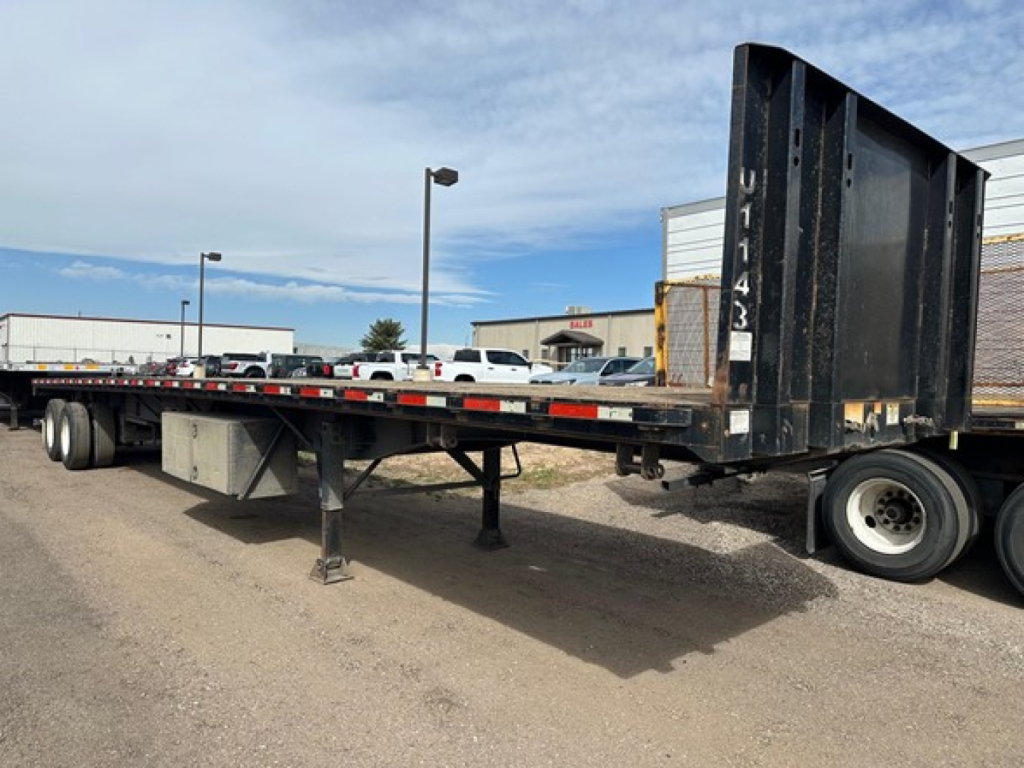
Have clark flatbed trailer to sell? List it here to reach thousands of buyers.
About Clark Flatbed Trailers
Construction details matter on a used Clark flatbed. Steel main beams and steel side rails typically offer durability and repair familiarity, but trailer tare weight should be checked against your usual freight. A wood deck is still the standard choice for many operations because it handles mixed freight well, accepts securement hardware easily, and is straightforward to replace in sections when wear shows up. Buyers should inspect crossmembers, rail condition, landing gear structure, ICC bumper integrity, and bulkhead mounting points, especially on trailers that have spent time hauling steel, lumber, or concentrated machine loads.
Axle and suspension spec has a direct effect on day-to-day usability. A closed tandem with air ride and a slider is a common combination because it helps with ride quality, bridge law compliance, and load positioning. Tire size, wheel type, and brake condition also deserve close attention since they affect maintenance cost and uptime. On a flatbed, practical features often separate a good spec from an average one. Sliding winches, stake pockets, rub rails, nail strips, pipe spools, mud flaps, and toolboxes all add real value when the trailer is working every day and drivers need faster securement and cleaner storage for chains, binders, and straps.
If you are comparing Clark flatbed trailers against other open-deck options, focus on freight profile first. A standard flatbed trailer, also known simply as a flatbed semi-trailer, is the right fit when you need a full-width deck without side walls or a roof. It is less specialized than a step deck or double drop, but that simplicity is exactly why flatbeds remain one of the most versatile trailer categories in commercial trucking. The best trailer for the job is the one with the right deck condition, securement package, suspension spec, and legal payload for the freight you haul most often.
Frequently Asked Questions
What should I inspect first on a used Clark flatbed trailer?
Start with the frame, main beams, crossmembers, and side rails because structural condition drives both safety and repair cost. After that, inspect the deck for rot, broken boards, thin spots, and evidence of concentrated load damage. Securement components such as stake pockets, rub rails, winches, and pipe spools should be checked for bends, cracks, and excessive wear. Also review suspension, brakes, tires, wheel ends, landing gear, and slider operation if the trailer has sliding tandems.
Is a wood deck the right choice on a flatbed trailer?
A wood deck is the standard spec for many flatbed operations because it works well with mixed freight, provides traction, and is relatively easy to repair in sections. It is a practical fit for lumber, palletized freight, machinery, and general building materials. Buyers should still check board condition closely, especially around forklift contact points, chain tie-down areas, and high-traffic loading zones. If your operation handles abrasive or concentrated loads regularly, deck maintenance history becomes especially important.
Why do sliding tandems matter on a flatbed?
Sliding tandems give the driver flexibility to adjust axle spacing for bridge law compliance and load distribution. That matters when freight weight is legal overall but needs to be positioned correctly across the tractor and trailer axles. A slider can also help adapt the trailer to different states, routes, and customer loading patterns. When evaluating a used flatbed, make sure the slider pins engage properly and the rail and locking components do not show excessive wear or damage.
What tie-down features are most useful on a flatbed trailer?
The most useful tie-down features are the ones that match the freight you haul every week. Stake pockets, rub rails, sliding winches, and pipe spools are common because they support a broad range of strap and chain securement setups. A bulkhead can add protection for certain freight profiles, while toolboxes improve organization and keep securement gear protected. The value of these features is not just convenience. They can reduce loading time, improve securement options, and help drivers adapt to irregular loads.
How is a standard flatbed different from a step deck or other open-deck trailer?
A standard flatbed has a full-height deck from front to rear and is designed for freight that can legally ride at that deck height. It is simpler and more versatile for many general freight applications than a step deck or double drop. A step deck lowers part of the deck to carry taller freight within legal height limits, while a double drop is meant for even taller or heavier specialized loads. If your freight usually fits legal height on a straight deck, a flatbed is often the most efficient and broadly usable option.